Tag: career

  • What Not To Say

    Don't yell at the boss

    This article on 8 things your boss doesn’t want to hear made me smile. There are a few phrases listed that I would definitely recommend not using if you want to succeed in your current place of employment.

    Having managed a few DBAs in my career, I thought of a few more that I thought might fit the data professionals out there as “things not to say” to your boss:

    I’m not sure if more memory will help: You could substitute CPU or disk drives for memory in this one, but it’s your job to know. If you don’t, learn how to tell what your bottlenecks are and make appropriate recommendations.

    That additional memory didn’t help: The only thing worse than not being able to make a good recommendation is making one that doesn’t improve performance after your boss has approved the purchase. Now you look bad, and you’ve made your boss look bad.

    Company X has offered me $yyyyy. Will you match it? You can get away with this once at a job, or maybe once a decade. If you want to go to your boss with this one, be ready to quit if you don’t get it, and be ready to shine if you receive the raise. No one wants to be put in a corner, and I would be likely to let you move on if you came to me, unless I felt you deserved it. Even then, the second time you ask, I’m showing you the door.

    I downloaded this software off the Internet and it crashed the server: You can’t trust stuff you download, no matter what the Open Source crowd says. Test, test, test. Preferably on a test machine.

    It works on my machine: I have always wanted to answer this with a “Who gives a <insert four letter expletive here>?” My actual responses haven’t been that far away if it’s an important project and you give me this excuse.

    Feel free to add your own “things not to say” to the comments below.

    Steve Jones

    (originally published at http://www.sqlservercentral.com/articles/Editorial/72279/)


    The Voice of the DBA Podcasts

  • Data Scientists

    Would you like to be a data scientist? In some sense I think that many of us working with SQL Server are amateur data scientists. Whether it’s building a report, or just writing code to summarize data, we are working with data in a scientific way.

    What is data science? It’s not really a science, but instead it describes the field of analyzing data and the tools used. It’s primarily used with more traditional sciences to make sense of the vast quantities of data that are accumulated and used to support or debunk some hypothesis.

    Many of us as data professionals have some experience in managing data and manipulating it, but not a lot of formal knowledge in statistics or heavy math. Just reading the recommendations of what might be needed become a data scientist reminds me of a graduate level curriculum, but I’m not sure most of us need that much schooling.

    However I do think that as a data professional that is looking to add strategic value to your company’s applications and trying to stand out, it makes sense to beef up your analytics skills. Finding ways to spot trends and patterns can be very valuable to finding new opportunities in business, and those talents are based on sound statistical analysis techniques.

    Steve Jones

    (Originally published at http://www.sqlservercentral.com/articles/Editorial/72171/)

    Podcasts

  • T-SQL Tuesday #14–Resolutions

    tsql2sdayIt’s T-SQL Tuesday time again, and this month the Midnight DBAs (Jen’s blog | Sean’s blog | @MidnightDBA) are hosting the party. You can read about the whole T-SQL Tuesday blog party idea from Adam Machanic (blog, Twitter) if you want, and if you want to participate, you have a few hours left.

    Resolutions

    The theme this month is resolutions. That’s interesting because this was the first year in quite some time where I haven’t set goals or resolutions for the new year. I’m behind and somewhat unsure of what I want to do in life.

    However, it’s T-SQL Tuesday, so I need to think of something if I want to participate.

    I recently received an offer to take the MCM written test for SQL Server. There was no downside for me, so I signed up. And I pushed back the test a month since I wasn’t ready. I could say that my goal is to get the MCM this year, or to pass the written test, but that wouldn’t be right. I have reasons I’ll blog about later, but suffice it to say those aren’t resolutions.

    However I would like to make an honest effort to pass the written test. I haven’t had production responsibilities on a SQL Server instance in years, and while I know a lot about SQL Server, and understand how many things work, I don’t have to practically apply that knowledge, and so I’m rusty.

    I’d like to remedy some of that this year. I have been watching the MCM readiness videos, trying to learn some things and get prepared. Part of the reason I pushed back the test was because I hadn’t had a chance to watch all the videos and read the other prep material. I’m still working my way through things, and hope to be better prepared when the test comes around.

    My resolution is to really make an honest effort over the next month. Not cramming, and making this a single-focus-I-have-to-get-it-all-done, but make a good effort, my best effort given my busy life, and do as well as I can on the test.

    Kind of a nebulous resolution, but I can say that I didn’t make a solid effort in December, and I’m working to fix that now.

  • Building Better Communication Skills

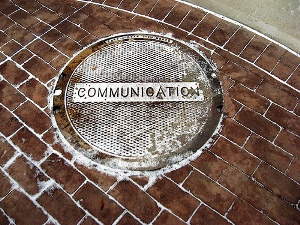
    I think that one of the most valuable skills that someone in technology can have is the ability to communicate with others. It doesn’t matter whether you write code, rack servers, or sit in meetings with business people, it is important that you find a way to express clearly what you want, need, or would expect from someone else. If you can’t, you will find that you often struggle to get anything accomplished in an efficient manner.

    It’s possible that you can get by with verbal communications in many instances, but it seems that so much gets done by written communications of some sort. Especially these days where it seems that so much of the interaction between people takes place through email, IM, or even Twitter. We are constantly using some form of written text to convey information between each other.

    However it seems that many people don’t place a premium on building better writing skills. When I talk to many people at SQL Saturdays, most of them are hesitant to try something like blogging. The most common complaint: I hate writing.

    But we have to do it constantly at work and working on your writing skills will not only help you to communicate better, but it will also help you learn to better organize your own thoughts. You will have a better understanding of the logical thought process, which might even help you build better code.

    Steve Jones