After my call for “What the Business Says Is Not What the Business Wants”, there were quite a few people that responded. Including my blog post, I found 43 comments posted on with links back to the thoughts.
Here’s a quick summary, along with a short comment on each.
Matt Whitfield wrote on issues with letting the customer decide how, in addition to what, a project should be built. Wise words, and often a place where trouble ensues when technical people take things literally. A great cartoon to start out the topic is in this post as well.
Rob Farley talks collation issues. In this case, the collation issues are misunderstandings due to the different way we express ourselves in our particular industry or career. It’s a common problem, and it shows why the technical people need to make very, very sure they understand what the business person said, not what they meant.
Mark Broadbent stresses that we need to provide alternative solutions when what is proposed won’t work, and talk in terms of value, something the “business” should understand.
Roger Noble wants to take off the white coat and tells us to remember that communication is the key. On both sides.
Aaron Bertrand has seen issues with outsourcing and requirements. This technique works well in some cases, but not others, and with development projects, it can be problematic.
Reporting is the area where Jason Brimhall has found confusion in different departments wanting separate reports, but then somehow having them match for comparison purposes.
Performance is always an issue, and Alexander Kuznetsov talks about the need to actually define carefully what types of performance, and what the metrics we use, will mean.
I have horses, well, my wife has horses. I love my wife, so there are horses at the ranch. Noel McKinney asks what to do with the business wants a pony? Not literally a pony, but worth the ready anyway to understand what he means.
Shrinking Databases is the scenario that Pinal Dave uses for his post. He describes a scenario where the business requested that the smallest file be used for DR, but a lack of understanding of how backups worked resulted in a regular shrink job.
Nicholas Cain talks about this mysterious business, and has a few examples of the problems that can be caused when too much design input comes from non-technical people.
Chris Shaw channels the Soup Nazi in a quick note about a former manager who wants the database locked down, to everyone but him.
Jen McCown starts with a classic joke and gives a few examples of where the business has caused issues with technical systems.
John Sansom, DBA from across the pond, has some advice for DBAs on how to better develop understanding with your business people as well as understand politics a little better yourself.
Bradley Ball tells a story of how he has had to build trust with the business. A story similar to one I’ve had, and worth the read to remind you how to deal with mistakes.
Joshua Feierman wonders how we can better build good software the meets the business’ needs, budget, and timelines. I can sympathize here, but also understand that the business wants things done, and not necessarily in the best way possible.
Bob Pusateri describes the problems that come when the business has a little knowledge and tries to work too closely with technical people.
Matt Velic reminds us to listen to the business and ask questions to be sure that the communication is understood by both sides. A good reminder that ultimately this is a job and you shouldn’t get too upset.
Jeremiah Peschka tells us to listen in a not-so-subtle way. Listening, and understanding, what users say to you is important. We shouldn’t design the software we want, we should design the software users want. Not as easy as it sounds.
Gethyn Ellis, one of SQLServerCentral regular bloggers, runs into the classic Full-Recovery-Mode-with-No-Transaction-Log-Backups.
Mike Walsh tells us we need to listen. And tells us again. And again. Get the hint? We (IT people) don’t listen well.
Erin Stellato uses quotes to remind us that teamwork and relationships are important.
Kendra Little talks features. What people want, but what they then forget or don’t consider. This is a nice post to send to your business people, or perhaps paraphrase to try and help them understand your point of view.
My good friend, Andy Leonard, talks ego, as a part of his series on interactions with business people. Check your ego. Good advice.
Audrey Hammons has a top 5 list. These are the top five things the business has asked for. It’s a funny list.
The very talented Wendy Pastrick from Chicago found some nice blog fodder with this month’s topic. Is your business like the blind men describing the elephant? If so, you might like Wendy’s post.
Jason Bacani uses some great images to show why the business has trouble with us. They want everything yesterday and we want our procedures to get in the way.
Richard Handloff tells us how to ask questions to get better information from the business.
Meredith Ryan-Smith gives us a method that has worked well for groups in her cmpany.
Cade Roux tells us that IT needs to be a strong partner with the rest of the business.
John Welch has to convince the business of the value of data quality. I’ve fought this battle before as well and it’s a tough one.
Amit Benjeree writes his second T-SQL post and talks about the classic things you need: requirements and priorities.
Allen Kinsel tells us to plan on changing. It’s a lesson I learned early, and not only do I plan for change, I design with the idea that my design will need to change for future requirements.
Jes Borland learned about the business and learned just how valuable that knowledge can be.
SQL Soldier, Robert Davis, warns us of the dangers when the DBA does not push back on business demands.
Brian Kelley, longtime SQLServerCentral author and security expert, reminds us that technical people and business people start from different places. Neither knows what the other knows, and that can be a source of problems.
Thomas Rushton left a job when the business didn’t appreciate the value of people. I’m sure he’s glad he’s not at that job anymore.
Ryan Adams says that we need to be the interpreters. DBAs have to translate what is said into what is needed. Now if we just had a decent piece of software to help us, this would be easy. Ryan has a good example of a situation where things can get confused without someone acting as interpreter.
Oscar Zamora talks about the importance of a strong business analyst in the software development process.
Stacia Misner rounds out this months’ party with “a picture worth a thousand words” and gives us some insight into how she designs systems and works through projects. Rather than go left to right, she goes right to left. Read her post to understand more.
This was a neat experience, but a lot of work. I’ll admit that I don’t always read that many T-SQL Tuesday posts. I tend to read 5-10 tops, and going through 40 and summarizing was hard.
However I’m glad I did it, and I bet you will too. Contact Adam to host a month in 2011 and pick your topic.
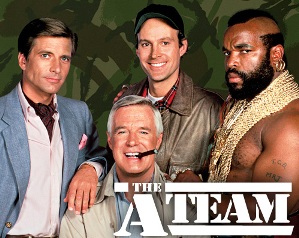 Would you want to be part of an elite strike force inside your company? An IT team that can solve complex problems and save the day when there’s a crisis? Or even a large challenge facing your department?