Tag: computers

  • Trusting Systems

    What's the cost of this?
    What’s the cost of this?

    Computer technology has become more and more integrated into all sorts of businesses. These days when I look at the ways in which automation and technology is embedded in business, I’m amazed to think that I worked in businesses that didn’t have any personal computer systems early in my life. Unfortunately this integration comes at the a price: dependence. We depend more and more on our systems working as expected for businesses to continue to operate.

    Most businesses can tolerate some issues and failures in their systems for a short period of time. As much as I want to maintain 5 9s of uptime, I’ve never been in a business that really required that level of stability. I’ve had systems go down that management claimed were critical. They’ve been down for a couple days, and the companies didn’t go out of business. We have a lot more tolerance than management would like to admit. If you work with a 24×7 environment like Amazon’s online store or a banking application that is generating revenue every second, that might not be true, but for most of us, in most organizations, for most systems, we can tolerate some downtime.

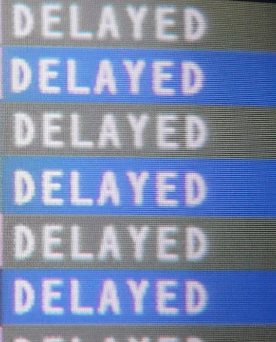
    However the effects of some failures can’t easily be measured. American Airlines had computer issues recently and had to delay or cancel 400 flights. I’m sure there were some costs in compensating customers that took other airlines, or received vouchers for services. However, most of the flights were moved to later in the day, and I doubt there were many refunds. The short term costs of this computer issue were probably relatively small. Given the fact that some customers might have skipped or moved flights, with a change fee, there might not have been any absolute short term loss.

    However it’s impossible to know how many other businesses were affected. Sales calls that were missed and not rescheduled, people that missed events that were important to them and they’ll never be able to attend, or even penalties paid on contracts for the failure to deliver something in person. What’s also impossible to know is how many people will reconsider booking flights with American in the future because they lost their trust in that company.

    That’s really the bottom line for most of our management and our businesses. If we can’t provide reliable computer systems, management won’t trust us, and their customers won’t trust them. If that happens too often, we won’t be employed, and at some point in the future, we might find ourselves unemployable if our reputation is such that we can’t keep systems running.

    Steve Jones


    The Voice of the DBA Podcasts

    We publish three versions of the podcast each day for you to enjoy.

  • Our Race with Machines

    Terminator2-580-75
    Hopefully we aren’t racing these types of machines for our jobs.

    The Terminator andMatrix movies showcase a world where our computing machines have taken over the world to the detriment of humanity. These are worlds were the machines are superior to humans in many ways. It’s a view that scares many people and has them concerned about the future as we find machines doing more and more work for us humans.

    Whether you think we’ll reach a point where machines are sentient or not, we do know that for single tasks, or a limited domain of tasks, machines can excel at some tasks. We’ve seen tremendous improvements in any number of fields where computer technology combined with machinery has greatly improved the way in which a business can function. These improvements have sometimes come at the cost of jobs, which can be a problem in some cases as humans must adapt to the changing ways that organizations function.

    However the news isn’t all bad for human workers. I ran across a very interesting TED talk about machines and how we might compete or work with them. It’s from Erik Brynjolfsson and discusses some of the advancements, including the Deep Blue and Watson projects from IBM. While these projects have sometimes proved they can beat individual humans, groups of both humans and machines have proven to be even more capable of solving problems.

    I don’t know how the world will change, especially our jobs, but as I’ve watched technology be introduced, grow, and dominate business in the world, I’ve also noticed that there are more and more opportunities for those of us willing to work hard, learn, and adapt.

    Steve Jones


    The Voice of the DBA Podcasts

    We publish three versions of the podcast each day for you to enjoy.

  • Using Technology in New Ways

    heat map of made shot attempts
    Apparently Kevin Durant doesn’t make his shots from everywhere.

    There are some amazing things that we accomplish with technology. For example, there is a system that can track a missile, moving at incredible speeds, and report this information to other applications that could potentially be used to react in some way. That’s pretty amazing, and whether or not you agree with the purpose of the system, the technical achievement is pretty incredible.

    There are other people that can take that technology and apply it to a more benign use. SportVU has used missile tracking technology in sports to gather additional statistics on the various games and the players. They started using this with soccer, but have brought it to the US and the National Basketball Association, implementing the system in 10 arenas. The linked article looks at the way in which this technology can be applied to player performance, and uncovering patterns that might not be otherwise recognized.

    It’s incredible to see the the heat maps of attempts v makes for one of the most exciting young shooters in the NBA. Watching his Kevin Durant in some games, I was sure that he could make any shot from anywhere on the floor. The data proves me wrong. If I were a defender, I’d be looking to force Durant outside of a few areas near the three point line and let him take his shots from elsewhere. At least until the data showed he was getting better from other spots.

    So many of our decisions these days are based on hard data, but are we collecting the correct data? Could we find other data points that might uncover data within data? This article shows that there might be other technologies out there, even in completely unrelated fields, that might help us find new data points to capture, and new patterns that can help us make better decisions. If you are using any type of unusual technology in your business, let us know.

    Steve Jones


    The Voice of the DBA Podcasts

    We publish three versions of the podcast each day for you to enjoy.

  • Is Empowerment Good?

    I remember my boss having a secretary that used to take his dictation down.

    When I started working in business, PCs were just coming to use in the company where I worked. Not everyone had a computer, which may shock some of you. We had shared computers in some places, and there were people whose jobs didn’t require computers, if you can believe that. The world has changed since then, and having access to some computing device is almost required at every level of business these days, from delivery drivers to warehouse workers to the CEO.

    One of the anachronistic events you might see in older films or book was the idea of an executive calling a secretary into their office to dictate a memorandum or letter. I’ve actually witnessed that event, though it’s a faded memory that I barely recall. As technology evolved, we found more and more people could handle their own work, typing and proofing their own letters, calling up their own reports, and reading their own correspondence. That seems to be much more efficient, allowing one person to do the work that two might have done before, but is that correct?

    When you ask for a report, or dictate a letter, you are delegating that work. You can let it go, and spend your time thinking about the content or analyzing the data without worrying about the mechanics. It’s easy to pick up a report, but it’s also easy to get bogged down in worrying about which options to pick, or experimenting with a few options, going back and forth. I shudder to think of how much time someone spends formatting, changing fonts, or customizing their work in Word, Powerpoint, etc. when they could be applying knowledge to a process.

    Technology is a great enabler, but too often we think that just enabling someone with more options, choices and settings is a worthwhile exercise. Technology ought to make things easier, and allow us to concentrate more on the work we need to do. If  it requires more work from us, especially because it’s given us too many choices, I’m not sure it’s been implemented well.

    Steve Jones


    The Voice of the DBA Podcasts

    We publish three versions of the podcast each day for you to enjoy.