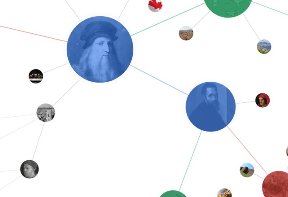
Google aims to use a “database of everything” to satisfy search queries.
Google does some amazing things. In many ways I like the company and their emphasis on data. I’m not sure I’d want to work there or fit into the culture, but the company tackles some problems that could really change many of our daily lives. They experiment with many projects, one of which is the driverless car project. I’m particularly interested in seeing seeing how that might influence the world.
One of their other projects seems more ambitious. The Knowledge Graph project aims to use a database of everything in the world (according to this piece) and provide even more information to people using the Google search engine. In addition to search results, the idea is that you can get other facts and information about the topic you are searching for.
Whether it works well or not, it’s certainly an interesting idea. Can we build engines that can divine the context of what we are looking for? If we can do this often enough, then the idea of interactive computers, like the ones on Star Trek, might be closer than we think. Perhaps there’s a way for us to actually mine the data we have about a customer, or a situation, and present results that are more relevant and useful. Perhaps we can build software that can do more than just automate tasks and can help us better analyze information with new ideas or concepts as it interacts with us.
Steve Jones
The Voice of the DBA Podcasts
We publish three versions of the podcast each day for you to enjoy.
It was an interesting year, though not quite this interesting.
It’s the end of 2012, but not the end of the world. As I look back at this past year, I think it’s been a great year for SQL Server and data professionals. The big news of the year was the release SQL Server 2012. This is a great step forward for the platform with a number of enhancements that both make our jobs easier, as well as challenge our skills. The addition of AlwaysOn provides a number of great new ways to scale out SQL Server as well as ensure high availability. Power View, columnstore indexes, and the BI Semantic Model allow for better BI applications, and who could applaud the undo/redo features in Integration Services. There are lots of great things in this new release for the technical staff, though the licensing changes might cause some companies to reconsider or delay their upgrade plans.
We had more opportunities to use SQL Server in new ways, many of them with the expansion of cloud services. Amazon added SQL Server to its RDS platform, allowing quick and easy deployment of SQL Server in the AWS cloud. SQL Azure lost its name, as it was folded into Windows Azure, but it was enhanced throughout the year with a number of releases.
SQL Server is still one of the most secure database platforms available, though it did require patching for a critical flaw in an ActiveX control. There have been fewer advisories and issues with SQL Server 2008 and later than any of the other RDBMS platforms. That’s good news as security continues to be an ongoing challenge for many organizations. However the security of the platform doesn’t mean that DBAs can relax. There has been no shortage of data loss in 2012, mainly though laptop loss or insider actions. Everyone should continue to be vigilant about security, auditing, and especially SQL Injection.
The positive side of 2012 were lots of events for SQL Server professionals. There were 79 SQL Saturday events in 2012. That’s amazing to me and it’s something Andy Warren and I never would have imagined when SQL Saturday #1 took place in Orlando in 2007. A lot of the success is due to Karla Landrum’s work in helping organize the events. Many thanks and congrats to Karla for an amazing job.
I only attended 4 of these because I participated in the SQL in the City tour that Red Gate Software put on. We held 8 fantastic events in the US and UK this past year, and we will put on a few events next year as well. Grant Fritchey and I will also be visiting some SQL Saturdays in 2013, and I hope to see some of you there. Along with Connections, SQL Server Live, the PASS Summit, and a number of other free events, there’s a lot of great training and knowledge being shared in the SQL Server community. If you’ve got pictures or blogs of your time at an event, please share them in the discussion.
Here at SQLServerCentral I had a few milestones as well. Our Stairway Series took off and we published over 120 articles on various topics. We crossed over 1.5 million registrations, and receive over a million unique visitors every month, which are fantastic milestones for us. ASKSSC continues to grow as well for those people that prefer a Q&A format rather than a discussion. Based on comments and emails, the site continues to help educate and inform many data professionals on a daily basis. I hope that you have found us to be a valuable resource in your job and I hope we can continue to do so in 2013. If you have suggestions, comments, or critiques, please feel free to share them with us.
Happy New Year and my best wishes to each of you.
Steve Jones
The Voice of the DBA Podcasts
We publish three versions of the podcast each day for you to enjoy.
We are gathering more and more data all the time. There’s no end in sight, and even as storage becomes more dense and cheaper per GB, we are needing more and more of it all the time. I saw a note recently that estimated in 2011 we gathered 1.8ZB worldwide. Not TB, not PB, but ZB. That is crazy. There are estimates that say some industries have more data per company than the US Library of Congress.
Our own databases are constantly growing, and even though many of them are relatively small, we keep multiple copies of the data. We have production, we have test, we have multiple development copies. Some companies have UAT, some have customer service environments. Overall, we may have a lot of data in our companies that’s redundant, but necessary.
Managing all this storage can be a hassle for DBAs. It can be a pain for developers that need more drives for their environments. It can lead to arguments with SAN adminstrators for those servers that need additional storage to match production. Time becomes a factor as well when looking to restore, copy, move, or just query the systems.
An obvious solution is compression. There is data compression built into SQL Server, which works well in some data distributions. Third party products exist to compress backups, or even whole databases. Virtual restores can eliminate the need to have enough space for a backup and the data expanded in an MDF. There are solutions out there, and often they can return a very strong ROI against their costs.
If you have a storage crunch, take a look at the various third party products out there. You might something that makes your job easier, and perhaps even gets the SAN administrator to smile.
Steve Jones
The Voice of the DBA Podcasts
We publish three versions of the podcast each day for you to enjoy.
Better modeling requires more CPU and a lot more data.
Moore’s law has held true for computer resources for a long time. I don’t know how long it will continue to work in the future, but I am interested to see if it can continue to work for the rest of my career. I don’t know that it will, with our newer CPU designs approaching the limits of physics, but I’m sure that research is under way to find ways to vastly improve our processing capabilities. Look how far we’ve come from the Apollo guidance computer, which landed 3 men on the moon, and had a fraction of the power of almost all of today’s cell phones.
I ran across an article that talked about modeling sailing conditions to help sailors design faster and more stable boats. Just like many other types of modeling, this is a way to use computer simulations of various real world events to test designs of new products. This can save lots of time and money as fewer prototypes can be built and many more design ideas can be tested before a final design is chosen. More intensive modeling means more processing power is needed, but it also means more data is needed.
We see this more and more in business. We want to get answers faster, often by running more complex business simulations. To get our answers faster we need more processing power. However as we upgrade our machines and enhance our CPUs, we also add more and more data to our databases. The additional data, while beneficial to making better decisions, also slows down our queries. The additional data is also a challenge to load, manage, and store, which is something we need to ensure we are learning to do better.
Processing costs are going lower and lower. These days with the large clusters in the cloud that anyone can rent for a few thousand dollars, extremely complex simulations can be run. The code to run them, however, is still something that we need to produce. Just as the scientists have developed complex models that accurately test new designs, each of us must learn how we can write more efficient queries that analyze our business data and take advantage of the constant improvement we see in processing capabilities. Otherwise the advances in CPU power might be negated by rapid data growth.
Steve Jones
The Voice of the DBA Podcasts
We publish three versions of the podcast each day for you to enjoy.