Tag: Microsoft

  • Microsoft Research

    Microsoft is investing heavily in research.
    Microsoft is investing heavily in research.

    I’ve always thought that the idea of investing in research products was a good one in many industries. Some of the companies that were very successful across the last hundred years were those that invested in learning about the technologies and processes in their industries. From these ideas and inventions, engineers have built the products that companies sell and which enrich our lives. Government and academia have also helped fuel the advance of technology in America, but it takes business interests to provide the practical implementations of innovations that can be bought and sold.

    There are people that think corporations like Microsoft and Google should focus on their core businesses and maximize their profits. However I think the investments that these companies make in various research areas allow them to learn about new opportunities that may become products at some point. It can be hard to determine if a technology area is viable for products, and the targeted research these companies engage in can help them improve existing products, or invent new ones.

    I think that having research areas enables diverse opportunities that may help attract, or retain, some extremely talented employees. I know I’d love the chance to take a sabbatical for a year and work on a research project of some sort. The top talent at many large companies may want to work in a theoretical area for a period of time, and companies may find very talented academics that might want to try working on more practical endeavors.

    I was watching this keynote from Microsoft Research and it was amazing to me how much of an effort Microsoft is putting into their research. They claim they are the number one organization doing basic research in computer science. They publish more research, and funding more graduates student hours of work than any other single institution. Considering how large some universities are, this quite a commitment to research. It’s one that I hope they continue in the years to come.

    Steve Jones


    The Voice of the DBA Podcasts

    We publish three versions of the podcast each day for you to enjoy.

  • A Billion Transactions

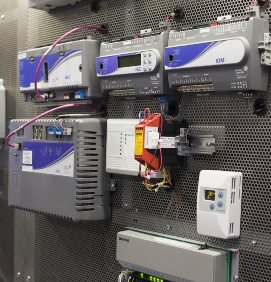
    These are some of the sensors generating that half billion transactions/day.
    These are some of the sensors generating that half billion transactions/day.

    How long would it take your systems at work to process a billion transactions? You’d expect some, heavily used and highly visible systems to be involved. The stock market systems process billions of trades a day, but I’m sure most of the systems in single companies, even large companies, deal with fewer transactions on a daily basis. A billion transactions a day is 11,000+ transactions a second, sustained across the entire day. That’s a heavy load, but it might be the level of transactions that more and more of us will see over time as our systems gather more data.

    The Microsoft corporate headquarters in Redmond consists of over 100 buildings on 500 acres. It’s grown over the years from its original 88 acres, which is also the title of a story about Microsoft and the relatively unknown work in automating their infrastructure. Not the computer systems their software developers use, but rather their facilities and physical buildings. It’s a fascinating story that outlines the way in which Microsoft saves millions of dollars in maintenance and repairs by using software.

    Across those buildings, Microsoft collects a huge amount of data, from disparate systems, which is the presented to the facilities personnel. The sensors and systems don’t process a billion transactions day; they process half a billion. Still an amazing amount of data, just from physical buildings and the infrastructure that ensures Microsoft employees have a pleasant place to work every day. Using a combination of SQL Server, Office, and Azure, Microsoft has built a software system that corrects many faults itself within sixty seconds. Those that can’t be fixed remotely often end up generating one of the 30,000 work orders produced for personnel every quarter. The system is forecasted to save 6-10% of the energy that might otherwise be wasted with a less efficient system.

    It’s a great read, and perhaps is a good case study for an application that is well suited for cloud services. There are a few great quotes from the article as well that are particularly pleasing to a data professional. “Give me a little data and I’ll tell you a little,” he (Darrell Smith) says. “Give me a lot of data and I’ll save the world.” That ought to be the model for data analysts. As SQL Server professionals and developers, we should be helping others to do just that.

    Steve Jones


    The Voice of the DBA Podcasts

    We publish three versions of the podcast each day for you to enjoy.

  • The Patch Wild, Wild West

    The wild, wild west, immortalized in so many movies, was very chaotic. Not what I want in a patching process.
    The wild, wild west, immortalized in so many movies, was very chaotic. Not what I want in a patching process.

    I’ve had various iOS devices over the last few years and one thing that’s annoyed me is the patching process. I have very little control over which patches I install, and I can’t roll back patches if I get a new version of an application that doesn’t seem to work well. As a result, I’m glad I have control over when I patch particular apps, and patch them rarely. This isn’t the best security process, but it provides stability, which is usually more important to me on my devices.

    It seems to have worked well for Apple, which has sold billions of applications across their devices. It works so well that Microsoft seems to have adopted a new process for the “Metro” style applications for devices and Windows 8. According to this article, the “Black Tuesday” for patches might be going away. All of the things I don’t like about the iOS patch system seem to be coming to Metro apps. I wouldn’t care, but since Windows Server 2012 has some of the Windows 8 characteristics, I’m a little concerned. Are we doomed to get more “Metro” style interfaces for Windows features and potentially third party applications that will send patches mixed in with enhancements? Will we get stuck “upgrading” systems with new features in order to get security patches?

    Consumers want things to work, and I can understand Microsoft’s desire to simplify the patch process, but removing the ability to roll back and not warning users of patches could backfire with companies that end up using these same devices. This most assuredly makes the process of publishing and distributing patches easier for Microsoft, but it’s a big step backward for companies, and it’s one that I’m sure will upset, anger, and frustrate both users and IT departments.

    The world continues to abstract away from particular platforms for any purpose. Those of us using SQL Server are stuck with Windows, but many of the applications we use are increasingly being released on multiple platforms. If Microsoft is having issues with Windows 8, Windows phone, and Windows RT adoption, this is a sure way to continue the problems. Other ecosystems might not be any better, but if that’s the case, then wouldn’t you consider iOS, Android or something else?

    Steve Jones


    The Voice of the DBA Podcasts

    We publish three versions of the podcast each day for you to enjoy.

  • Modeling the Earth

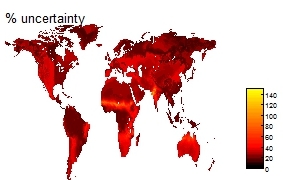
    The idea of modeling the Earth is an incredible challenge.
    The idea of modeling the Earth is an incredible challenge.

    Whether you agree with the science of climate change or not, the ability to work on a project like this one from Microsoft Research would be cool. The issue of carbon pollution and the potential impact on our world is huge. If we accept that global climate predictions of problems are true, we may severely impact world economies with the changes that some people have suggested. If we discount the problems and they turn out to be true, we may end up in an even worse position. It’s also entirely possible that climate changes are natural cycles of the planet and we have no need, or possibility, to alter the way the world is evolving.

    No matter what your position, it seems the Microsoft Research isn’t trying to make a stand for either position, but rather attempting to clear the technical hurdles that would allow other groups to compare and debate about their models with regards to any global issue. Their goal isn’t to push users in a direction, but give governments or other organizations tools they can use to either consider future actions, or react to new data or information that can be added to a model. There’s a short interview from CNN with one of the researchers.

    As I browse through the list of projects around the world at the various Microsoft Research facilities, it’s an interesting mix of somewhat practical ideas with pure research into areas that may never become projects. One thing is clear, and that’s much of this work involves large amount of data. Quite a few of the projects themselves deal with data issues, from searching to visualization to analytics. I have to think a few of them will influence or impact SQL Server over the next decade in some way.

    Steve Jones


    The Voice of the DBA Podcasts

    We publish three versions of the podcast each day for you to enjoy.