Tag: syndicated

  • Learn about Modern Microsoft Apps in San Diego

    I wrote about learning today for the editorial: I Can’t Make You Learn. I sure hope you want to learn. It’s been great for my career and it will help yours.

    Join me this September in San Diego (register). I used to live there (Carlsbad) and it’s a beautiful, wonderful part of California to visit. VS Live comes to San Diego, and I’m honored to be speaking this year.

    2026-07_0297

    Visual Studio Live! (VSLive!) San Diego 2026 is at the Bahia Resort Hotel, September 14–18, 2026 in San Diego, CA. It’s five days of immersive developer training right on Mission Bay.

    I think actually worked as a waiter for a wedding in this hotel. If not this one, then one of the others right there on Mission Bay. It’s a great place to stay and I’m looking forward to going back.

    Whether you’re building modern apps on the Microsoft stack (.NET, ASP.NET Core, C#, Blazor, .NET MAUI) or focused on cloud and AI (Azure, GitHub Copilot, AI-powered development, Kubernetes, modern data platforms), this is real-world instruction, hands-on labs, and direct access to expert speakers, Microsoft engineers, and MVPs. Learn more: vslive.com/sandiego

    I’ll be discussing local LLM models, which I think are important for the future. You might not want an LLM on your laptop (maybe a MLM or SLM), but your org might want local models in its data center. I’ll also be discussing the Data API builder, which is a great piece of tech that makes your development against a database much easier, whether you write the code or an AI agent helps.

    Save $500 off standard pricing with my exclusive code JONES. Be sure to register by July 17th.

    Register with my code here: https://na.eventscloud.com/ereg/newreg.php?eventid=865669&discountcode=JONES

  • A New Word: Attriage

    attriage – n. the state of having lost all control over how you feel about someone – not even trying to quench the flames anymore, but lighting other fires around your head just hoping to contain the damage.

    My first thought is that this is a crush-type of feeling, of young love and desire. However, I quickly think of my wife and while I am so in love with her, and there is still passion, I’ve definitely lost control of myself in other ways.

    I can’t imagine living without her. I don’t handle it well when we argue. She means so much to me, that there is attriage and I flow with it. Enjoying the struggle and appreciating I have someone like her in my life.

    Then I think about others.

    My wife lost a student and friend this weekend to cancer. I’ve lost friends, and I keep following Hugo’s blog, worried that I’ll never get the chance to hug him and speak in person. I sent a birthday message to Steve Hughes, who is amazing and inspiring, and makes me sad.

    I have attriage about those people, more from worry and loss and yet I have to continue to go on, understand this is part of life, and it sucks.

    Having amazing things in your life means you also have really bad things in your life. You care, and you can’t help but see the differences. If you’re luck, you get into attriage and go with the pain and excitement.

    From the Dictionary of Obscure Sorrows

  • Capturing My Own Metrics: #SQLNewBlogger

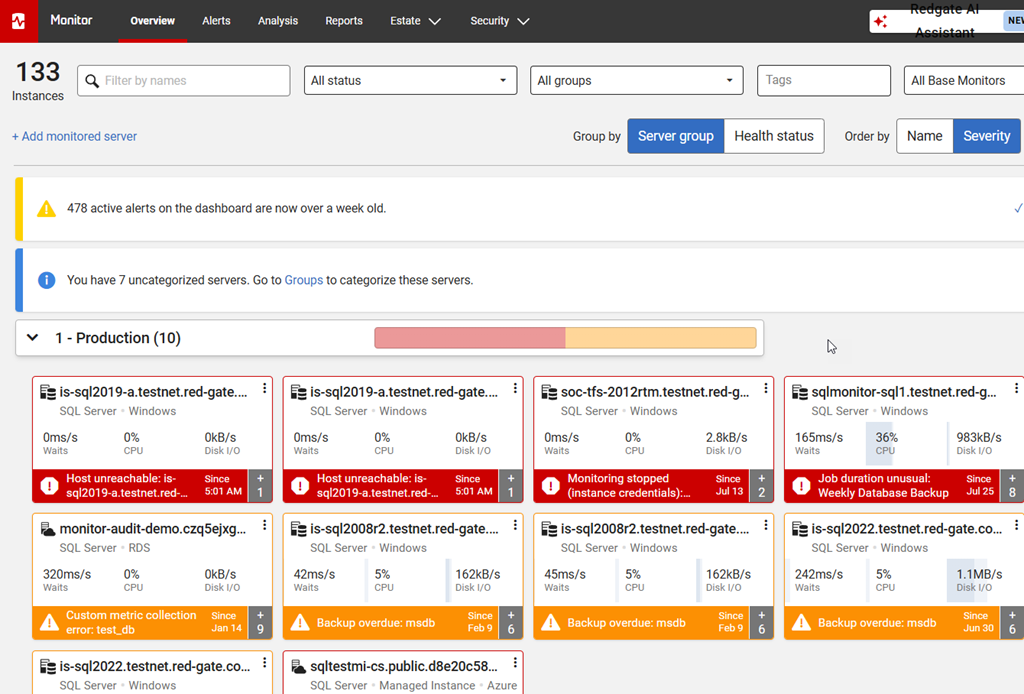
    A customer was trying to compare two tables and capture a state as a performance metric. In this case, they were wanting to use Redgate Monitor and custom metrics, but since the tables were in a Memory-Optimized table, they couldn’t as Redgate Monitor runs inside a transaction.

    Note, there are workarounds, but they’re clunky.

    Fortunately, I had a quick solution, which involved SQL Server User Settable Objects. This post looks at how this works.

    The Scenario

    Let’s take the transaction out of the equation by using my own metric. SQL Server includes a few procedures that fall into a pattern. They are named with numerics as shown:

    • sp_user_counter1
    • sp_user_counter2
    • sp_user_counter3
    • sp_user_counter10

    Each of these corresponds to a value that is captured in a perfmon counter. The counters are in the objects called “SQLServer:User Settable”. The counter name is “query” and the instance is “User Counter n” where n is the number corresponding to the stored procedure.

    By default, these are 0, and you can see them here:

    2026-06_0191

    You can also see them in Perfmon

    2026-06_0192

    I’ll stick with SQL Server.

    If I want to alter a value, I call the appropriate procedure. I can do something like call the proc for 5 and set a value. I’ll then query the counters from T-SQL. You can see this below as the value for counter 5 is set to 3.

    2026-06_0193

    This value remains set. I’ll set counters 2 and 8 to 2, and then query again. Note that 5 is still set.

    2026-06_0194

    If I want the value set to 0, I need to set it. I’ll do that for counter 8.

    2026-06_0195

    These are metrics, so I need to pick an integer. I can’t set a decimal (or other type) and have it work. If the implicit conversion works, it works, but the value is a decimal.

    2026-06_0196

    If I make this a string, it fails with an error as ‘2.5’ doesn’t convert to an int. Same for a date. Using an int, like ‘5’, works.

    Solving the Issue

    In this case, for the customer, we solved the issue with a proc that performed their query The result of this query (and int) is sent to a counter value like this:

    CREATE or alter proc My_Checker AS BEGIN declare @i int select @i = count(*) from dbo.Customer a INNER JOIN dbo.Candidates b on a.CustomerName = b.PersonName select @i = @i + 1 EXEC dbo.sp_user_counter1 @1; END

    This can run from an Agent job on their schedule, updating the counter as appropriate.

    For their alerting, they can query this metric and set the boundaries that matter to them. In this case, whenever this is greater than 0, they want an alert.

    The user settable values aren’t that useful, especially as there are 10, but I’ve used them in a few places when I wanted to get instrumentation for an application. This allows me to easily capture values and watch them from any monitoring system.

    Worth knowing about and using if you need random things captured.

    SQL New Blogger

    This post took me around 15 minutes to write, though I spent about 10 minutes mocking this for our customer based on their system and then stripping out a few items that are specific to them.

    This is a post that shows how I can use features of SQL Server to solve a problem, which is something every employer wants. An AI would make this code easier, but I have to know to guide an AI in this direction and evalaute if this works. I’d certainly need to check if other apps were using these counters, which isn’t something an AI might think to do, especially as there could be lots of repos to scan.

    You can write something like this, showing how you’re use this features. Bonus points if you use an AI to help you (and disclose how).

  • T-SQL Tuesday #200: When I Look at a Query …

    This month is a milestone for T-SQL Tuesday. It’s number 200, which doesn’t sound big, but this is a monthly party (started by Adam Machanic). We have 12 blog party events a year. 200 means this has been running for almost 17 years (16 years and 8 months).

    I don’t care who you are, that’s impressive. Think about where you were, what you were doing, and what was happening in 2009.

    I haven’t been running it that long, but I am glad I took it over from Adam and have kept it going. Thanks to everyone who writes and reads the posts and especially the hosts.

    I tried to get Adam to host, but he declined. Fortunately Brent Ozar stepped up with a great initiation. My response below.

    At First Glance

    There are two things that immediately stand out to me when I see a query and create concern.

    1. cross joins
    2. functions in the where/on clause

    While there are other things I might see, these two stand out and usually I can guess there will be issues.

    For cross joins, I don’t see this as much when people use SQL Prompt or some other helper because they tend to use inner/left outer/right outer explicitly, or cross join. If you explicitly use a cross join, I might ask why, but these clauses require an ON clause, which means you’re deciding to join tables.

    Where I see people using old style joins, like this:

    select *
    
    from a, b
    
    where a.id > 23 and b.saledate > current_date
    
    or (a.id is null and b.saledate is null)

    I get worried. This happens in Oracle, and PostgreSQ, and it’s easy to forget to join a and b, especially when there are multiple tables. Usually cross joins happen with legacy join conditions.

    The other area is using functions in the WHERE clause. A common example is

    select *
    
    from customer
    
    where upper(customername) = ‘Steve’

    This function in the WHERE clause ruins the ability to see the data. The index is something like (‘Adam’, ‘bill’, ‘Steve’, ‘WILLIAM’). This can’t be used when the UPPER is applied. This often results in more reads, more scans than a system might otherwise take.

    There are plenty of other issues that can indicate performance issues, but these two are the ones I’ve often run into and the ones that would have helped 2004 Steve write and review better code.