Author: way0utwest

  • Remove an Active Lease on a Blob in Azure

    I was creating and dropping VMs in Azure, and found myself charged money for disks that I thought I’d deleted. I found later that deleting a VM doesn’t necessarily remove the disk blob. Here was one way that I removed some of those blobs.

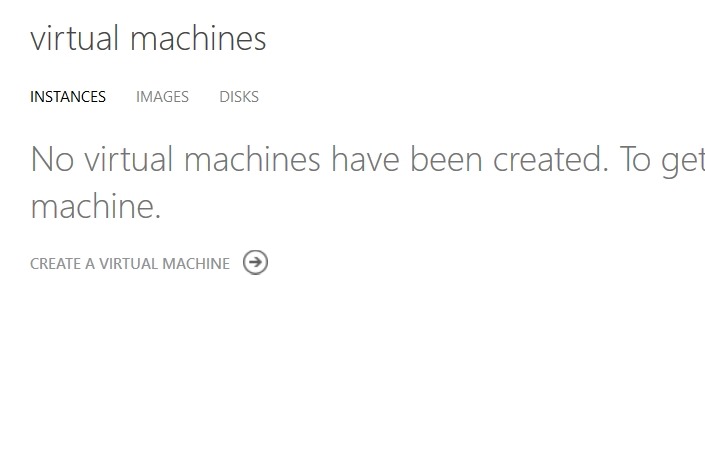
    First, go to the classic portal. For some reason, the new Portal doesn’t have the capability.

    2017-06-21 21_11_07-Virtual machines - Microsoft Azure

    Click Disks

    2017-06-21 21_11_19-Virtual machines - Microsoft Azure

    At the bottom, click Delete

    2017-06-21 21_11_31-

    That removed one lease, but not others. To get rid of those, I had to do more research and searching. That process is for another post.

  • The Randomness of Analog

    One of the joys for much of my early life was walking through a library, looking for a book to curl up in the corner with and read. As a young boy, I would walk to a local library and read at the wooden tables before I had my own library card to check out books. Later, I moved and had a newer library with large, comfortable chairs in which to sit and read a few pages. I’ve enjoyed the same thing as an adult in various bookstores.

    I didn’t often have a specific book I wanted to read, so I’d randomly walk around, looking at spines, covers, and choosing a book in a somewhat random fashion. My fellow founder at SQLServerCentral, Andy Warren, also appreciated the randomness of browsing in a library for bookstore, discovering some new author or story to enjoy. Across the years, we’ve discussed and debated whether or not there was a way to duplicate this experience with technology.

    These days I tend to buy or borrow all my books electronically. The convenience and unparalleled and time is valuable, and I certainly don’t miss the days of packing 4-5 large books for a week long conference trip. However, Amazon and my local library tend to use recommendation algorithms, or popular titles as the presentation method for their sites. I have lost quite a bit of the ability to enjoy the randomness that comes from wandering and happening upon new titles. Andy feels the same way, though none of our brainstorming has produced a way to duplicate the feeling of wandering through bookshelves in an electronic fashion.

    I’m not sure if there is or isn’t a way to deuplicate this electroncially, but certainly the feel isn’t the same on a screen. All too often our focus when working with data is narrowed to a limited set of choices. And often when we build applications and provide data to users, we are trying to be exacting and relevant, not random. So much of what we choose to do in software is to remove much of the randomness from our systems. Event the “browse” features are often scoped or focused in a particular topic, subject, or area.

    This filtering to a particular bubble of data is one of those areas where we have tremendous power in shaping the world. The code and queries we write, the organization of our data, this will have an impact on our users, and I’m not always sure this is for the best. Perhaps overall this is more helpful, but it also serves to prevent us from viewing the forest, only seeing the trees. If you doubt this, try browsing the internet in Private mode sometimes and run searches. You might be amazed how different the Internet can look.

    Steve Jones

    The Voice of the DBA Podcast

    Listen to the MP3 Audio ( 4.2MB) podcast or subscribe to the feed at iTunes and Libsyn.
  • Automate Migrations–T-SQL Tuesday #94

    tsqltuesdayIt’s T-SQL Tuesday time again, and I’m slightly pressed for time, which is sad. This is a great topic.

    Rob Sewell hosts this month with his question about what we are going to automate? He’s a PowerShell advocate, so I’m not surprised here. As much as I enjoy working in various languages, PoSh becomes more and more handy to me when I need to work outside of the SQL Server platform. I’ve been trying to play with it, and I enjoy it more and more.

    If you want to participate, check out the rules:

    1. Write a post on the topic below
    2. Schedule the post to go live on Tuesday, September 12th (between zero am and midnight, UTC)
    3. Include the TSQL Tuesday logo in the top of your post
    4. Link the post back to this one (it’s easier if you comment on this post and link it)
    5. Optional: Tweet a link to your post using the #tsql2sday hash tag on Twitter

    Automate Things Between Instances

    The first time I saw the dbatools project in action was at SQL Saturday Cambridge, where Chrissy Lemaire gave a session with Rob. I was surprised at the power and ease of the project. I was impressed, and decided to help learn more as well as promote the project. I’ve tried to blog regularly about their cmdlets as I get a chance to play with them and I’m pretty much always impressed.

    The next time you need to move some object, setting, job, etc. from one instance to another, you should try this:

    1. install the dbatools module
    2. look through the command index
    3. try migrating your object(s) with PoSh.

    That’s it.

    Maybe you need to copy a database or login. Maybe you want to copy jobs to a new server. The dbatools module makes all of these things easy.

    So give it a try. There are some great tools for migrations as well as wonderful items for common DBA tasks.

  • Final Thoughts

    I am a fan of Walt Mossberg. I have read his work and seen him interview many famous people in technology across the years. He has been quite an influential reviewer and commenter. If you haven’t ever read anything from him, I might recommend his view on Internet regulation or his thoughts on the Steve Jobs biopic , or even check out his gadget museum. You might even take a few minutes and read about The Taco Bell interview. It’s a pretty neat story.

    Mr. Mossberg recently wrote his last column. He’s retiring this year, and penned a look at some of the technology he’s experienced in his lifetime. Reading over the piece brought back some nostalgic moments for me as I think about how the world has changed. He also notes that early in his career he wrote this sentence: “Personal computers are just too hard to use, and it isn’t your fault “.  Now he says “Personal technology is usually pretty easy to use, and, if it’s not, it’s not your fault.”

    I agree with that, and one of the complaints I have with our industry. We haven’t done a great job of actually considering users and building software that’s not only intuitive and easy to use, but also gets easier over time. While I learned to appreciate the adaptation of some Office software that keeps the often used menu items displayed and remembers previous options I’ve used for features, I find this is the exception, not the rule. Our software is often in the face of the user, and I constantly bemoan the state of poorly written applications.

    As we’ve moved to larger displays, and smaller displays, using touch, speech, and other methods of interacting with computing devices, building newer devices that look nothing like the computer of the past or even the computers of recent years gone by, we haven’t necessarily made the computer fade into the background. The smartphone (and related car displays, tablets, etc.) have perhaps done one of the best jobs of integrating into our analog world, but the interfaces, displays, and certainly rendering of content overall has a long way to go. Plenty of that is our fault, we, the people who build applications.

    I wonder if we’ll reach Mr. Mossberg’s vision of having most of our computing infrastructure fading into the background. Certainly reducing the need for cords and remembering to charge things will help. I look forward to the day when I have multiple pads built into my desk, my kitchen, my car, and more to just charge my devices when I set them down, so I don’t need to think about power. I want connectivity to be just available, and I certainly want to be able to enlarge text easily, without zooming in and scrolling side to side as my eyes age.

    The world may get better applications and infrastructure, and hopefully much better security. I certainly think it’s possible, though not likely to be ubiquitous among all parts of the Internet. I doubt that for most of us choosing to work with technology as a career that we’ll see computing fade away. We’re too involved in the details, and hopefully excited by systems, to abstract ourselves too far away.

    Steve Jones

    The Voice of the DBA Podcast

    Listen to the MP3 Audio ( 4.6MB) podcast or subscribe to the feed at iTunes and Libsyn.