Author: way0utwest

  • Desktop Repairs – Power Supply Issues

    My desktop didn’t restart after vacation a few weeks ago. That wasn’t what I wanted to have happen with a lot of work to get done before some travel. Needless to say I wasn’t thrilled when it happened.

    Photo Jan 30, 8 35 47 AM

    I was worried that something major had died. However I’d replaced the main boot drive recently and I had the old one. If I could get power.

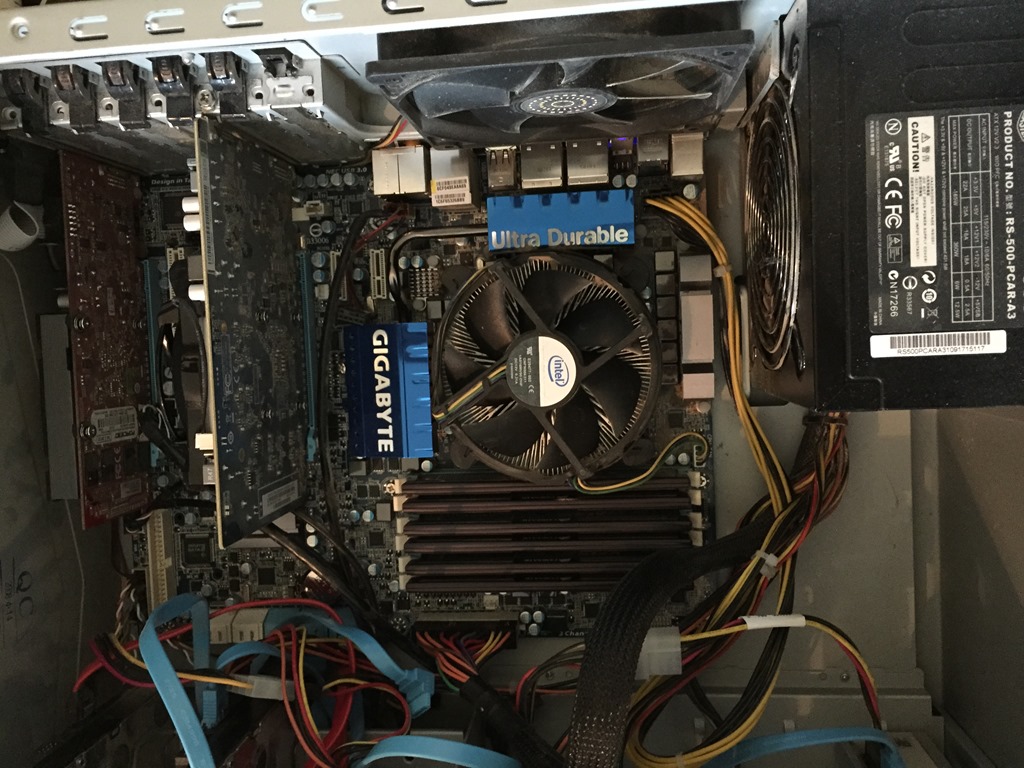
    I emailed Glenn Berry, who’s my go to hardware consultant. He suggested I check the power supply since I couldn’t get anything to happen. On his advice, I went to the local Microcenter and bought a new 650W power supply. Here’s the old one, with a stock CPU cooler. I bought a new one of those as well, since I find the heat alarm going off during some video editing.

    Photo Jan 30, 10 11 59 AM

    I didn’t remove the old power supply at first. I actually disconnected it and connected the new one to the motherboard from outside the case and powered things on. Sure enough, everything came on. Lights, drives, etc.

    I then powered things down again and set about replacing the power supply. It’s actually easy, and I’m surprised I’ve never had to do this before in my life. Probably because I’ve tended to replace machines so often.

    In any case, it was a matter of removing 4 or 5 screws from the back of the case, carefully slipping out the old PS and then putting the new one in there.

    The CPU cooler was trickier. The tabs push through the motherboard and hook, but they are somewhat fragile. I was worried, and sure enough, the first time they weren’t tight. The cooler needs to be held tight to the CPU to pull off heat. It was loose and I got heat alarms once I started using the machine.

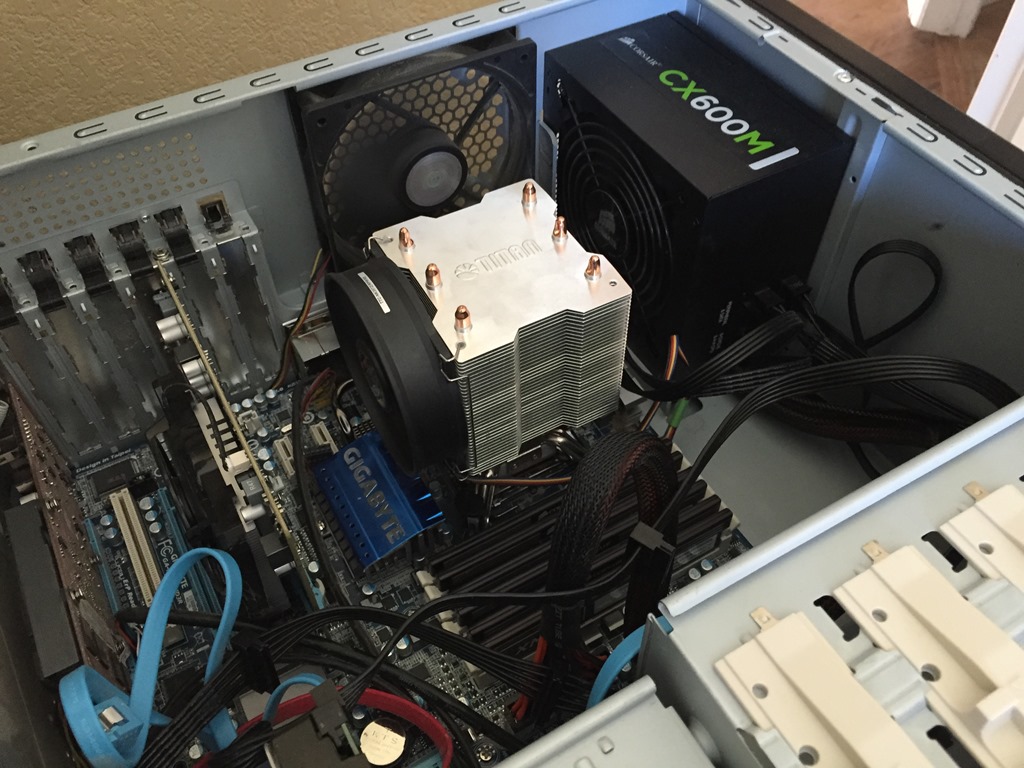
    However I kept messing with it, slowly trying to get the tabs in there and eventually they are holding fairly tight. I still get heat alarms during heavy duty video processing, so I think this cheap $25 cooler isn’t good enough. Or I don’t have enough thermal grease. Either way, I’ll probably replace this soon.

    Here’s everything together.

    Photo Feb 13, 10 50 03 AM

    And a happy Steve.

    Photo Feb 13, 10 50 45 AM

  • Closer to the Heart

    Most of us take whatever jobs we’re offered. We send out resumes, go through interviews, and often accept the first offer for employment. In fact, I bet most of us rarely have more than one employer to choose from at a time. Perhaps two if we’re looking for a job while still working, but I bet in many situations the current employer isn’t one we’re considering working for in the future.

    What’s more, it seems that many people working in technology can work in a variety of industries. A database that stores sales information for a retail company isn’t managed a lot differently from one that captures inventory information for a manufacturer. I know I’ve worked in the power generation, education, finance, software, and other fields. I’ve found that my job as a DBA or developer hasn’t really changed much. I could work in any of these industries.

    However, I’m sure that most of you have interests and attractions in areas. Perhaps some of you have really enjoyed working with certain data, or there are applications you think you’d enjoy. This week I wanted to ask what might be your ideal field.

    In what industry, or with what data, would you like to work if you had the choice?

    Or perhaps, where do you think you’d have a connection with the technology as well as the business. Imagine that you could choose what data you’d work with, and some employer in that field would offer you a job.

    For me, I think if I had the chance I’d like to work with a professional sports team in the US. In Denver, I’d really be interested if the Broncos, Rockies, or Nuggets needed some technical help. These organizations are starting to use more and more data to analyze their players in order to gain some competitive advantage. I find all the numbers published to be interesting and think it would be a fun job helping to find patterns and meaning in the data.

    Let us know this week where you might want to work.

    Steve Jones

    The Voice of the DBA Podcast

    Listen to the MP3 Audio ( 2.2MB) podcast or subscribe to the feed at iTunes and LibSyn.

  • tSQLt – SQLCop – Checking Naming Conventions

    I’ve been using tSQLt a bit to do some testing and one of the things I’ve tested is standards for code. I’ve been using a framework on top of tSQLt called SQLCop. These are a series of tests written to look for specific things. One of the items I do check is for sp_ named procedures. I’ve mostly gotten out of the habit of doing this, preferring spProcName, but at times I make a mistake in typing. This catches those simple errors.

    Using SQL Cop

    You can Download the SQLCop tests and install them in your database after you’ve setup tSQLt. If you are using SQL Test, then you also get the SQLCop tests installed when you add the framework to a database. For me, I see the tests in the SSMS plugin.

    tsqlt7

    There are a lot of tests, but in this piece, I’ll look at the Stored Procedures Named sp_ test.

    If I edit the test, I see it’s fairly simple code. I’ve included it here.

    USE [EncryptionPrimer]
    GO
    SET ANSI_NULLS ON
    GO
    SET QUOTED_IDENTIFIER ON
    GO
    ALTER PROCEDURE [SQLCop].[test Procedures Named SP_]
    AS
    BEGIN
    -- Written by George Mastros
    -- February 25, 2012
    -- http://sqlcop.lessthandot.com
    -- http://blogs.lessthandot.com/index.php/DataMgmt/DBProgramming/MSSQLServer/don-t-start-your-procedures-with-sp_

    SET NOCOUNT ON

    Declare @Output VarChar(max)
    Set @Output = ''

    SELECT @Output = @Output + SPECIFIC_SCHEMA + '.' + SPECIFIC_NAME + Char(13) + Char(10)
    From INFORMATION_SCHEMA.ROUTINES
    Where SPECIFIC_NAME COLLATE SQL_LATIN1_GENERAL_CP1_CI_AI LIKE 'sp[_]%'
    And SPECIFIC_NAME COLLATE SQL_LATIN1_GENERAL_CP1_CI_AI NOT LIKE '%diagram%'
    AND ROUTINE_SCHEMA <> 'tSQLt'
    Order By SPECIFIC_SCHEMA,SPECIFIC_NAME

    If @Output > ''
    Begin
    Set @Output = Char(13) + Char(10)
    + 'For more information: '
    + 'http://blogs.lessthandot.com/index.php/DataMgmt/DBProgramming/MSSQLServer/don-t-start-your-procedures-with-sp_'
    + Char(13) + Char(10)
    + Char(13) + Char(10)
    + @Output
    EXEC tSQLt.Fail @Output
    End
    END;

    This code looks at the meta data in the database for an routines, stored procedures, that start with sp_ as part of their name. If any results are returned from the query, the IF statement will be true and the @output will be returned as part of the tSQLt.Fail call.

    Using the Test

    Let’s write a stored procedure. If I do this:


    CREATE PROCEDURE spLetsTestThis
    AS
    BEGIN

    SELECT TOP 10
    e.EmployeeID
    , e.EmpTaxID
    , e.FirstName
    , e.lastname
    , e.lastfour
    , e.EmpIDSymKey
    , e.EmpIDASymKey
    , e.hashpartition
    FROM
    dbo.Employees AS e;

    RETURN 0;
    END;

    GO

    This is a simple procedure. I wrote it, execute it a few times and be sure it’s what I want. I’ve done basic testing, not let’s check it before I commit it to VCS.

    The easy way to execute all the SQLCop tests is to right click them in SQL Test and execute them. I can also use T-SQL to run tests. However since I just want to show this one, I’ll right click it and select "Run Test".

    tsqlt8

    This runs the test selected. I can also run an entire class, or all tests, but clicking in the right spot. In this case, the test passes and I see a green mark.

    tsqlt9

    Now let’s write a new procedure:

    CREATE PROCEDURE sp_GetArticles
    AS
    SELECT *
    FROM dbo.Articles

    GO

    This is a bad procedure for a variety of reasons, but let’s execute my test. I see it fail, and a red mark appears next to my test.

    tsqlt10

    In this case I also get a window from SQL Test popping up with more details. This contains the output from the test, which is also inserted into a table by the tSQLt framework.

    tsqlt11

    Note that there is a URL with more information on this particular test. That is a part of the SQL Cop test code above. I could easily replace this with something particular to my environment if I chose.

    At this point, I can rename the object, drop and recreate it, etc. to correct the issue. However running this test helps me to be sure I’ve gotten good code into the VCS. If I have this also run as a part of a CI process, it then prevents bad code from other developers appearing.

    Meeting Standards

    There are all sorts of SQLCop tests, and I’ll write about more, but this is an easy one to implement to prevent a bad practice in your coding by a team of developers. Allowing each developer to test themselves, as well as an overall check by some CI process means that our code quality improves.

    If I have other standards, I can even write my own tests to enforce them, which I’ll do in another piece.

    Downloads

  • Starting a New Job

    I’ve had practice here, and was reminded of this when I ran across this thread on starting a new job. In my career, I’ve had far too many employers. I’d like to think it’s not my fault, but after having double digit jobs, I have to take some of the blame. I’ve often been looking for positions that I expected to last for many years, but something always seems to crop up. Even the jobs I’ve loved have ended sooner than I would have liked.

    As a result, I’ve gotten used to starting new jobs, learning a new environment, and quickly getting familiar with people and processes. I thought of this when I ran across a thread that talked asked about the first few things you should do at a new job. There are some good answers, and it’s worth a read.

    For those of you that start new jobs regularly, or are consultants, do you have a routine? Do you have scripts you bring along? When I saw sp_Blitz presented a few years ago, it seemed like exactly the type of thing you would want to have with you and go through on each instance you encounter. Something that gives you a good overview of how things look. While each environment is different and the configuration and settings will vary, it helps to have a view of the situation you’re familiar with. Even if you don’t change anything, at least you understand how the systems are set up.

    There was a time when I had a complete evaluation routine similar to sp_Blitz and an install that would create jobs for backups and maintenance in a consistent way. I had more a few jobs switch to my way of managing things because it was very efficient. These days, I think I’d use tools that are tried and true, using sp_Blitz, Ola’s backup routine, and @SQLFool’s indexing routine. I wonder if the rest of you have similar preferences.

    Steve Jones

    The Voice of the DBA Podcast

    Listen to the MP3 Audio ( 2.4MB) podcast or subscribe to the feed at iTunes and LibSyn.