Author: way0utwest

  • The 2013 SQL in the City Tour

    sitc_e

    Once again, Red Gate is planning on a tour of the US for the SQL in the City events. Last year we had a large tour, hitting 6 cities in the US during October and November of 2012. It was great fun, and very well received by the attendees. I enjoyed it quite a bit, though it was a bit of a stressful time for me with all the travel.

    This year we’ve scaled back slightly, but we’re still moving around the US. We have three dates scheduled, all packed into a week: Pasadena, Atlanta, and Charlotte.

    sitc_b

    Our first stop will be in California, on Wednesday, Oct 9, 2013. Red Gate has a sales office in the Pasadena area, and we’ll have a large staff coming out to meet customers and the SQL community. This event will be at the Pasadena Convention Center, in the North East LA area. It’s close to Arcadia Wilderness Park, where I’m hoping to get in a #sqlrun Winking smile

    Register today and join us if you are in the area.


    sitc_c

    Atlanta has a great SQL Server community. They consistently have the largest SQL Saturday events every year and there is a lot of excitement about the platform in this area. It would be a great place for a future Summit (hint, send your feedback to PASS).

    We’ll be in Atlanta on Friday, October 11, 2013 at the Blackburn Conference Center. This is at the John Marshall Law School in the heart of the city. I’m expecting this event to sell out soon, so register today.


    sitc_d

    The PASS Summit is in Charlotte this year, and once again we’ll open the week with a SQL in the City event in Charlotte on Monday, October 14, 2013. If you’re in town early, or live there, register and come spend a fun day on Monday with us, talking about lots of development and DBA SQL Server topics

    You can register now to join us at the Ritz-Carlton in downtown Charlotte.


    That’s our 2013 tour (along with sold out London), and I’m looking forward to seeing many of you and meeting even more this fall.

  • Provisioning

    azurecreate

    At a talk recently, the presenter talked about the time lag for an on-premises server to be installed and configured to be on the order of months. Not that many, but it could easily be six months.

    That seems crazy, but in many companies I’ve worked in, that wasn’t an unusual time frame. From the time someone decided that a purchase was allowed, it could be days for the accounting department to approve the funds. A day or two to place an order, assuming that IT had already provided the specifications. Vendors respond quickly, but it could still take a week or two, possibly even more, for a server to arrive at our company.

    One of the advantages of cloud computing services is that new virtual machines can be bought and enabled in minutes. That might be true, but I wanted to ask many of you if you know how longs it actually takes for you to begin working on a new SQL Server.

    How long does it take to provision a new server?

    Imagine that you were to ask for a database server today, and you management agreed to grant the approval, think about how long would it be before you could sign into a SQL Server. I’m sure some of you have virtual infrastructures available, and that should reduce the time it takes, but let us know if that’s your setup and how long it takes.

    The ultimate service would be a cloud like application inside your organization that allowed you to select a SQL Server template, and send you a server name and login with minutes after an automated build took place. I don’t know many companies that have that yet, but I think many of us would appreciate that capability. Especially if we could choose the hardware we required.

    Steve Jones


    The Voice of the DBA Podcasts

    We publish three versions of the podcast each day for you to enjoy.

  • When will we look back at this?

    It’s amazing how software has advanced. I look at the software I use, and I’m amazed. I still remember texting to 40404 for basic twitter usage on my Windows 6.5 Mobile. That seems miles away from the apps I know use on my current iPhone 4S. I almost can’t comprehend what my life would be like if I didn’t have a smartphone now.

    I saw this video of a HoloDesk from Microsoft Research. It’s neat, and I can imagine the possibilities of what might come, but for not it’s very basic.

    It makes me wonder when we’ll have something more like this interface:

  • Trusting Systems

    What's the cost of this?
    What’s the cost of this?

    Computer technology has become more and more integrated into all sorts of businesses. These days when I look at the ways in which automation and technology is embedded in business, I’m amazed to think that I worked in businesses that didn’t have any personal computer systems early in my life. Unfortunately this integration comes at the a price: dependence. We depend more and more on our systems working as expected for businesses to continue to operate.

    Most businesses can tolerate some issues and failures in their systems for a short period of time. As much as I want to maintain 5 9s of uptime, I’ve never been in a business that really required that level of stability. I’ve had systems go down that management claimed were critical. They’ve been down for a couple days, and the companies didn’t go out of business. We have a lot more tolerance than management would like to admit. If you work with a 24×7 environment like Amazon’s online store or a banking application that is generating revenue every second, that might not be true, but for most of us, in most organizations, for most systems, we can tolerate some downtime.

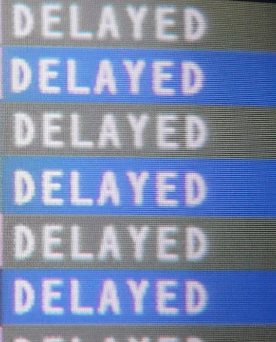
    However the effects of some failures can’t easily be measured. American Airlines had computer issues recently and had to delay or cancel 400 flights. I’m sure there were some costs in compensating customers that took other airlines, or received vouchers for services. However, most of the flights were moved to later in the day, and I doubt there were many refunds. The short term costs of this computer issue were probably relatively small. Given the fact that some customers might have skipped or moved flights, with a change fee, there might not have been any absolute short term loss.

    However it’s impossible to know how many other businesses were affected. Sales calls that were missed and not rescheduled, people that missed events that were important to them and they’ll never be able to attend, or even penalties paid on contracts for the failure to deliver something in person. What’s also impossible to know is how many people will reconsider booking flights with American in the future because they lost their trust in that company.

    That’s really the bottom line for most of our management and our businesses. If we can’t provide reliable computer systems, management won’t trust us, and their customers won’t trust them. If that happens too often, we won’t be employed, and at some point in the future, we might find ourselves unemployable if our reputation is such that we can’t keep systems running.

    Steve Jones


    The Voice of the DBA Podcasts

    We publish three versions of the podcast each day for you to enjoy.