Author: way0utwest

  • The SQL Server 2016 Plan

    SQL Server 2016 went out of support this week, on Jul 14, 2026. This is the end of the Extended support, according to the Support Lifecycle page. Microsoft posted an article on next steps for SQL Server 2016, which looks like the AI read of an article at the top. There’s a lot of header info, so scroll down. I’m sure none of you want to listen to 10 minutes of an AI voice reading an article.

    I know some of you still run SQL Server 2016. In fact, I still run into some companies on older versions, and the last (ever) update from Brent also showed 6% on 2014 and older. There are probably still plenty, albeit a minority, of systems on older versions. I know when I worked in a non-regulated industry, we weren’t in a hurry to upgrade as many of our applications ran fine on older versions. Especially with VMs these days, I could see people sticking with 2016 for a while if it’s running well. Just be sure your server is well protected by firewalls.

    The blog gives 3 upgrade paths: Azure (IaaS or PaaS), SQL Server 2025, or Extended Security Updates. That latter one goes until 2029 if you want to pay for it. This is certainly a marketing post more than a technical one. Moving to Azure PaaS isn’t necessarily easy or quick. IaaS doesn’t help you here, so I’m sure whoever wrote this post (or whatever AI) isn’t thinking this through. An Azure VM isn’t going to get me any support.

    SQL Server 2025 is likely the easiest if you want to upgrade, as you could continue to use an older compatibility level in your database on SQL Server 2025. It will cost something, but it does give you 9-ish years of support and updates. I’d certainly prefer this over paying for ESU. It might not be a seamless upgrade, but I’d give it a quick go and see if my application worked on a restored 2016-on-2025 database. That’s an easy test and helps me make a decision.

    I suspect some in regulated industries need support for their compliance goals, and they might pay for ESU if their staff is busy and they need to mitigate an audit finding. I think this option is there, and it’s expensive, as a carrot/stick combo for organizations to upgrade. I can’t be upset about this, as I think there should be a plan in organizations to keep their software up to date. Either deliberately plan to remain on an older version and accept the risk, or ensure you have plans (and time) in place to regularly upgrade systems.

    If you’re on SQL Server 2016, what are your plans? Upgrading soon? Sticking with the platform? And if you’re on 2017 or 2019, you ought to be thinking forward and be ready to handle the end of support for those versions.

    Steve Jones

  • The Mythical Bus Accident

    What if I got hit by a bus?

    I’m sure many of you have heard some variation of this, or used it, or maybe your boss told you to be ready in case you (or someone more important) gets hit by that vehicle. This is the “bus factor,” and it’s often used in reference to preparation for unforeseen events. Not literally someone getting hit by a bus, but perhaps a sudden accident that takes someone away from work (hopefully not fatal). Perhaps it’s someone leaving for a new job. Maybe it’s retirement, which is something my boss and I at Redgate chat about periodically.

    Don’t worry, I’m not planning on retiring anytime soon. I expect to work until at least 2033 and possibly longer. Likely longer, I’m a weird work-a-holic in some ways, and I love my job.

    Recently, Rob Sewell wrote about a DR plan for his life, and specifically about his setup in case his wife needs to understand what’s running. I certainly don’t have the automation or complex computer setup he does. In fact, none of my computers really need to be running for anything on the ranch to function.

    However, there is a lot of important data.

    If you think about how embedded your life is with digital assets, you’ll realize quickly that if you were to get hit by the mythical bus, a lot of stuff might disappear. Most won’t matter, but your partner/spouse/children/parents might care about some. They might really care about a few items.

    There will be passwords to banks, the locations of photos, videos, and other memories. There will be documents you’ve kept on maintenance, or manuals on how something works, or maybe it’s just the various email (and social) accounts you have. You might not care, but the person behind you might feel the need, and want to, notify your friends and coworkers that you’re gone. Maybe your family wants to know how to keep your site alive (I still miss Tom and re-read his work occasionally).

    This isn’t to be morbid or worry you, but the planning you might undertake for your life is a lot like the planning that you should be doing at work for your job. Others should be able to take over for you (especially on vacations), and a guide to how you’ve solved problems, patched over issues, and built scripts that run rarely but reliably for some forgotten reason. Those items should be available to others. Certainly, your IT staff can give someone else access, but will those others know what to do with that access?

    I’ve documented a bunch of processes for SQL Server Central. Mostly so I can go on sabbatical and not worry, but also so that others can share the load. I’ve given away some of my work to others, I’ve been lucky to have others volunteer (volun-told) to help, and I realize as I write this, I likely need to update some docs. Not a fun task, but my buddy Claude can likely help me. And he will.

    Planning for the future is prudent, it’s respectful to others, and it’s a common courtesy. I used to think the future was a long way off, but as I age, I realize it’s closer than I think. Planning for the future is a good idea, and it’s something I need to ensure I update every so often, to help the others in my life.

    Steve Jones

    Listen to the podcast at Libsyn, Spotify, or iTunes.

    Note, podcasts are only available for a limited time online.

  • Moving on from Tesla

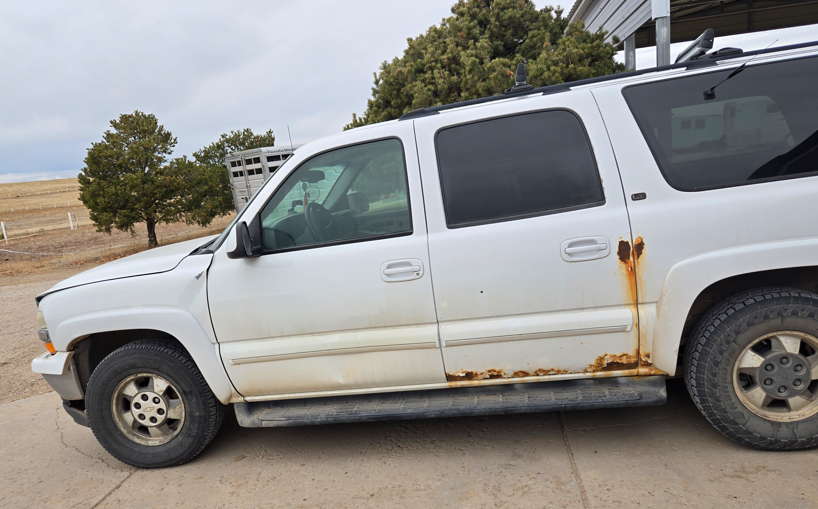
    We decided to sell our Tesla Model Y. It’s been almost 5 years, and it’s (still) an amazing car. My wife, however, wants something more luxurious. As cool of a car as it is, and how well it performs, it’s not luxurious inside. The ride can be stiff, the seats are good, not great, and we’re ready for something else.

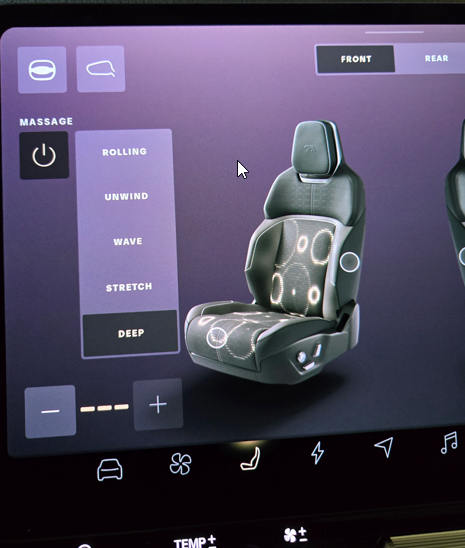
    We’ve been testing a few different SUVs, as we don’t want anything smaller than the Model Y. We ended up choosing a Lucid Gravity, which feels like an advanced version of a Tesla in many ways. It doesn’t self-drive, but it’s a very, very nice car inside and drives like a computer.

    A luxury computer that is very comfortable.

    What’s amazing is I listed the Tesla and had 6 people ping me that day for the car. I showed it to one and he liked it, so we’re in the process of getting paperwork done. I haven’t sold a car in a long time that had a loan, and I’m surprised at the weird challenges that this entails.

    It’s been 4.8 years with the Model Y and it’s still an amazing car. No real problems with it, it’s performed well, and the battery health is still at 88%. What’s even more amazing is that moving to 18” wheels netted me better performance than I ever had, with my last, around town 200 miles showing 205Wh/mi. Kind of amazing.

    2026-07_0364

  • The Book of Redgate: Products

    We are product focused at Redgate Software. Here is another of our values that focused on this:

    2026-04_0231

    The text on the next page is:

    Shipping something amazing is better than creating something average and to budget and on time. We cannot market, sell, manage or account our way to success.

    We have tried to do that. I’ve used many of our products before coming to work for Redgate. My former partners at SQL Server Central used them extensively as well. Since I have been an employee, I’ve worked with a lot of customers who constantly find value in our products.

    I think we’ve succeeded, and I think that us trying to build useful software is what has helped. My fellow advocates and I constantly try to bring the voice of the customer to Redgate so that our engineers better understand your challenges. This helps them build things that are useful.

    I have a copy of the Book of Redgate from 2010. This was a book we produced internally about the company after 10 years in existence. At that time, I’d been there for about 3 years, and it was interesting to learn a some things about the company. This series of posts looks back at the Book of Redgate 15 years later.