Author: way0utwest

  • Google Research

    Interesting to see someone talking about all the research Google is spending money on, which aren’t directly related to their core business. The piece is a bit of a complaint, and it’s a valid one for shareholders.

    Personally I like what Google is doing. They’re experimenting, they’re trying to see if there are things that might work. Things that might impact their business. Or perhaps, give them a new business to get into.

    I hate that Google is getting so concerned about money in many ways. To me, that’s a sign they are losing their way a bit, focusing more on the money of their business, than the money. I like seeing them doing things other than just making money. To me, once a company gets too caught up in their stock price, and what it is doing, they start to go downhill.

    However they can go too far, and waste too much money. It’s good that people are keeping an eye on them. Reign in things that are wasting too much money, or going on without producing anything, but let them do some research.

  • The Maintenance Poll

    What’s your maintenance window like when you repair your systems?

    Part of working in Information Technology is working during off hours. In one company we had a standing maintenance window every Friday night. It was annoying for the family, but it did build a nice bond among the production staff during our many Friday night dinners together. Another company allowed maintenance only from midnight Saturday to 6am Sunday, once a quarter. Those restrictions, while annoying, certainly taught us to prepare and test everything in advance.

    The systems we build and support are often in use during the business day by our companies and clients. That usually means that patches or changes to the applications take place in off hours, and that means the IT staff is used to working at night and on weekends to make changes. This Friday I’m wondering what that means for the SQL Server community.

    What type of maintenance windows do you typically operate under?

    Do you have regular maintenance scheduled? When you patch systems or make changes, how does that impact your schedule during the week? Do you get any comp time or flexible scheduling to accommodate patches?

    It’s interesting right now with SQLServeCentral. Since most of the staff at Red Gate operates on GMT and most of the audience is in one of the US timezones, it’s preferable for changes to the systems to be made early in the morning in Cambridge. An 9-10am change window occurs at 4am EST/1am PST, and a relatively small amount of our audience is affected. These changes also mean that there are plenty of people in the office to respond if there are issues.

    In most companies I’ve worked in, we had limited change windows, and restrictions at different times of the year, but overall we had regular maintenance scheduled and available to allow us to maintain our systems and allow staff to plan for work during off-hours, with some type of flexible time for employees stuck working after hours. Let us know today if that’s the case at your job.

    Steve Jones


    The Voice of the DBA Podcasts

    We publish three versions of the podcast each day for you to enjoy.

  • Change your Windows path

    When you run something from the start menu or in a Windows command prompt, you type the program name to run the executable file. There are three ways in which you can execute something:

    1. the executable is in your current directory/folder
    2. you type the entire path to the executable.
    3. the PATH environment variable contains a value that points to the folder containing the executable.

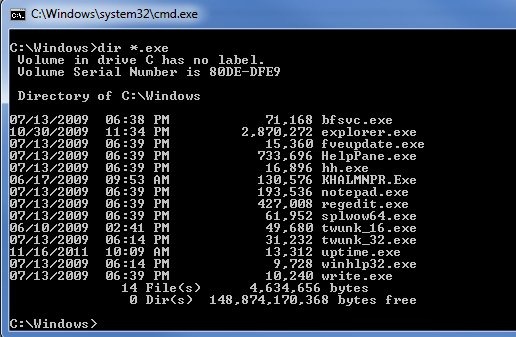
    The first and second items are fairly self explanatory. In a command prompt, if I change to the \Windows folder in Windows 7, I see these executables:
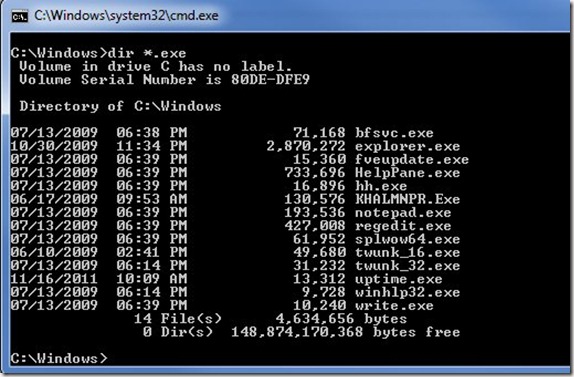
    path1

    If I type notepad (the .exe isn’t required), Windows searches the folder, finds notepad.exe, and runs it.

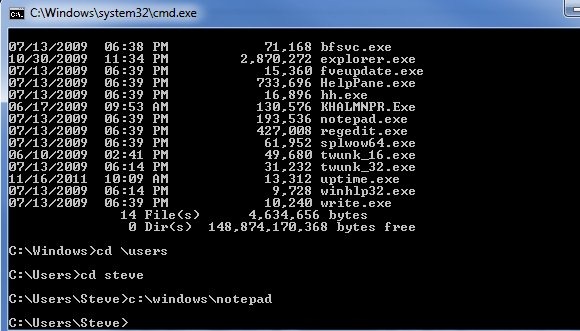
    If I am in c:\Users\Steve, however, I can run notepad in one of two ways. I can do this:
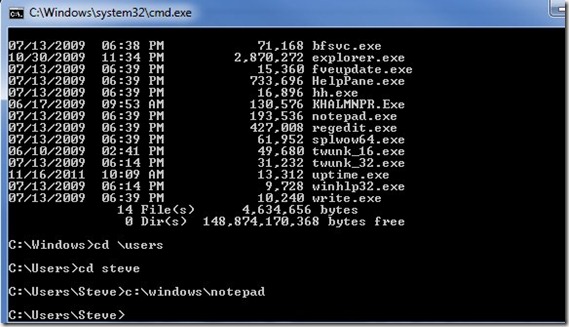
    path2

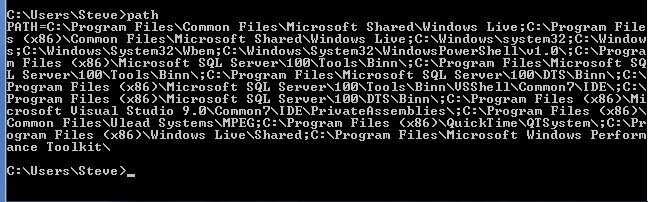
    The other way is that I just type notepad, and it runs. How does this happen? It’s a holdover from DOS (and Unix) for an environment variable called PATH. My current path is returned by typing PATH in a command prompt.
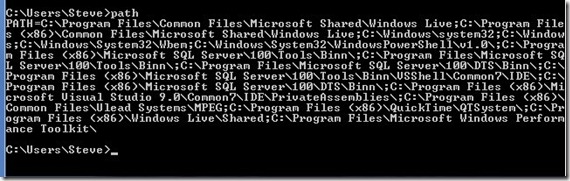
    path3


    There are a lot of folders listed here, all separated by a semi colon.  Most of these are for various programs, and lots of installers alter the path to add their own folder. For example, the Live suite of products added this path

    C:\Program Files (x86)\Windows Live\Shared

    I would have thought most technical people knew how to change the path, but I found a developer recently that did not. I suspect most people don’t need to deal with this in most cases, so they aren’t aware.

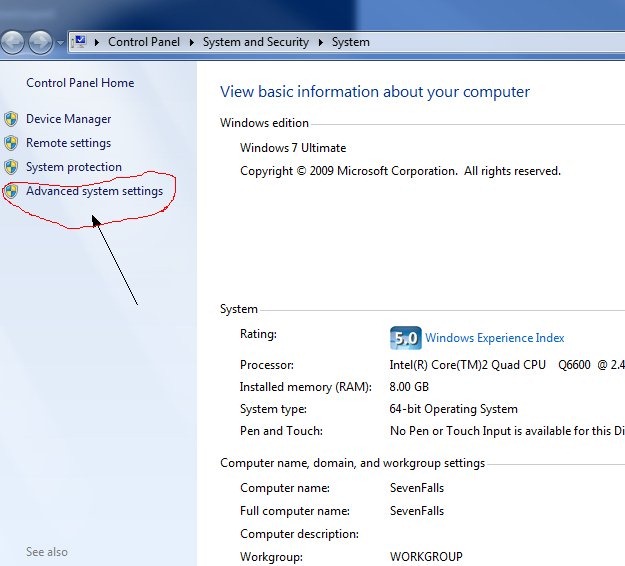
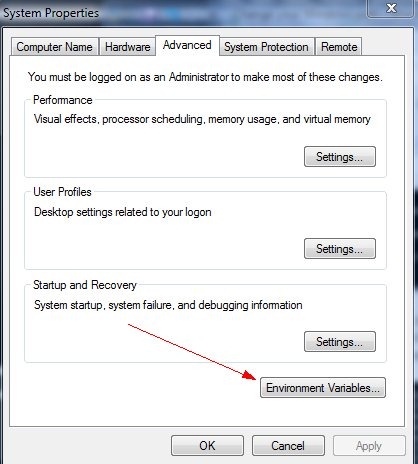
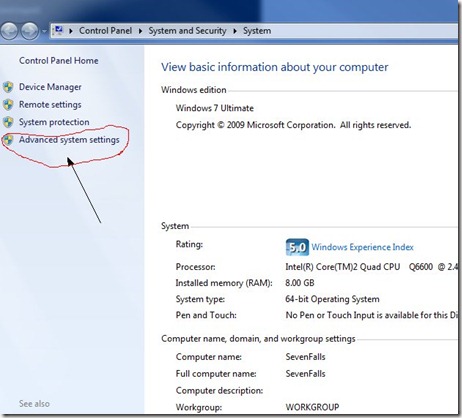
    The way you should change this manually in Windows is this. Go to the properties of your system by right clicking the “Computer” item in the Start Menu and select Properties. You’ll get this screen (in Windows 7)
    path4 

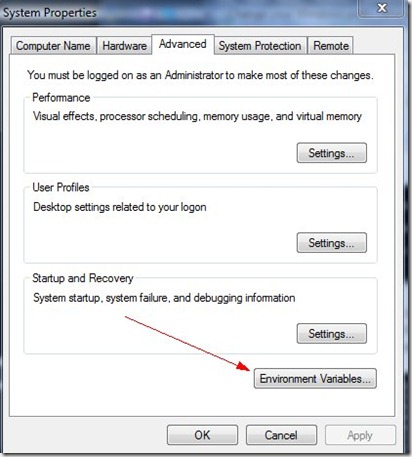
    Select the “Advanced System Settings” in the left side. This is an admin function, so you need the UAC permission. This will open a new dialog
    path5

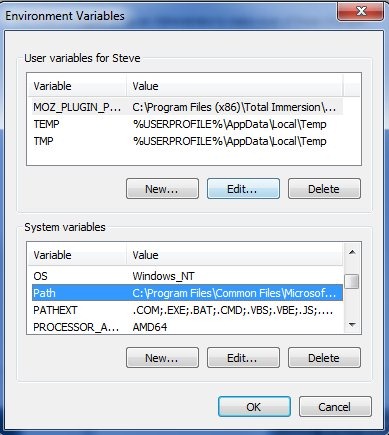
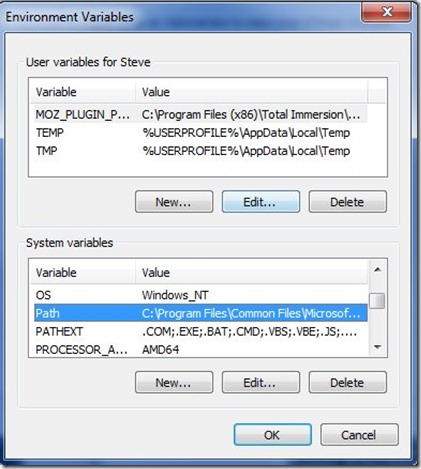
    The Environment variables are accessed through a button on the Advanced tab. Once you press that, it will give you the variables dialog.
    path6

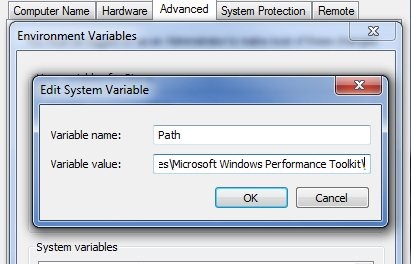
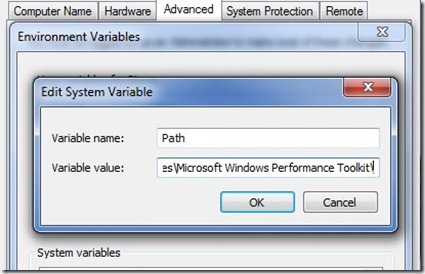
    If you scroll down in the System Variables, you’ll see PATH as an item. Select “Edit” and you can change the path.
    path7

    The path is selected when this opens.

    DO NOT START TYPING.

    Instead hit the right arrow to de-select all the txt and move to the end (as shown in the image above). Add a semi-colon and your path, and OK back out of all dialogs. You’ll have a new path that you can use in your system.

  • Data Growth

    Data Growth
    Data is growing at many organizations at an unbelievable pace.

    I attended the Special Ops Tour for SQL Server 2012 in Denver recently. It was an event that was showcasing some of the changes in SQL Server, with presentations and networking for the local SQL Server pros. It was fun to get out for a half day and see some friends from the area and extra exciting as the RTM was announced the day before our event.

    During the opening talk, there was a slide with a very interesting statistic. It talks about the last few years had seen 40% data growth for many organizations, but IT budgets had only grown by about 5%. Those two numbers don’t really relate well to each other since the cost of IT operations can dwarf the cost of storage, but for how long? At some point 40% growth will catch up and become a significant cost in your organization.

    The 40% growth does show that data professionals become increasingly important to companies. As “Big Data” becomes something that more companies need to deal with, the skills that we have as data professionals will become more valuable. We have to learn to separating out the information from the noise, enforce data quality, and learn to manipulate large volumes of data more efficiently. SQL Server is growing to help us with enhancements to SSIS, DQS tools, and even Hadoop processing capabilities, but we need to learn how to better use these tools. Storage is also an issue, and so many products and tools are available to help here. We have lots of compression tools, some de-duplication tools for backups, and more, but we need to learn how these tools fit in our environments, and what the ROI is for our organization.

    Budgets are not going to keep pace with the requirements we face. We need to learn to work smarter, more efficiently, and more effectively to get the most out of the limited funds available.

    Steve Jones


    The Voice of the DBA Podcasts

    We publish three versions of the podcast each day for you to enjoy.