Author: way0utwest

  • Webinar – Navigating the database landscape in 2024: Shifting skills to match constant demands

    Next week on Jan 23, I’m part of a webinar titled “Navigating the database landscape in 2024: Shifting skills to match constant demands”. You can register today and join me live or see the recording.

    Redgate has run various surveys in the past, often with a professional survey company that reaches a wide audience. At the end of 2023, we surveyed lots of people about the state of the database landscape, with a emphasis on how the world of the database professional is changing.

    Ryan Booz, Beca Parker, and I will be discussing what we think of the results, as technical professionals. This is more of an informal chat, a discussion about some of the data that came back from over 3,000 professionals.

    Join us Tuesday the 23rd for a discussion and feel free to ask your own questions of us.

  • Portable Data Storage

    I saw a review on a rugged SSD, and it got me thinking about local storage. Over the holidays I needed to scan something from a device at the ranch, but to get the image to my computer, I needed a flash drive. It took me 10 minutes of searching around to find one because I rarely use them anymore. In fact, I couldn’t remember the last time I’d used one for a transfer between computers. I just send stuff through OneDrive/DropBox/GDrive or some other mechanism.

    Today I’m wondering if the rest of you have abandoned using portable storage or if is it something you find useful. How often do you use portable storage in your life? Apart from laptops or mobile phones, I’m wondering about portable disk drives or any device where you transfer data using a wire rather than wirelessly. Note, I’m not talking about going from one computer to another on a wired network. I mean moving the storage from one place to another with your hands.

    The only place I know I’m regularly using a portable drive is in the Tesla. There I have a rugged portable SSD that captures the dashcam and security footage. I had to transfer it from the drive to my computer last year when I saw an accident. I think that might have been the last time that I actually used portable storage (before the scan).

    I have lots of old portable drives, and even old CD/DVDs I’ve recorded that have SQL Server ISO, pictures, backups of databases, and more. However, I don’t use them anymore. I don’t know how many of those devices still work, and I ought to check them, load the backups into cloud storage, and then recycle (after erasing) the devices. Or trashing them. I’m guessing many of them are just old tech at this point no one wants.

    I think the era of using portable storage most of the time is likely gone. Even my friends who like to keep their own backups locally tend to use a NAS of some sort and wireless transfers, as opposed to plugging in. However, maybe I’m wrong. Are some of you still Luddites with storage technology, if that word can even apply to digital storage technology?

    Steve Jones

    Listen to the podcast at Libsyn, Spotify, or iTunes.

  • Updating Teslamate to the Latest Version

    I noticed Teslamate wasn’t updated. In fact, I hadn’t had any data captured in nearly a month and I’ve been too busy to notice. I was concerned something had happened, but I wasn’t sure what.

    This is part of a series that covers my experience with a Tesla Model Y.

    Troubleshooting

    I saw a few notes online that said to restart things, which I did. When I went to the home page of my installation, everything looked fine, but not data for the last 20 something days. On the settings page, I saw a message that I needed to include an encryption key as an environment variable, nothing else.

    One post said that I should delete the entry in the tokens table in the database to force a new login. So, I did that. I connected to the container with:

    docker compose exec database psql teslamate teslamate

    Then I ran a delete statement.

    2023-12-19 15_39_30-cmd

    When I went back to the home page, I did see a login page. Fortunately, I had the Tesla Tokens app on my phone and it generated new API keys for me. If you don’t have this, you need it.

    I still had the encryption key message and I didn’t have any data, so I decided to upgrade.

    Adding an Encryption Key

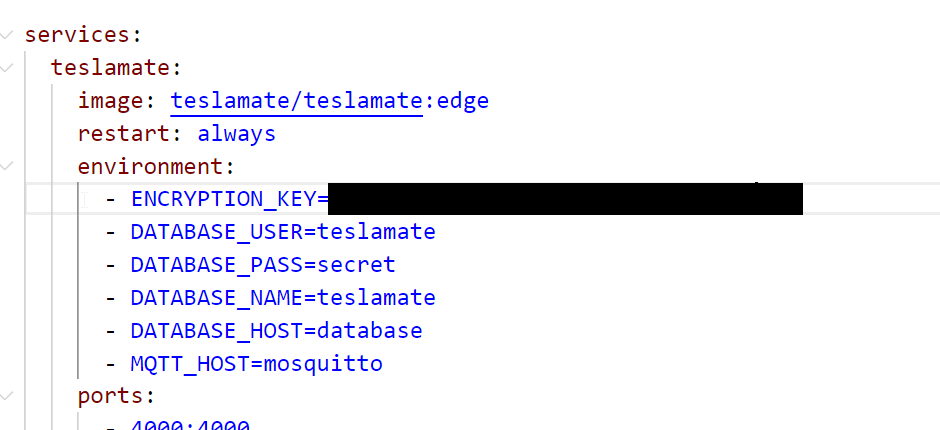
    In my Docker Compose file, I decided to add the encryption key. In the old file, I didn’t have the encryption key, so I copied the environment variable from the docs and added this in my file.

    ENCRYPTION_KEY=somekeyvalueImadeup

    No, that isn’t my password, but you can see the file below.

    2023-12-19 15_41_44-docker-compose.yml - PublicDocuments - Visual Studio Code

    Once this was done, I checked the update page and it said to be sure you were on docker compose v2. I wasn’t sure where I was, but I know I hadn’t updated Docker Desktop in awhile, so I went to that app, downloaded the update and applied it.

    Now I was ready.

    Upgrading Teslamate

    This is really easy. This is on the docs page. First, stop your containers with this:

    docker-compose down

    Next, run this

    docker compose pull

    As you can see, it started the update and had to pull down new images.

    2023-12-19 15_45_41-cmd

    Once this was done, I ran docker compose up and things were running. I got to the teslamate page, where it wanted me to log in again. Fortunately, I’d saved my API tokens. I entered them and I was in:

    2023-12-19 15_46_43-Overview - TeslaMate - Dashboards - Grafana — Mozilla Firefox

    Before this, the “Tina” in the upper left dropdown was nul and none of the temp values were populated.

    Hopefully I’ll have this working for some time, but I’ll set a reminder to upgrade things a couple times a year.

  • Friday Flyway Tips–The Version Control Blade

    The Flyway Desktop Version Control tab is gone and a new blade has appeared in its place. This post looks at the changes and what that means for a developer.

    I’ve been working with Flyway Desktop for work more and more as we transition from older SSMS plugins to the standalone tool. This series looks at some tips I’ve gotten along the way.

    The Version Control Tab

    It’s gone. Here’s an old screenshot of what this looked like. It was one of four tabs across the top of a project. Note that this just had the title, with no information.
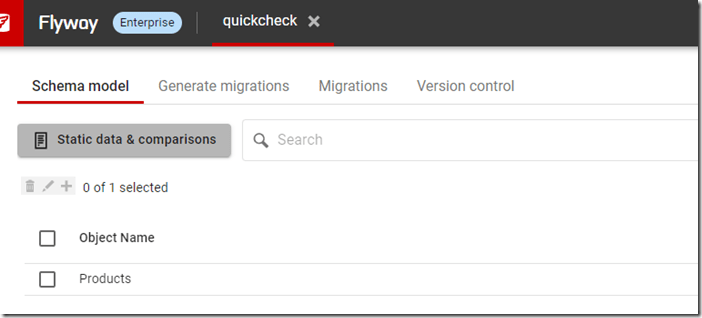
    2023-12-13 18_01_48-Flyway Desktop

    That’s unlike most other tools that provide VCS features, in that there usually is some status. On the tab, you can see the files to be committed, and push/pull/etc., but you have to select the tab.
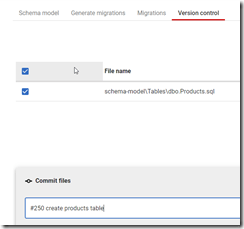
    2023-12-13 18_02_45-Flyway Desktop

    We wanted to do better.

    A Version Control Blade and Status Bar

    We realized that version control isn’t really part of the workflow of Flyway Desktop; it’s a separate function. We also had lots of requests to help developers know there are changes in the repo to commit, push, etc.

    We’ve been testing this for some time as a feature flag, which was annoying because I’d see the tab and the blade, but it released recently. I’m not sure which version got this, but it is in 7.0.3.

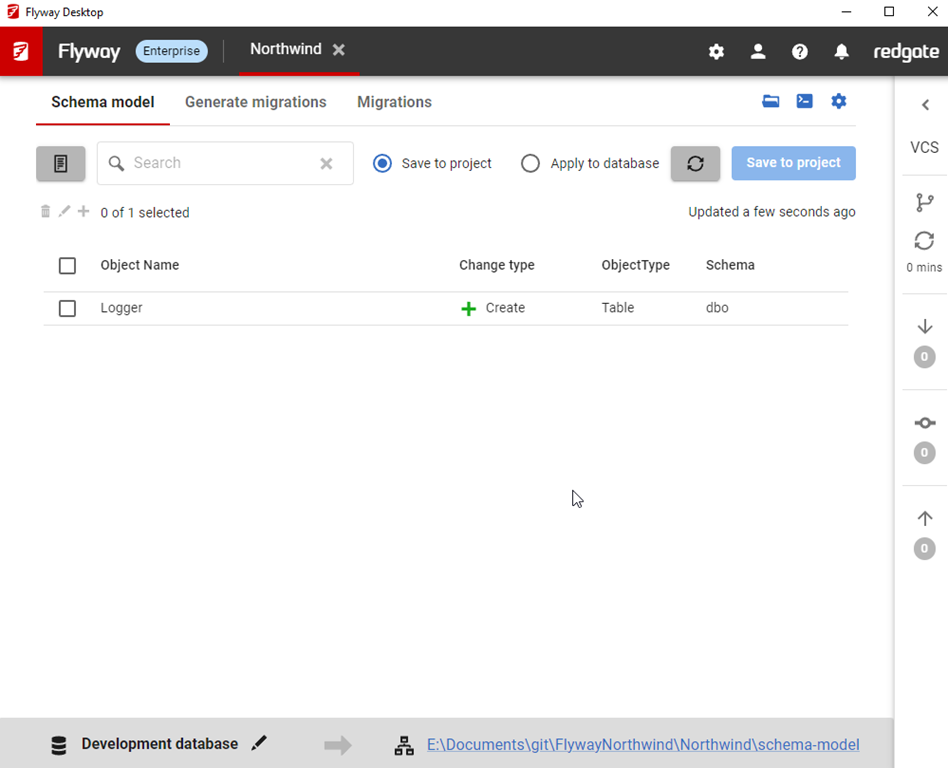
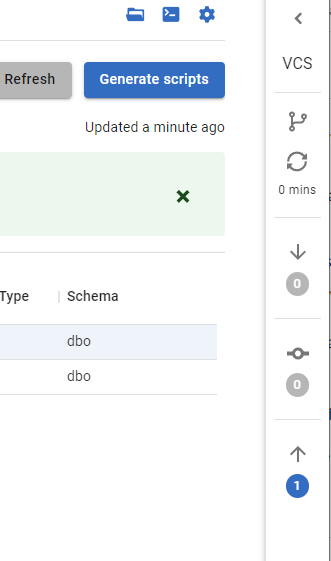
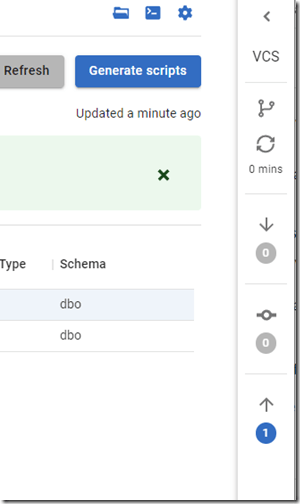
    You can see it below, on the right side. Note that we have an arrow at the top to expand this. We also have a branch icon, a refresh, which tells you the last time something push/pull/fetch’d, and then there are down arrow (remote commits not pulled), a circle with a line (uncommitted changes), and an up arrow (commits to push).
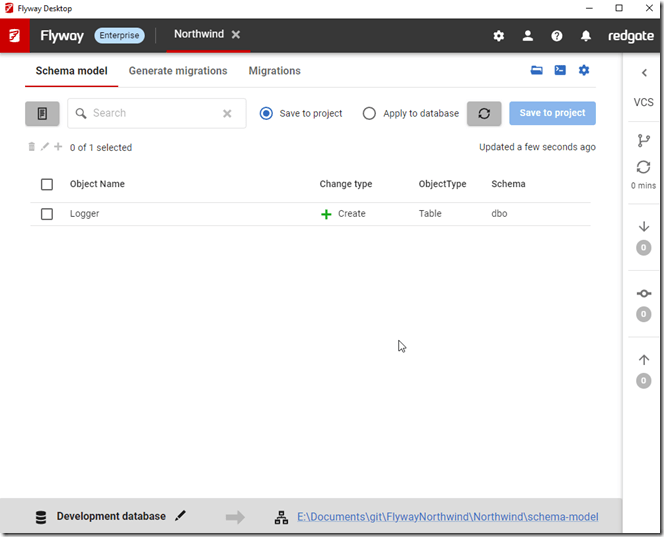
    2024-01-05 16_39_26-Flyway Desktop

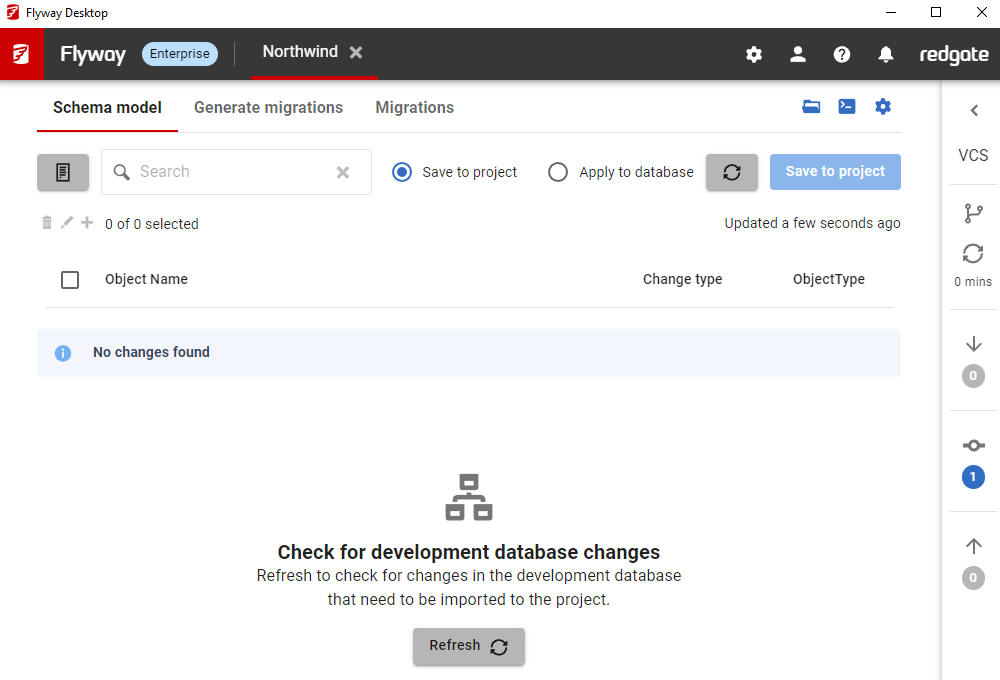
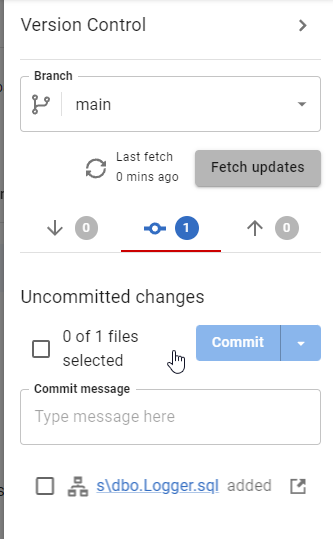
    If I select the object listed, and click Save, I’ll see this after the operation completes I have an uncommitted change. Notice the “1” in the middle of the blade.
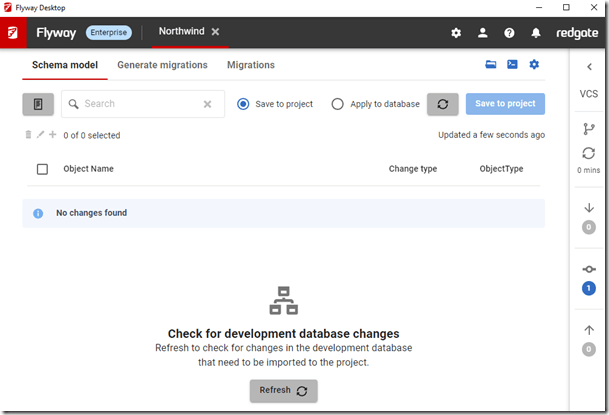
    2024-01-05 16_41_53-Flyway Desktop

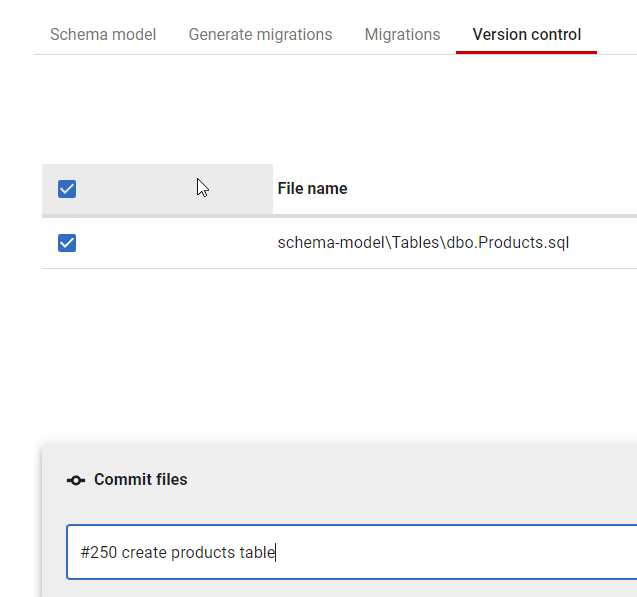
    I can expand the blade, but I can just click the one (or icon) and I see the blade expand. From here, I can add a commit message and commit this change (if I select it).
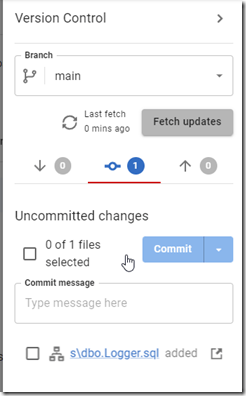
    2024-01-05 16_42_01-Flyway Desktop

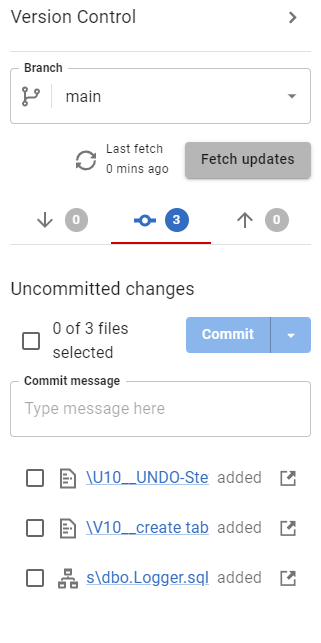
    I’ll make another change, generating a migration script. Now my expansion shows 3 changes, the schema file, the migration script and the undo script.
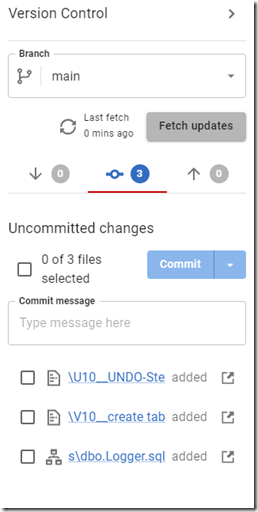
    2024-01-05 16_44_44-Flyway Desktop

    I’ll commit these three as one item. My blade closes after this and I see a committed change to push.
    2024-01-05 16_45_40-advocates - Redgate - Slack

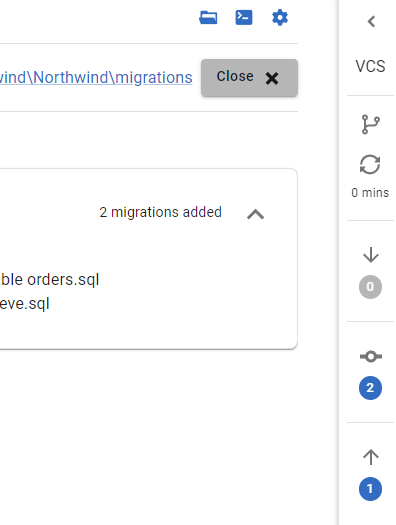
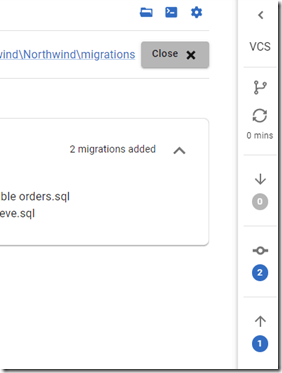
    I’ll generate another migration script. In this case, I now see multiple changes. I see my two new migration scripts added, and I still have a commit to push.
    2024-01-05 16_48_43-Flyway Desktop

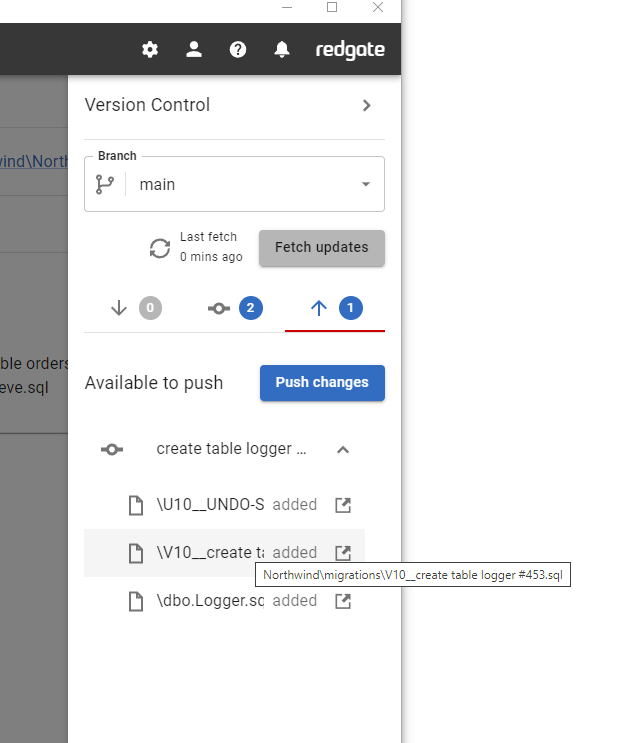
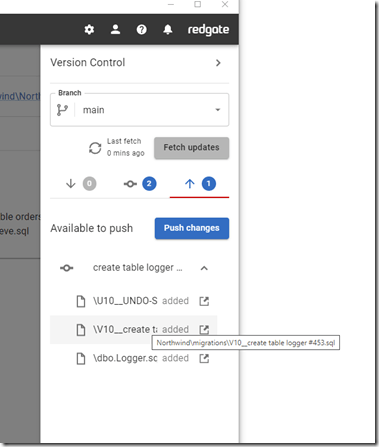
    If I expand the blade, I can see the details. For example, on the push tab, I can see the commit and files included. For a small screen, or small window, I get a tooltip if I hover and can see the full file name and path.
    Screenshot 2024-01-05 165157

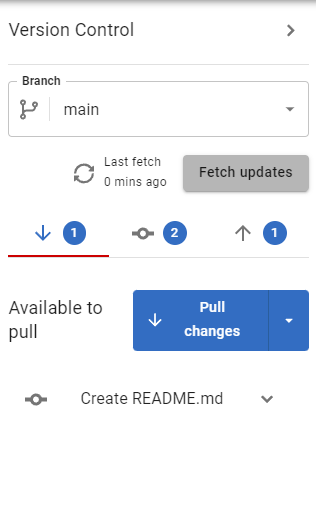
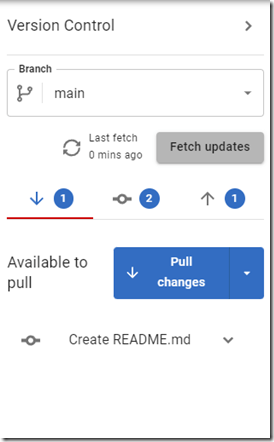
    If I make a change in the remote, likewise, I’ll also see a commit to pull.
    2024-01-05 16_53_57-Flyway Desktop

    I’ll push and pull (and commit) and then I’ll see a clean list nothing in my VCS blade.

    Summary

    This isn’t a big change, and I’d argue this makes FWD much easier to use and more comfortable for many people. Developers are less likely to have their local repo out of synch with a remote.

    Try Flyway Desktop out today. If you haven’t worked with Flyway Desktop, download it today. There is a free version that organizes migrations and paid versions with many more features.

    Video Walkthrough

    I made a quick video showing this as well. You can watch it below, or check out all the Flyway videos I’ve added: