Author: way0utwest

  • The Future of Database Development at SQL Saturday #870–Memphis

    I’m off to Memphis today for SQL Saturday #870. I’m excited as I’ve never been to Memphis and hope to wander around and see something while I’m there. I know Tennessee has a great #sqlfamily, so I’m looking forward to seeing old friends and making new ones.

    If you’re in the area, register and come out for a free day of learning tomorrow. The event is at the FedEx Institute of Technology, and there are a lot of great sessions on the schedule.

    I’ll be delivering The Future of Database Development with Containers at 2:45. This is a fun session and I’ll be referencing some research we’ve done at Redgate that might change how we help you develop with databases in the future.

    Come join me and shake my hand tomorrow in Memphis.

  • Live and Learn

    I love this quote from Randolph West: ” Listen to people. Have strong opinions, but loosely held. If you are wrong, admit it and move on. Learn from those around you.”

    This is from his blog on diversity, which I support and agree with. He has some great thoughts and the post is worth reading. Maybe you appreciate diversity, maybe you don’t, maybe advocate for or against it, but in all those cases, I think his message is worth reading.

    I am not going to talk about minorities or ethnic groups here, but rather diversity of thought. That first quote could apply to software development in general, and certainly the idea of a DevOps process for building applications. It’s good to have strong opinions, and good to be able to debate and argue them, but it’s also good to keep those strong opinions loose. Many of us find as we get older and more experienced that we often have a huge gap in the things we don’t know that we don’t know.

    These are the unknown unknowns, as opposed to the known unknowns, which are things I know I don’t really understand. I’ve remarked to a few people that learn new things every week, and I feel stupider every week. Why? I learn things I never knew existed, so I constantly expand the knowledge of my own ignorance. It feels like I learn two things and then realize there are nine more new things I don’t know anything about.

    Today’s software requires a team. Maybe more importantly, today’s software requires a team of both application and database developers, as well as infrastructure staff, that can help put together an entire system. We need to work together, not independently with hopes of efficient integration of our ideas later. We want to shift left, and coordinate and communicate earlier. That needs strong opinions on how to best do a job, but a loose grasp on those as we might need to adapt to work with others.

    Read Randolph’s blog twice. Once thinking about the topic of human rights, and then once more thinking about teams and our opinions on building software. It’s thought provoking and worth a few minutes of your time.

    Steve Jones

    Listen to the podcast at Libsyn, Stitcher or iTunes.
  • Shutting Off PowerShell Warnings–#SQLNewBlogger

    Another post for me that is simple and hopefully serves as an example for people trying to get blogging as #SQLNewBloggers.

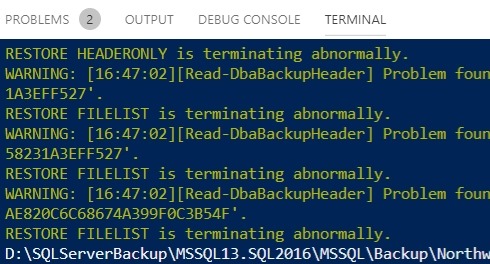
    Not really a SQL Server post, but I ran into this minor issue. While running a script, I saw this:

    2019-09-19 16_47_13-● RestoreUnknownStripedBackup.ps1 - SitC 2018 - CreateProtectManageDB - Visual S

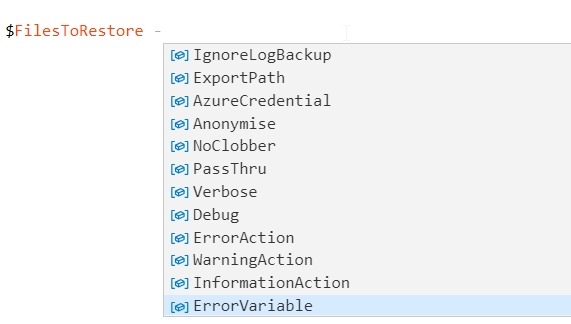
    The warnings aren’t a big deal, and in fact, have no bearing on my script. At least, not on this script. Since I needed to give this to a customer as a PoC item, I didn’t want any weird warnings. As a result, I needed to suppress these. A little intellisense in VS Code gave me a hint, but what value to use for the parameter?

    2019-09-19 16_47_46-● RestoreUnknownStripedBackup.ps1 - SitC 2018 - CreateProtectManageDB - Visual S

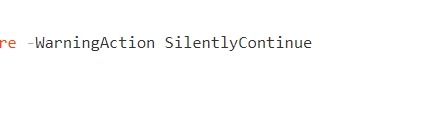
    A quick search brought me to Server Fault, where I saw the value. I added the SilentlyContinue to my script and messages suppressed.

    2019-09-19 16_48_11-● RestoreUnknownStripedBackup.ps1 - SitC 2018 - CreateProtectManageDB - Visual S

    SQLNewBlogger

    This is a helpful tip for me, and I think I showed you how I found an issue, researched, and solved it. It’s good to give a potential employer some confidence that you can work through issues and find answers.

    This took me less than 10 minutes. I bet you could do the same thing in the same time. Write about how you solve a small issue and drop it on your blog.

  • Searching for Answers Inside

    How easy is it for you to search your codebase, especially across projects, and find out if there are dependencies, similar code solutions, or even other incidents of similar problems? Do you feel comfortable that you can find out what you need to know across and throughout your organization?

    Or is it cumbersome for you and others?

    In the 2019 State of DevOps report, one of the important areas that designated high and elite performers was their likelihood to easily find internal information. Those users were more productive when using internal sources of information to find knowledge related to their work. They also know how to, and are able to use external sources as well. I certainly know that if I needed to write T-SQL everyday, having access to the SQLServerCentral forums would be invaluable for me, and I’m sure it is for many of you as well.

    I think one of the very hard things for inexperienced people in any organization to do is find information. So often knowledge is gained over time by employees that have spent significant amounts of time working on systems. No matter how much we might preach and mandate documenting things, many items won’t be written down. Over time, many of us internalize lots of information that might seem obvious and unimportant to us, but is necessary for more inexperienced people to succeed at different tasks. If you doubt this, just look at any DR test where someone tries to follow the directions written by experienced pros. They’ll fail almost every time because we don’t document every step.

    I’m not sure we should even try. I think the idea of trying to help others more easily find information is a better solution. Having tools to enable this can certainly help new people get up to speed quickly, as can group programming (or administration) efforts like pairing or mob style work. We might not easily ensure someone could pick up the pieces if no staff were around, we can make it easier for those that want to learn and succeed to seek out the knowledge they need.

    Steve Jones

    Listen to the podcast at Libsyn, Stitcher or iTunes.