I’m going to lose today again. This time I’m headed back to Australia and in flight. I wonder if I’ll get used to this, as I expect between work and vacation, I’ll be coming to this side of the world more often.
Author: way0utwest
-
Is Data the Future of the Vibrant Web?
Data privacy is a fascinating subject. Since the GDPR was passed, I’ve had a lot of conversations with people about the GDPR and the way different people feel varies dramatically. Moreover, the way an individual feels often varies depending on the situation. I know plenty of people that want their own data completely private, but they also want no restrictions on what they do with data inside their organization. Others feel the exact opposite.
One type of data that many people don’t think about is the cookie data that is used by Google and Facebook (among others) to track a user across many browsing sessions. This tracking is one reason that I see Redgate ads on a movie site or a new site. If I happened to search for SQL Compare, which I do sometimes to get a link, I might later see related ads on a site that has nothing to do with technology or SQL Server.
Apple, Firefox, and Microsoft have been experimenting with ways to give you some tracking protection in your browser. This should allow less data about individuals being captured, stored, analyzed, and then it couldn’t get lost/stolen/hacked.
Google has a different approach, and one that I think benefits them and their paying customers more than the rest of us. The idea is to have some sort of data cap for types of information, above which the browser would return generic information. Potentially it could return inaccurate information, but I can’t see that passing any sort of business relationship test with Google customers.
The goals here are relevant ads, and of course, information about you in order to serve relevant ads. While I think this goal will be met, I’m not sure it’s much more private than the situation today.
Data privacy means allowing users to decide what data a company, including a tracking company, is willing to share. The way browsers have changed in the last few decades is complex and confusing. I have no idea what information they track from my system(s), and I’m not sure I would even understand the implications of enabling certain rights. While most of us wouldn’t want to share our email, there are lots of other data that we might not be sure of the way it might be used.
Like most of the data privacy issues, I have no idea what to do here. The issues are complex and confusing. I would hope that Google would remember its “do no evil” origins and help us increase our ability to keep data private.
Steve Jones
Listen to the podcast at Libsyn, Stitcher or iTunes.
-
Working in Smaller Teams
I don’t know what the average size of a team is, but I know I’ve worked in all sizes in my career. I’ve had teams of 1-3, which is common in database work, but I’ve also been on a 20 person Ops team. I’ve been in 2 person development teams, 25 person teams, and everything in between. At Redgate, it seems most of our development teams are less than 10 people, but I’m sure we’ve exceeded that at times.
I do think smaller teams are better, and they are certainly easier to keep track of what everyone else is doing. Once a team becomes large, even with regular status reports or meetings, there is too much information to easily hold in one’s memory about tasks other than our own. Knowing what others are working on can be invaluable in coordinating and avoiding conflicts. This also ensures that the team can more easily ensure code is written in a similar fashion and knowledge is easily shared.
There is research that seems to indicate that smaller teams are better. This article talks about some of the reasons small teams seem to perform better. These all seem to intuitively make sense to me, and I’ve certainly experienced people behaving in these manners. In the second piece, there is advice on how to get teams to be more effective. The biggest advice seems to be a lot of what we do at Redgate. We empower teams, give them tools, and don’t manage them in traditional ways. We hold them accountable to get work done and meet goals, and we challenge them, but we want them to move forward, not work in a particular way.
Building a team is hard, and getting a team to perform at a high level is very hard. I do think that the internal talent and motivations of individuals can make a big difference, but I also think that management can bring out the best in people, or it can ensure you never get anywhere near the potential of team and encourage under-performance.
It constantly surprises me how often I find managers and their organizational culture built to control and not inspire employees to do their best. I think it’s a holdover of years of working a certain way, rather than supporting and encouraging each person supervising others to get the best from others. I hope this changes, but it’s certainly something I try to detect in interviews before I ever commit to a new position. I hate working for micromanagers and never want to do it again.
Steve Jones
Listen to the podcast at Libsyn, Stitcher or iTunes.
-
SQL Change Automation v4 Puts Migrations in SSMS
I’ve been waiting for this a long time. Over the years, as Redgate has improved and changed the SQL Change Automation product in Visual Studio, I’ve been wanting to see it in SSMS. After watching this take shape across the last year, I now see it live.
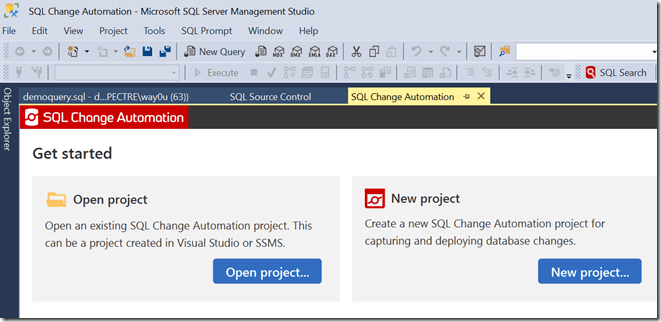
SSMS integration is finally here with SQL Change Automation v4. Kendra wrote a bit about how this allows collaboration on database projects that use migrations between both Visual Studio and SSMS (Management Studio). This gives you the flexibility to work in the environment that is most natural for you. You can share the same project in both IDEs. Watch Kendra introduce this in a video to see just how things work, and the value of migrations.
I am definitely a migrations oriented developer. I like to track changes, and I like to customize scripts. To me, migrations is the best way to perform database development, though I certainly understand the attractiveness of the SQL Compare/state/model method of development.
If you have never tried migrations, I urge you to give it a try on a PoC (Proof of Concept) project and see how you can control exactly what code is run when making changes to your databases. That’s important to me, especially when trying to minimize the risk and downtime of making changes. Even without working in a DevOps process, I like migrations.


