Someone I stumbled across this picture of @brento on my drive.

This might be the best one:

And this was a good time:
However, I have a collection of silly moments. Enjoy.














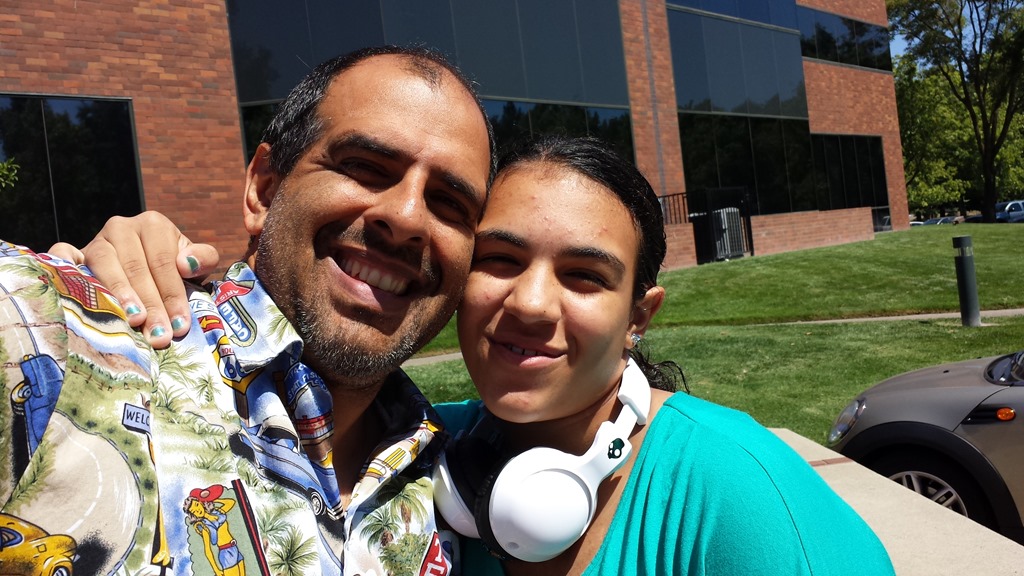


Someone I stumbled across this picture of @brento on my drive.
This might be the best one:
And this was a good time:
However, I have a collection of silly moments. Enjoy.
Today is my last day at work for a couple weeks. Actually, I’m not done yet. I travel to Louisville today forthe SQL Saturday tomorrow and then I return home Sunday. I’ll be traveling away on Monday, so this is really my last day in the office. I hope. It’s possible I’ll realize over the weekend I’ve forgotten something and need to tackle it remotely, but I’m hoping that won’t be the case.
While I won’t be completely unable to do anything, I am hoping that I’ll remain unwired for the two weeks. We are traveling to remote locations for some of the time, and there might not be cell service, and certainly not wi-fi. There will be some access on some days, as my son is taking an online class this summer and he has work to do, but I’m going to try and stay off email and Twitter, using my phone to just read and take/post pictures.
Getting away from work is a challenge for many of us in technology. Earlier in my career, and for many years running this site, I struggled to take time off. I’d regularly check on the site, even writing editorials at times while on holiday. I can still remember using a public terminal at a hotel years ago to connect with work. In the last few years, I’ve gotten better, and taking time off for a 6 week sabbatical really helped. I even take all my vacation most years.
That’s something that plenty of us still need to learn. I saw a post from someone recently that was on vacation and checking email. There were issues, though a backup person was supposed to handle them. I get the compulsion to check on anything for which you have responsibility. I get the habit of looking at email. I get the desire to just fix things. Those are feelings that I think many of us experience.
What I’ve learned over time is that most of the work we do isn’t that critical. Certainly our employer’s systems can affect operations, profitability, and more, but they’re not our systems. They’re the responsibility of the organization to run, which includes ensuring there are backup resources, human and otherwise, that can manage systems. For those of us that are on top of our jobs, that are the go-to person, that don’t just maintain, but actively improve systems, we need to let others make decisions, even poor ones, and bear that same burden. Ultimately that’s how others learn and get better.
I experience this as a parent, and I’m sure many of you do as well. We want our children to do better, to avoid the mistakes we’ve made in the past. We often try to actively manage how our kids live, or prevent them from making a poor decision. Across three kids and many years, I’ve learned to step back more and allow my kids to fail. It’s hard, one of the harder things in my life to not act or say something, but allow them to make a mistake. Even at work I’ve started to step back at times and hold my tongue if I’m not positive I need to say something. Instead, I try to listen more and accept that things will be less than perfect.
That’s OK. We strive to become better, to improve our systems, to increase efficiency, but it’s possible to do too much. To overspend resources on tuning, or indeed, not make things better but worse. We can overcomplicate things to the point where others can’t understand them, or perhaps worse, we encourage mistakes from the complexity we’ve introduced.
Life requires some balance, as do our careers. Work hard, improve things where you can, meet your obligations and take responsibility for your mistakes. Accept that others will make mistakes, and that you are not irreplacible while you enjoy your time away. I’m hoping I will during the next two weeks.
Steve Jones
Listen to the MP3 Audio ( 3.9MB) podcast or subscribe to the feed at iTunes and Libsyn.
I’ve asked for #SQLCareer posts, and I haven’t done any. My job isn’t a data platform DBA or developer, but it is SQL related, so a glimpse of the nonsense I perform. I’m asking for more posts, so a note at the bottom.
This should have been a cool day, after all, I’m scheduled for my first (partial) presentation at Microsoft’s Inspire conference. It turned out to be not so great.
The day started with my waking up in the Tropicana in Las Vegas. I was a last minute addition to the Inspire staff, so I grabbed the nearest Hilton. I travel enough that it’s worth me to try and stick with one airline and hotel company. As I write this, I got two free nights for my wife and daughter in South Dakota this week for a volleyball camp.
However, I get up around 7 and pack up. As I’m doing so, my daughter calls. I took her car key while she was gone to get copies made. A minor crisis distracted me on Tuesday afternoon and her key is in my car. At the Denver airport.
I apologize for the hectic, chaotic nature of my life and for not putting it back. I make mistakes, and know my kids do as well. I expect them to apologize, and I should do the same.
I check emails and answer a few, then shower and pack up.
7:45am – Walk across the bridge to catch the tram from the Excaliber to the Manadalay Bay resort. It’s got to be 90F this morning already, and I find the first station is blocked off for construction. Great.
Walk to street level and start heading to the next station. I get there and don’t see an easy way up. It’s a coin flip to walking inside and looking for a way or crossing the street to the Luxor. Everything is far in Vegas, and I elect to walk. I get into the Luxor and it seems as easy to use the internal walkway to the Mandalay as it is to wait for the the tram.
7:52 – Starbucks. Priorities, yo.
8:05 – Inspire registration. I had problems on Wed, so I needed to complete this today. I start, click to pick my MS account login, and when I click the “Next” button, the internet disappears. Fortunately the event staff was helpful and brought me a laptop to complete registration.
8:30 – The Inspire schedule is a bit of a mess. I’m not sure where to go, but pick my co-speaker and he texts me directions to the room. I head over and sit down, watching a few other Microsoft partners talk about their companies and strategies.
I have 3000 steps today, but I see a couple interesting things that partners are doing. One of which might be something we try at Redgate. In any case, it’s an interesting half hour. Then I head over to an empty room to practice my talk with co-speakers, go over timing, and review my notes.
9:45 – We’re on. There are three of us talking about SQL Operations Studio, which seems to be Ops Studio to MS. I have 15 minutes at the end, so I stand around for a bit. Me on stage, just waiting around. The professional look today.
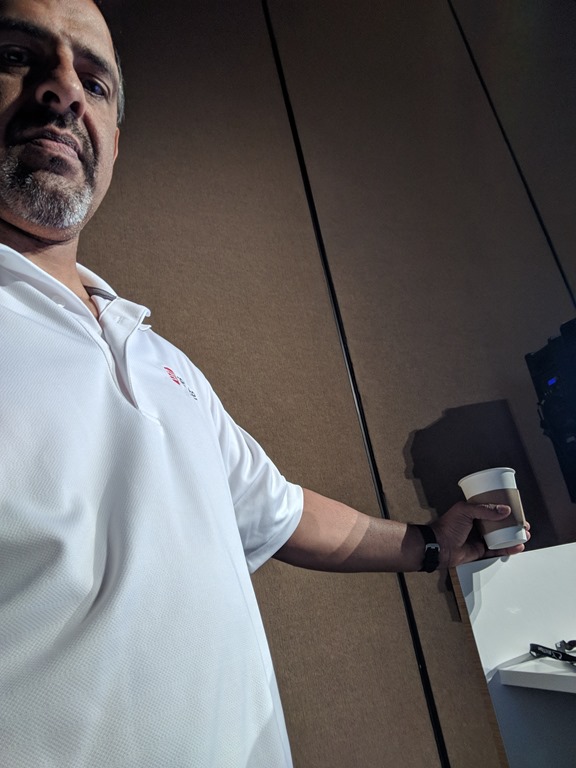
While waiting on stage, I check Slack and respond to a few messages. I do my talk, get one question, and then walk out. That’s after I’ve finished my coffee.
11:00 – The schedule seems to be just some general partner stuff to close the day. I ping a friend for lunch, but he’s down the strip at another hotel. With a 1:30 flight, I decide to give up and get a cab to the airport.
Not wanting to waste time, I forgo an Uber and get a cab. The guy talks a slightly long way around the West side of the airport, which is annoying. It’ s not my money, but at Redgate, we try to spend wisely. This feels like I should have stood around waiting for an Uber. I could have answered a few emails while waiting. I did that in the cab, but likely I didn’t save anything other than a few minutes standing and wasted $5.
In any case, I get to the airport, walk to security, get through and make my way to the terminal. I do this enough that if I don’t try to be efficient, I waste lots of time. Fortunately from taxi drop off to sitting down for lunch is about 15 minutes for me. I sit there and go through a few product items on Slack, and respond to a question on the Redgate Hub. Nothing that important, but it’s the type of busy work that will catch up to me if I don’t get things done.
Post lunch I still have about 45 minutes before boarding, so I pull out the laptop, charge my phone, and start this post. I also answer a few emails and load some Database Weekly items for the newsletter. It’s my week to get links and write an editorial, so I try to do a little of this everyday. I find it keeps me in touch with what’s happening in the database world.
One article is on Managed Instances in Azure and how they are different. It’s interesting and I learn about the Job Object, which I knew nothing about. I always seem to learn a few things every week that I didn’t know from someone. I also caught up on a couple SQL Career posts from Jen Stirrup and Brent Ozar.
The flight home is fine, but it’s cramped. I don’t do any work and just read a bit and watch part of a movie. I seem to see parts of movies here and there, but never bother to finish if they’re not that interesting.
6:30pm – I hit the gym on the way home for 30 minutes and then get my daughter’s keys made and then some chores at home.
7:45pm – One last check of things and finish this post. I realize I’ve scheduled tweets for the next three newsletters all tomorrow. Grrr, I delete them all and need to rebuild the schedules. Takes about 30 minutes.
Not a productive workday, but since I travel again Friday to SQL Saturday Louisville, I’ll let it go.
Security issues seem to be appearing more frequently, not less. I’d expect that we would be getting better at writing software, and I think many of us are. The problem is that more and more people are writing software and we still haven’t found a way to better train developers early in their careers. Perhaps the one good thing is that more and more developers are using frameworks, which create more consistent software. If issues are discovered, a patch can ensure a large swath of systems can be patched.
The bad news is that far too many development groups build systems quickly, but don’t patch them in an expedient manner. They may be afraid or just not bother.
A short while ago there was a loss of data from Ticketmaster ticket sales. Apparently a chatbot was used to steal information. As soon as Ticketmaster discovered the issue, they disabled the software. There is some disagreement as to who is at fault here. The chatbot vendor says their JavaScript chatbot should not have been running on a secure payment page.
The specifics here aren’t important, but it is a concern that more and more often we are assembling applications from pieces of software. We often use plugins on websites and other building blocks when we put together a system. In more and more cases, we will be connecting this software to our data stores. That wasn’t the case here, but often there is some data access, and since we may keep both secure and non secure data in the same database, any vulnerabilities in one building block can cause security issues in others. The weakest link in the chain saying applies here.
I wonder how many of you worry about issues with the assembly of whole pieces of software. The pieces should be more secure, or at least, more easily patched. There should be more incentive and resources to patch software used by many people, though many times vendors become hesitant to do any more than absolutely necessary.
I’m not sure if it’s better to build out of pre-written pieces of code, but I do know that security is a shared responsibility and I wish it was more of a priority for all developers. The security of our application can depend on that weakest link.
Steve Jones
Listen to the MP3 Audio ( 3.9MB) podcast or subscribe to the feed at iTunes and Libsyn.

