Author: way0utwest

  • We Do Need To Upgrade

    I advocate that we should get a long life from our database platforms. In fact, I like to think about a 7-10 year lifetime for many of my database instances. That means I’ll get beyond the 5 year lifetime that Microsoft provides and move into the extended support. Actually, for most of my career, I’ve run instances without support and haven’t had issues. We invest a lot in databases, and I want companies to invest a lot because they are important. That means I need a good payback.

    Microsoft should provide security patches for products throughout the Extended Support period, which means that I should be able to run SQL Server and Windows securely for 10 years. that probably stretches the lifetime, but certainly that gives me time after five years to begin planning and prepping for an upgrade.

    The problems for many customers come when other vendors don’t bother to keep supporting older software and providing patches. Even if Microsoft releases a security fix for your OS, the vendor that makes software you run on top of Windows or SQL Server might not. That’s an issue, and it’s one that will become more of an issue as companies become reluctant to change software that works well.

    This article shows that older ATM machines running XP and Windows 7 are having issues. Some of this is physical access, but some is related to issues in the OS. While Windows 7 should be getting patches, Windows XP is not and needs to be upgraded. In fact, I’d argue that any losses here should be born by ATM owners and not covered by insurance for not having upgraded their systems.

    While I like to get as much time as I can from a system, it’s irresponsible to expect software to run without security patches being actively applied, which includes any upgrades from vendors. In some cases, this might be negligent by the companies doing so, especially for embedded systems. I don’t know that I want governments to force vendors to provide patches, but I’d like companies to write contracts that ensure that patches will exist for come lifetime of the products. In the event the company can’t provide patches (or certification), then they’d need to release their code as open source so that someone can provide a patch.

    The world becomes more intertwined and dependent on computing, from things like convenience services or core systems. We can’t have those systems becoming more vulnerable because companies are unwilling to upgrade and vendors abandon older software. Some sort of compromise is needed to ensure that computer systems are protected from known vulnerabilities.

    Steve Jones

  • Summit 2018 Program Survey

    PASS has a survey out asking for your thoughts on the  2018 content. Take a few minutes and fill it out, and maybe you’ll win a registration.

  • Surround Code with Comments in SQL Prompt

    I work for Redgate and write about products. I’ve got a series of SQL Prompt posts here on little things I like. SQL Prompt might be my favorite tool.  SQL Prompt will be yours as well if you give it a try.

    I can’t believe I haven’t built this snippet before now, but it’s not in my list. I’ve dealt with this for some time, but I decided enough was enough.

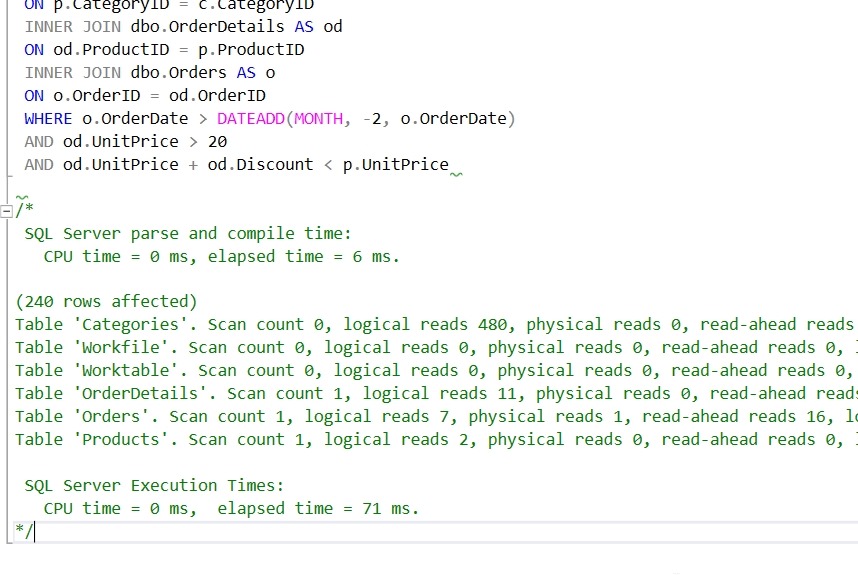
    Here’s what I want. Note that all the code is inside a single comment.

    2018-01-27 09_28_29-SQLQuery1.sql - (local)_SQL2016.Northwind (PLATO_Steve (66))_ - Microsoft SQL Se

    Getting There

    I often have some random notes that I want to keep in a comment. For example, I might get a list of tables like this:

    2018-01-27 09_25_12-SQLQuery1.sql - (local)_SQL2016.Northwind (PLATO_Steve (66))_ - Microsoft SQL Se

    If I highlight this code and hit Ctrl, I get a list of snippets that contain a certain token. In my case, I get:

    2018-01-27 09_26_31-SQLQuery1.sql - (local)_SQL2016.Northwind (PLATO_Steve (66))_ - Microsoft SQL Se

    If I select Comment, I get the code commented, but as single line quotes.

    2018-01-27 09_26_58-SQLQuery1.sql - (local)_SQL2016.Northwind (PLATO_Steve (66))_ - Microsoft SQL Se

    That’s OK, but if I am saving something like STATISTICS output, that’s not pretty or easy for me to read. I prefer a single comment, not a series of separate inline comments. This is even more annoying with code.

    Let’s fix this with a snippet. Here’s my snippet code:

    2018-01-27 09_30_43-SQL Prompt - Create New Snippet

    The $SELECTEDTEXT$ token will take whatever text you’ve highlighted and insert it into the token. In my case, I just want this commented out.

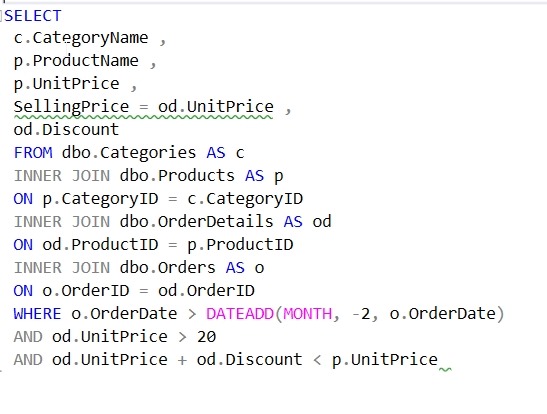
    Let’s see how this works. Suppose I have this query:

    2018-01-27 09_36_06-SQLQuery1.sql - (local)_SQL2016.Northwind (PLATO_Steve (66))_ - Microsoft SQL Se

    I really want to get the results from STATISTICS IO and TIME as I’m tuning a few things here and I want to check how well my changes work.

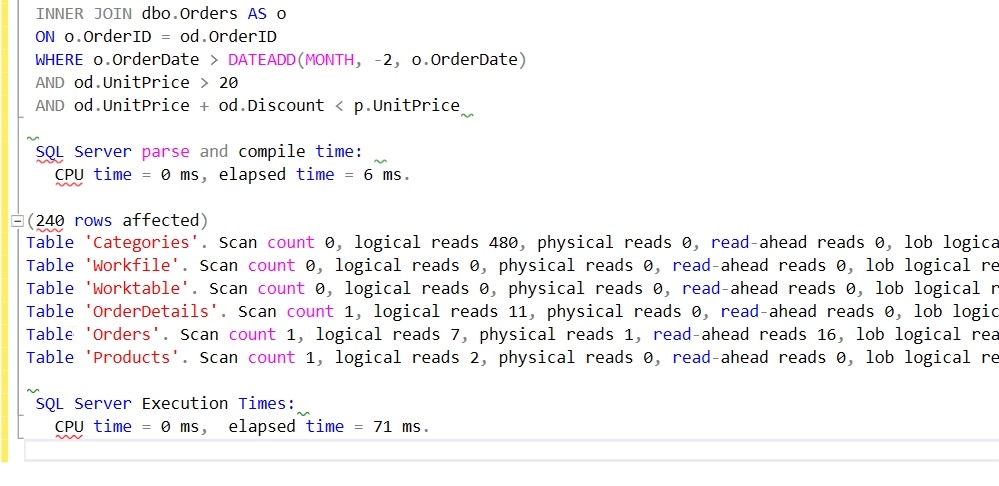
    Once I run this, I’d like to place the results with the query and see them to compare with the next iteration. I paste the results into the query window like this:

    2018-01-27 09_37_42-SQLQuery1.sql - (local)_SQL2016.Northwind (PLATO_Steve (66))_ - Microsoft SQL Se

    Now I can highlight those results and hit CTRL, type surr, and get this:

    2018-01-27 09_38_12-SQLQuery1.sql - (local)_SQL2016.Northwind (PLATO_Steve (66))_ - Microsoft SQL Se

    I hit tab and I have my notes commented out:

    2018-01-27 09_38_28-SQLQuery1.sql - (local)_SQL2016.Northwind (PLATO_Steve (66))_ - Microsoft SQL Se

    The next time I run the query, I can easily compare how things have changed:

    2018-01-27 09_38_37-SQLQuery1.sql - (local)_SQL2016.Northwind (PLATO_Steve (66))_ - Microsoft SQL Se

    I also use this when working through a list of results. I’ll get those in the query window, highlight them, and then surround them with a comment.

    There are lots of places you might like to use this token with SQL Prompt. For more ideas, Phil Factor has a nice scenario for using this with other tokens in the Redgate Hub.

    Give SQL Prompt a try today and see how it can improve coding and feel free to share your tips here.

  • Lowering the Noise

    Over my career, I’ve had the chance to work in a variety of environments of all sizes. I’ve managed systems that powered all sorts of applications, with a variety of requirements. In many cases, I’ve had certain databases that needed constant monitoring and care from me to perform as needed. I’ve also had other systems that the business used, but weren’t necessarily critical. Those systems often had a lower priority for my attention if multiple problems occurred at the same time.

    I’ve been meeting regularly with the SQL Monitor team as they try to enhance and tune the next version of their product. As the product has grown and evolved, and SQL Server advances, there are different types of counters and metrics that need to be tracked. One of the major goals is to ensure that they reduce the number of alerts for DBAs and sysadmins that don’t require immediate attention or may be unnecessarily adding to someone’s workload, at least for new installations. You might customize your system to include many alerts. To do this, we have to make decisions for the default alerts and threshholds, which can be a challenge.

    That’s been a goal of mine as an administrator as well. I don’t want to get notifications or alerts of activities that are expected, such as backups. However, if backups fail, I may need to be alerted. Actually, I’m sure I need an alert, but it’s a question of whether I need to know now, at 2am, or get an alert the next morning at 9am. Often I may choose to respond differently to the QA server than I do for the production Sales instance. One might get immediate attention 24×7 while the other is a best available effort, and certainly isn’t likely to get a response on Saturday night.

    While SQL Server becomes better at adapting to changing conditions, there are definitely times when a human must get involved and decide how to solve an issue. That’s the reason that many of us are employed by others. We manage tasks and make decisions that machines can’t do for us. However, our attention and time is limited. Despite what some managers think, there are only so many hours in the day and week, and we need to make decisions about which items to focus on and handle. Perhaps even more important, unnecessary distractions can weaken our focus and cause us to make mistakes that we wouldn’t ordinarily make.

    As we manage more systems, many of which are important to our employers, a good system administrator will tune monitoring systems and ensure that they aren’t receiving or responding to unnecessary alerts. They work to minimize the interruptions and distractions from lower priority items. Maybe most importantly for long term job health, they ensure that systems don’t cause interruptions during their personal time, especially vacations. Good administrators put another human in the loop when they need a break.

    Of course, we also do ensure that low priority systems receive some attention. We can’t ignore that low disk space warning on the development instance forever.

    Steve Jones

    The Voice of the DBA Podcast

    Listen to the MP3 Audio ( 4.9MB) podcast or subscribe to the feed at iTunes and Libsyn.