Category: Blog

  • Off for a Holiday

    This has been a crazy month, and it’s getting crazier. So far I’ve been to these places this month:

    • Washington, D.C.
    • New York City
    • London

    Today I’m in Chicago for the SQL in the City Summit. I flew in yesterday, prepped, and today is the event. It’s exciting, and I’m glad this is the end of the Summits because I fly home late tonight, arriving around 10.

    That gives me 12 hours to get home, unpack, repack, get back to the airport before a 10am flight to Hong Kong. I probably need to sleep in there as well.

    I’ve never been, but my wife and I booked a short trip, so I’ll be gone for the next week, taking a break from my travels with a more travel, but it should be exciting.

    Enjoy Halloween without me.

  • Data Classification in SQL Server 2019

    One of the areas that Redgate is working on is making data classification easier. Microsoft added some capabilities to SSMS 17.5 and Redgate has an EAP out for the next version of our data catalog tool.

    Azure SQL Database has had some advanced options they were building into the database engine, and we get our first look in the on-premises version with SQL Server 2019 CTP 2.0.

    The ADD SENSITIVITY CLASSIFICATION and DROP SENSITIVITY CLASSIFICATION DDL is now available, and here are few examples of how this works.

    Let’s look at a database that has some potential data to classify. I’ve got a sample database with a few tables. In fact, if I look at the data classification suggestions in SSMS, I see 7 columns.
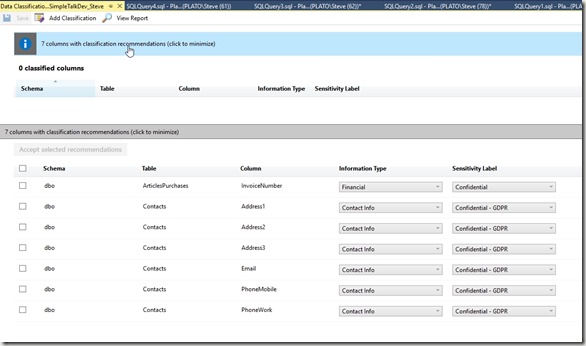
    2018-10-23 11_56_48-Data Classification - SimpleTalkDev_Steve - Microsoft SQL Server Management Stud

    I can accept any of these, but if I do, these are written to extended properties, which isn’t the best way of storing this data.

    However, the ADD SENSITIVITY CLASSIFICATION syntax works well. If I take that dbo.Contacts.Email column and decide this is Confidential according to the GDPR, I can do this:

    ADD SENSITIVITY CLASSIFICATION TO
      dbo.Contacts.Email
      WITH (LABEL = 'Confidential - GDPR')

    If I then query my meta data table, I’ll see this:
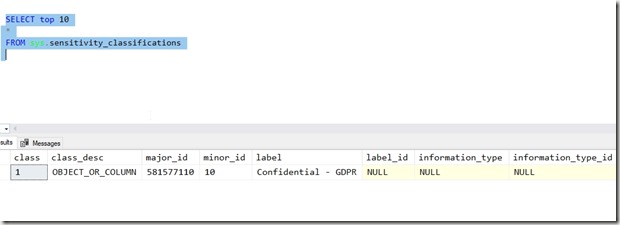
    2018-10-23 12_01_04-SQLQuery4.sql - Plato_SQL2019.SimpleTalkDev_Steve (PLATO_Steve (61))_ - Microsof

    There are other items I can add, such as the information type and then IDs for the label and type. I can, however, update that data like this:

    ADD SENSITIVITY CLASSIFICATION TO
       dbo.Contacts.Email
       WITH (INFORMATION_TYPE = 'Contact', INFORMATION_TYPE_ID = '5BFAE3B8-4549-4989-BEB6-F9BF6434DAD1')

    Note I still haven’t given the Label_ID a value, but that’s OK. This allows me to add human readable metadata to columns, as well as add IDs that I might get from some external auditing system.
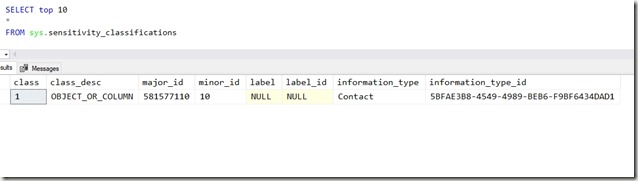
    2018-10-23 12_04_01-SQLQuery4.sql - Plato_SQL2019.SimpleTalkDev_Steve (PLATO_Steve (61))_ - Microsof

    This feels primitive, but it’s slightly better than extended properties, and it’s somewhat built into the engine, so we can code this as a part of development and ensure classification is added to our sensitive data.

    If this is an area you’re interested in, we’d love to have you try the Redgate tool and give us feedback. We’re working on this problem and trying to find ways that are both useful and sustainable over time.

  • Webinar: The end of support for SQL Server 2008

    Coeo is a partner with Redgate Software. Tomorrow they are hosting a webinar on what your position will be if you are still running SQL Server 2008 or R2 now. Extended support ends next year and now is the time to start your preparations.

    Register now and tune in tomorrow, or whenever you have time.

  • Better Keyboard Extensions in Azure Data Studio

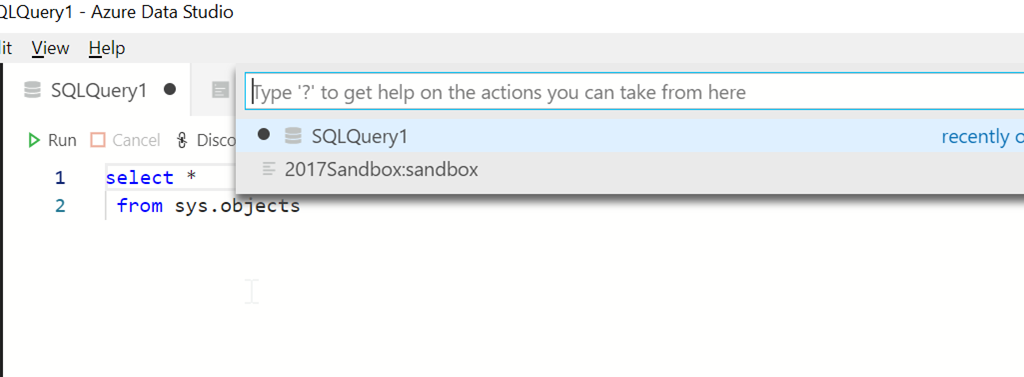
    I used to use ALT+X to execute queries in SSMS. I spent years with this shortcut, but as I started to present more, CTRL+E felt more natural. I’ve now grown used to that, so when I typed CTRL+E in Azure Data Studio (ADS), I was less than pleased.

    2018-10-19 17_06_57-● SQLQuery1 - Azure Data Studio

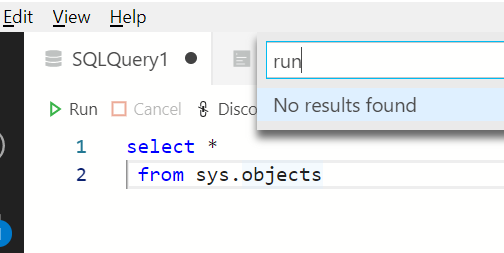
    Even trying to get help here didn’t help.

    2018-10-19 17_07_18-● SQLQuery1 - Azure Data Studio

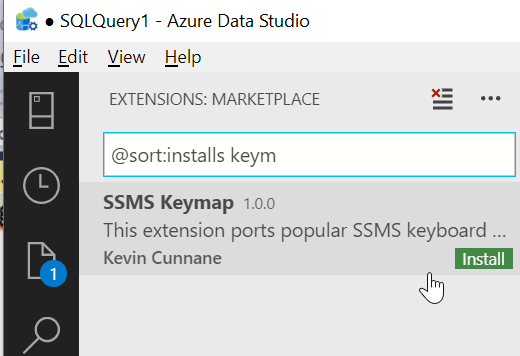
    I actually had a conversation with Kevin Cunnane when this was SOS and he pointed me to the keymap extension.  You can get this by clicking the extensions icon on the left side of ADS:

    2018-10-19 17_12_50-● SQLQuery1 - Azure Data Studio

    Once you do this, search for keymap, and you’ll see Kevin’s extension.

    2018-10-19 17_13_03-● SQLQuery1 - Azure Data Studio

    You can see details for the extension on the right.

    2018-10-19 17_18_34-Extension_ SSMS Keymap - Azure Data Studio

    When you click “Install”, you’ll go to Kevin’s repo on Github. Click the link to download the VSIS extension. This gets saved in your Downloads folder (or wherever you have downloads going).

    Go back to ADS and use the File menu to find the VSIS installer.

    2018-10-19 17_18_28-Extension_ SSMS Keymap - Azure Data Studio

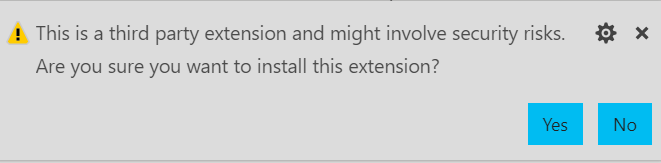
    Browse and double click the VSIX file you downloaded. You’ll see a message in the lower right of ADS.

    2018-10-19 17_19_48-Extension_ SSMS Keymap - Azure Data Studio

    Click Yes, or no, but if you click No, this won’t install. In a few seconds, if you clicked Yes, you’ll see this:

    2018-10-19 17_19_57-Extension_ SSMS Keymap - Azure Data Studio

    Click Reload, and ADS will close and reopen. Your query window should still be there, and CTRL+E will pop the connection dialog, since the connection closed. Once you connect, the query will run with CTRL+E

    2018-10-19 17_20_10-● SQLQuery1 - Azure Data Studio

    The full list of key mappings is available on the repo or in the package.json file.