Tag: career2

  • Salaries in Job Ads

    Hiring at Basecamp is interesting. I caught this interview and think it’s a good look at a process most of us have gone through, but perhaps not thought about. Maybe we ought to try and not start out our relationship as employer/employee with a “I got one over on you”.

    Of course, many companies are not interested in treating employees well and just assume they’ll hire/fire/turnover often. Makes sense in some places (McDonalds type work), but less sense in our industry.

    I do think that we hide salaries too much in our industry. Certainly this aids in favoritism and entitlement for works with seniority. I’d really prefer to see salary ranges published for jobs, both internally and in the description. And not some huge range, but put something like a junior DBA from US$35,000-50,000. Or whatever range you think is appropriate.

    This would do a few things for me. First, it ensures that candidates that want to work for that range will apply. It also ensures you don’t waste time with a developer that wants to move to DBA work, but really needs $70,000 for their financial commitments. This also helps you determine if you’re range is correct for the market.

    I am a big proponent of disclosing more info up front and finding a good match between employer and employee.

  • Learning Kubernetes Security Concepts

    This post continues looking at my process of learning more about Kubernetes. I’ve been working through the 50 days of Kubernetes (K8s). Here I continue on with a few videos on secrets, configuration management and RBAC.

    Secrets

    I am glad that the idea of storing data securely has come to so many applications. Authentication, authorization, privileges, and more are complex and hard to get right. We continually see problems with passwords, certificates, and the link not being managed well.

    Kubernetes has the concept of secrets, which can be values or file contents (like a certificates). These can then be sent or mounted to containers for use.

    One problem, these are stored in the Kubernetes etcd (keyvalue store) in an unencrypted format. Kubernetes has new concepts to integrate into key management areas, like Azure Key Vault, to protect secrets, though Kubernetes privilege controls are still needed.

    A gross simplification, but I learned a little more about what secrets are.

    Configuration Management

    This is interesting to me, because I like abstracting things away. In Kubernetes, we abstract a configuration object as a separate entity, which can then be applied to a container/pod later. This also works through deployments, allowing configurations to be part of the rolling deployment, which can prevent issues.

    If you have good testing/evaluation of what is healthy. This is likely easier than comprehensive unit testing, but still.

    A good idea, just not sure if this is too much.

    RBAC

    I always think of this as row-based, but it’s really role-based, so maybe that should be the way I translate RBAC in my head.

    Like most systems that use RBAC, there is, of course, a role. The video wanders a bit in the explanation, but I’ll try to summarize what I learned. There are two facets to roles. First, these are verb/noun pairs that determine what permission is available for what resource. Like get/list for the verb, and pod, volume, service, etc. for the noun. These are setting up the permission side.

    However, there is another facet. These roles can be set as cluster roles, similar to server roles for SQL Server, or at the namespace level, more like a database role. In either case, you are scoping permissions. Obviously, be careful with cluster roles.

    The other side of this is the user. We can have users or groups used for these roles, similar to what is in SQL Server.

    A simple explanation, but at least I have some idea of the concept.

  • Redis University

    As if I don’t have enough to do, I started a data structures class at Redis University. Someone recommended this to me as another way a company has structured learning, so I decided to give it a try. There were some things they liked that we might use as Redgate University.

    I decided to start with the 101 course, since I have a rough idea of what Redis is, but now how it works. The class has a number of videos, with transcripts alongside that teach various concepts. One thing I like is that if I get lost, I can glance at the transcript, click it, and the video jumps back to that point. That’s handy, as life sometimes distracts me.

    The quizzes every video or two are nice, but I wish there was a bit more chance to practice things in the middle. I could certainly grab a Redis VM or container, but I have no real idea of how to access it, and I’d have another project. I would actually suggest some “launch lab” points after each set of videos with some practice tutorials or exercises.

    The class has two weeks, with a few chapters, each of which is about 6-7 videos. I don’t know about you, but that’s a lot in a week. If I could abandon some other things for an hour a night, maybe, but that can be tough to do consecutively. I’d really rather this was a 4 week class, with each of the items listed as a set of learning and practice for one week.

    Overall I learned some interesting things about how Redis works. With the power and speed of this memory based key-value system, I can see why some of our customers are using it. If you are thinking about it, or your app uses it and you want to know more, maybe check out their university.

  • Update Your PASS Profile

    If you haven’t logged into your PASS profile, please do so now. You should be able to get to this page: https://www.pass.org/myPASS.aspx

    Once you’re here, there’s an announcement:

    2019-05-17 12_23_38-PASS _ MYPASS

    Voting is coming this year, and no matter what you think of PASS, I do ask you to vote and make your voice heard.

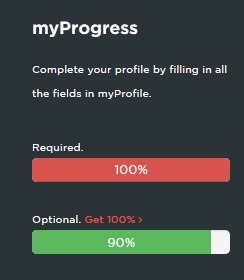
    You can check on your profile in the lower left side of the page, where you ought to see this:

    2019-05-17 12_24_25-PASS _ MYPASS

    The required items should be complete, though in my mind, the colors are backwards. Still, get to 100%.