Tag: T-SQL

  • Encrypting T-SQL Code

    This editorial was originally published on April 10, 2009. It is being re-run as Steve is on vacation.

    I recently engaged in a discussion with someone that was building an application on SQL Server. This person had a bunch of SQL code that was being put in stored procedures and then being sent to client sites. The developers were worried about clients modifying their code and wanted to send “secure updates” to the client by encrypting the stored procedures and giving the clients the encrypted text.

    Apart from the hassles of getting this to work, I asked by would they bother. There are decryption routines available and this isn’t meant to be a secure way to hide your code. Heck, even application code can be decompiled, and if they’re likely to mess with the code, they likely have the skills to get the source.

    So for this Friday’s poll, I’m wondering about how you feel about encrypting code in SQL Server. I want to know what you think.

    Is there a point?

    Is there a reason to encrypt stored procedure code? After all, there are many, many vendors that sell applications built on SQL Server, with stored procedures.  Most of that code isn’t encrypted and it’s usually not a problem. Most customers don’t mess with the code and there are usually prohibitions written into support agreements.

    Personally I don’t think there are many great ideas, and likely very, very few in the database space, that are worth securing. Someone doesn’t buy a software package so the can learn how you wrote it. Most of them buy software because it solves a problem and saves them time. If you can deliver a well performing, and good looking application, no one cares about the code.

    But I’m curious what the rest of you think, both end users and software developers. Is there really a good reason to worry about encrypting your code?

    Steve Jones


    The Voice of the DBA Podcasts

    Everyday Jones

    The podcast feeds are available atsqlservercentral.mevio.com. Comments are definitely appreciated and wanted, and you can get feeds from there.

    You can also follow Steve Jones on Twitter:

    Overall RSS Feed:  or now on iTunes! 

    Today’s podcast features music by Everyday Jones. No relation, but I stumbled on to them and really like the music. Support this great duo at www.everydayjones.com.

  • The T-SQL Paradigm

    This editorial was originally published on Mar 21, 2009. It is being re-run as Steve is on vacation.

    I ran across this post ranting about T-SQL. It’s got going pretty quickly with some less that professional responses. It’s cleaned itself up a bit, but it got me thinking for this Friday.

    My first programming was done in BASIC. From there I played with a little assembler before going on to Pascal and C in high school. The came LISP, APL, Fortran, more assembler, C++, and a little ADA in college. My professional career had me programming in Lotus 1-2-3, dBase, FoxPro, C, VB, and finally SQL with minor dabbling in HTML, XML, ASP, and some .NET.

    I think I’ve had a decent amount of programming experience in my life. In that time, I’ve found that most programming languages to work fine, and while I’ve enjoyed some more than others, I haven’t thought that any “sucked.” I wouldn’t want to write most modern apps in APL, but I don’t much think there’s any thing wrong with picking VB.NET v Java v C#. So for this Friday’s poll:

    Is T-SQL really a strange paradigm?

    Or SQL in general? Is it really messed up? Would the structures used by LINQ make more sense to anyone? Hardcore developers seem to like a different structure, but is it because it seems more natural to them? Or is SQL really such a strange beast.

    Many people seem to have trouble with SQL. Just read the forums here at SQLServerCentral to see all the issues that come when people try to query the database. But is it just hard to learn or is there a better way to build a query language?

    Steve Jones


    The Voice of the DBA Podcasts

    Everyday Jones

    The podcast feeds are available atsqlservercentral.mevio.com. Comments are definitely appreciated and wanted, and you can get feeds from there.

    You can also follow Steve Jones on Twitter:

    Overall RSS Feed:  or now on iTunes! 

    Today’s podcast features music by Everyday Jones. No relation, but I stumbled on to them and really like the music. Support this great duo at www.everydayjones.com.

    I really appreciate and value feedback on the podcasts. Let us know what you like, don’t like, or even send in ideas for the show. If you’d like to comment, post something here. The boss will be sure to read it.

  • Managing Data in a FileTable with T-SQL

    I wrote a post about creating a Filetable, which just covered the basics of how to build one. How do you work with the data in this table? In this post I’ll look at a few things you can do from the T-SQL side.

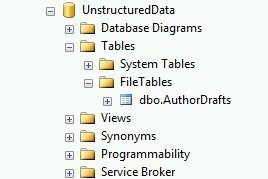
    From the last post, I had my author drafts Filetable. I can see this in the Object Explorer.

    filetable_c

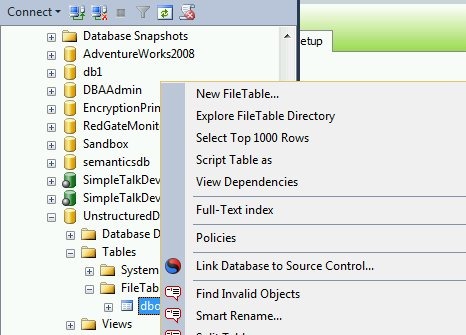
    I can use the same “select data” feature from Object Explorer on a Filetable, just like any other table.

    filetable_e

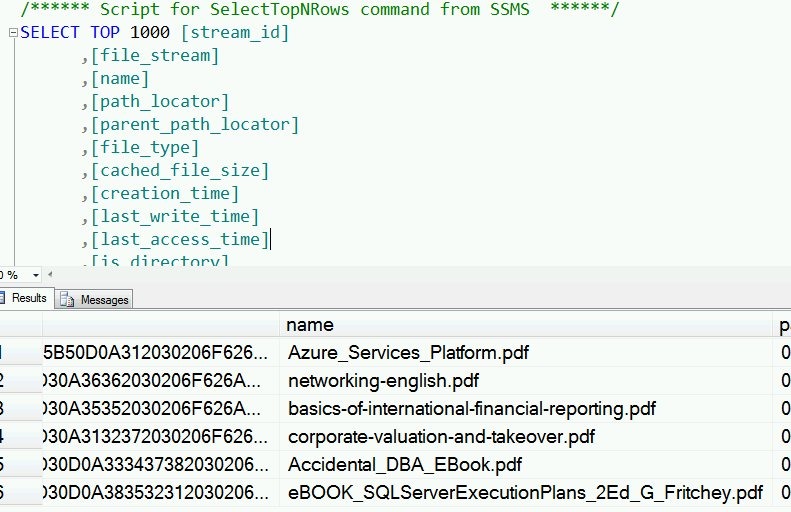
    I get the results, and as you see, I have a few rows in the table.

    filetable_f

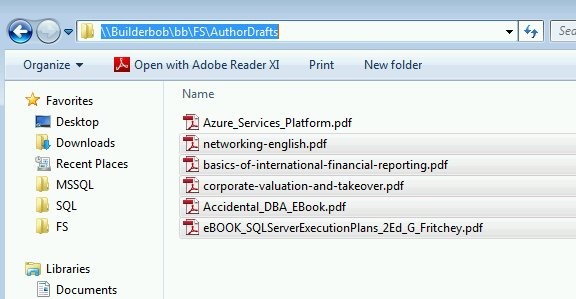
    These are actually the files I see in the share.

    filetable_d

    Inserting Data

    One of the advantages of Filetable is that you can use Explorer (and any tools that use the same Explorer APIs) to move data in and out of a table. However that doesn’t preclude you from using T-SQL.

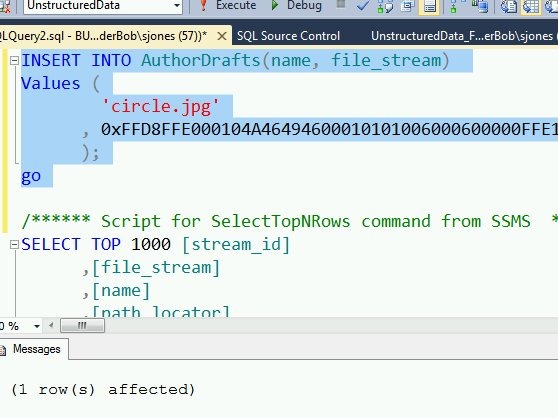
    I can use a script to insert data into the table, just as I might with Filestream.

    INSERT INTO AuthorDrafts(name, file_stream) Values ( 'circle.jpg' , 0xFFD8FFE000104A46494600010101006000600000FFE100684578696600004D4D002A000000080004011A0005000000010000003E011B0005000000010000004601280003000000010002000001310002000000120000004E00000000000000600000000100000060000000015061696E742E4E45542076332E352E313000FFDB0043000201010201010202020202020202030503030303030604040305070607070706070708090B0908080A0807070A0D0A0A0B0C0C0C0C07090E0F0D0C0E0B0C0C0CFFDB004301020202030303060303060C0807080C0C0C0C0C0C0C0C0C0C0C0C0C0C0C0C0C0C0C0C0C0C0C0C0C0C0C0C0C0C0C0C0C0C0C0C0C0C0C0C0C0C0C0C0C0C0C0C0C0CFFC0001108000A000D03012200021101031101FFC4001F0000010501010101010100000000000000000102030405060708090A0BFFC400B5100002010303020403050504040000017D01020300041105122131410613516107227114328191A1082342B1C11552D1F02433627282090A161718191A25262728292A3435363738393A434445464748494A535455565758595A636465666768696A737475767778797A838485868788898A92939495969798999AA2A3A4A5A6A7A8A9AAB2B3B4B5B6B7B8B9BAC2C3C4C5C6C7C8C9CAD2D3D4D5D6D7D8D9DAE1E2E3E4E5E6E7E8E9EAF1F2F3F4F5F6F7F8F9FAFFC4001F0100030101010101010101010000000000000102030405060708090A0BFFC400B51100020102040403040705040400010277000102031104052131061241510761711322328108144291A1B1C109233352F0156272D10A162434E125F11718191A262728292A35363738393A434445464748494A535455565758595A636465666768696A737475767778797A82838485868788898A92939495969798999AA2A3A4A5A6A7A8A9AAB2B3B4B5B6B7B8B9BAC2C3C4C5C6C7C8C9CAD2D3D4D5D6D7D8D9DAE2E3E4E5E6E7E8E9EAF2F3F4F5F6F7F8F9FAFFDA000C03010002110311003F00E97FE0E87FF82CA7ED35FB04FED85E09F03FC2BD6A5F87BE1097408B5C4D523D2ADAF1BC41746795248CBDC4722F970848C18940399373E43478FD75FF00827CFC68F177ED17FB0FFC2AF1D78F3461A078C7C59E19B2D4F57B110B42B14F244199846DF346AFC384392A1C024E335E95E2EF87BE1FF880968BAF687A3EB6B612F9F6C2FECA3B916F27F7D3783B5BDC60D6C5007FFFD9 ); go


    As you can see, this command works fine:

    filetable_g

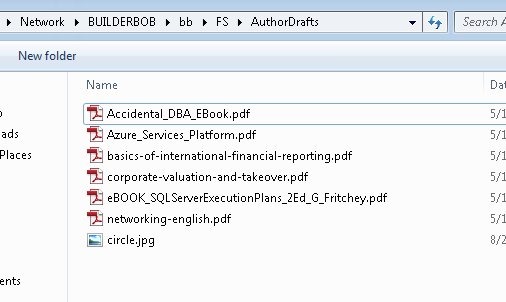
    If I then look at the share, I see my file:

    filetable_h

    Retrieving Data

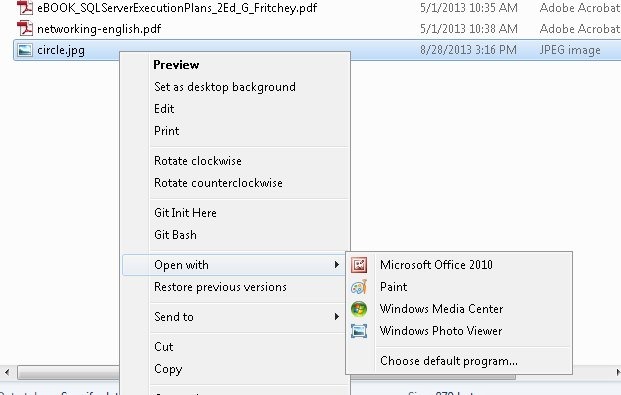
    As shown above, I can use SELECT queries to return data from a Filetable in T-SQL. However, I have a share as well, and I can cut, copy, paste, and open files from the share just as I would any other file in the file system.

    filetable_j


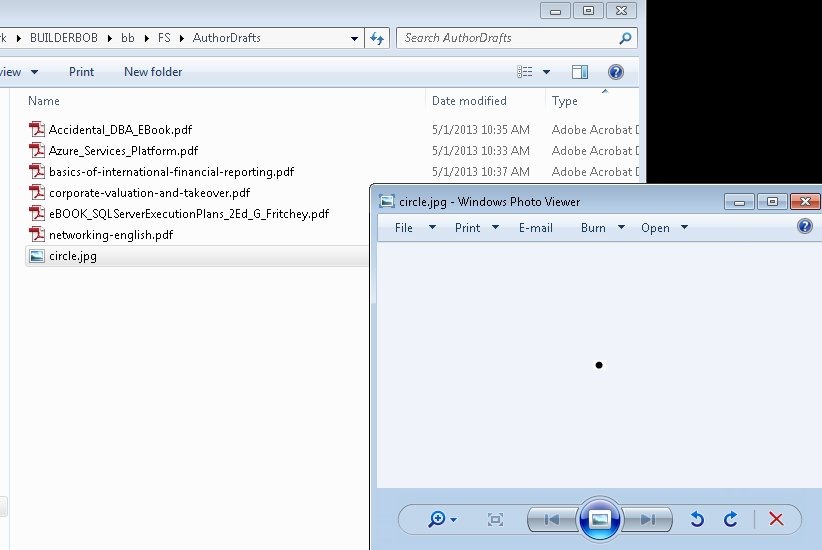
    If I open the file in Paint, I see my image:

    filetable_i

    Summary

    Working with files in a file table is easy, and while many people will use Explorer functions, you can use T-SQL as well to insert, or retrieve the data as you choose.

  • CHOOSE in SQL Server 2012

    The CHOOSE command is new in the T-SQL as of SQL Server 2012. I hadn’t ever had the chance to work with it, but after seeing someone submit a piece recently, I decided to play with it a bit.

    This feature is essentially an indexing value from an array. Here’s a short example.

    SELECT CHOOSE(1, 'First', 'Second', 'Three');

    The first parameter to the CHOOSE() function is an integer, which is the position. The second (and subsequent) parameters are the array of values. Here’s a better example. Let’s say I have a lookup table of titles:

    CREATE TABLE titles
    ( titleid INT
    , title VARCHAR(20))
    ;
    INSERT titles 
     VALUES (1, 'Manager')
          , (2, 'Developer')
          , (3, 'DBA')
          , (4, 'Sysadmin')
          , (5, 'Storage Admin')
          , (6, 'Help Desk')
    ;

    I might potentially have a very large table. Imagine that I work at SalesForce.com or I have some type of EAV table here. If I am performing a join with employees, I could easily do this:

    SELECT 
       e.firstname
     , t.title
     FROM dbo.employees e
      INNER JOIN dbo.titles t
        ON    e.titleid = t.titleid

    However, suppose I have performance issues, or I’m joining to lots of tables. Perhaps I’d prefer not to actually join to another table for some reason. I could do this instead:

    SELECT 
       e.firstname
     , CHOOSE( e.titleid, 'Manager', 'Developer', 'DBA', 'Sysadmin', 'Storage Admin', 'Help Desk')
     FROM dbo.employees e

    Is this useful?

    I’m not sure. Most of the examples and places I can think of for using this are rather trivial, or inflexible. This seems like hard coding values into a procedure or function when a table join might be a better option.

    I haven’t found any blogs that present practical uses that make sense, but I’m sure some are out there. Let me know if you know of any.

    UPDATE: Rob Farley mentioned he uses this in the date dimension of data warehouses. I’m not sure if that’s the best solution, but Rob’s a smart guy, so I’ll take his word that this is a good use of the function.