Tag: work

  • Measuring Well Being

    I need to write something more on this, but it struck me that this is something I wish previous employers had done, anonymously, and reported results back to others. I also with I had some data on how I look at things over time.

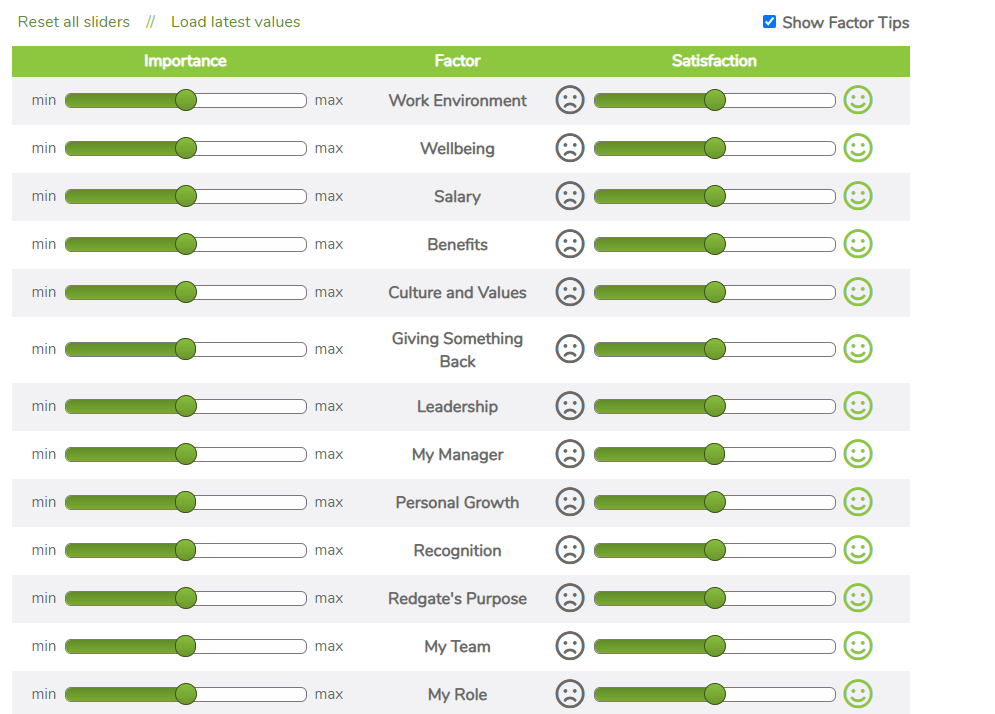
    Here is my Thymometrics dashboard.

    2020-06-15 07_39_08-Thymometrics _ Contribute

    Today I got the reminder to fill this out and decided to reset the sliders. The left is my rating of this in my job and the right is how I feel. I often glance at these and adjust them, but periodically I reset them.

    I look at this as a chance to take five minutes and take stock of where I am in my current employment.

  • The Challenges of Working Under Quarantine

    It’s been nearly two months since the Redgate Software offices closed. I am not normally in the office, but I did cancel a trip that I normally would have taken to touch base with a number of teams. That’s a minor change for me, but a still a change. It’s much less than the change for most other people, and by now, I expect many people have somewhat adapted to working at home.

    Working at home under this pandemic isn’t the same as working remotely. This has been forced upon us, and I agree with Scott Hanselman. Like me, he’s worked remotely for years, and this is different. We have kids, partners, roommates, and others around. We can’t easily change our scenery or engage in some of our usual activities. This is stressful, overwhelming, upsetting, disconcerting, and more.

    Some of you might have accepted this and are learning to work in a new way. Some are coping, but expecting to go back to normal at some point. Some of us are getting much less work done, which adds another level of stress. Performance reviews, and the inevitable comparison with others will weigh on our minds. Whether we go back to normal soon or not, companies will add and remove staff. There are new projects to tackle, raises to award, and all the regular work of running a company.

    This is a difficult time for all, and most of us are experiencing life in our own unique ways. Our view of the world, of coping and getting our daily work done is much different than our co-workers. Even if we appear to be the same people, we aren’t. We may react differently day to day, and there may not be a good explanation.

    This is not the same as remote work, and I hope managers understand that. It is important that we all appreciate that our view of any big or little thing at work is not necessarily the same way others view the same action. A daily standup meeting might seem like a little thing to you, but perhaps it’s exam day for someone else’s child and they can’t focus, or maybe not even attend.

    Be kind, be more flexible, and be more understanding. You never know what someone else might be dealing with in their life today.

    Steve Jones

    Listen to the podcast at Libsyn, Stitcher or iTunes.
  • The Challenge of Chat

    I’ve followed 37 Signals (now Basecamp) and Jason Fried for years. I think they’ve built an amazing company and have a philosophy on business and life I admire. They’ve written books, and they blog often. Recently I saw a post on chat, which is something that I’ve struggled with at times. Even before this work-at-home-at-scale experiment we’re all living, the challenges of everyone reaching out have weighed on my mind.

    Without an office that physically concentrates many people together, many of us are only communicating electronically with our coworkers. We’ve had email for years, and video conferencing is growing in use, and some of us have had instant messaging for years.  It seems that chat has become more pervasive and the ability to reach out with live, interactive chats is something that has become expected in many organizations. Whether this is on Slack, Teams, or some other channel, there is some good and bad with the medium. I think the post highlights the bad outweighing the good, and it mentions a few things I hadn’t thought about.

    I do have Slack running most of the day, and initially I found it to be exhausting and distracting. I think I also knew chat might create some implied consensus and lessons deep thought, but I hadn’t thought much about before reading this post. Chat has been a great quick tool for questions and answers. I often use it to pose a question about how some feature in our product works, not necessarily getting an immediate answer, but also having this work better than email as a developer can pull the question rather than it being pushed to them. It works well in threads, but not very well if responses aren’t tied to questions.

    At the same time, there are enough distractions for most of us, and having more of them randomly appear throughout my day has been an issue. Over time, I’ve learned to utilize some of the advice in the piece. I ignore lots of channels and just mark them as read often. I’ll take bigger discussions into email or a meeting, and I’ve learned to not check this all day. I use it at times, but I’m happy to drop out, and even ignore direct messages if I’m concentrating. It helps I have most notifications turned off.

    Attention is limited, and like time, it’s a valuable resource. As you work alone, there might be more of a need to interact and engage with others, but recognize it for the productivity drain it can be.

    Steve Jones

    Listen to the podcast at Libsyn, Stitcher or iTunes.

  • Taking Quarantine Holiday

    On one hand I’m tired of writing about the challenges of working under this pandemic. On the other, it’s not going away quickly, and I know there are many people struggling much more than I am. I don’t in any way want to minimize the hardships that some of you are going through. I know there are many more important things than this topic for you.

    That being said, I wonder what some of you are doing about holidays and vacation this year. For many of us, any plans we might have had for a flight, a cruise, even a drive, might be derailed by closures and limitations. My wife would like to take a horse and go ride at a park, but many are closed. Other plans I had are completely up in the air for now, with no real idea of what to do instead.

    My employer has asked all employees to take 60% of their vacation allowance by the end of September. It’s a decision made for two reasons. One is that people need to avoid burnout and they need to get away from work, even if they can’t go anywhere. Employees need to find some way to recharge.

    The second reason is that assuming the world opens back up this summer or fall, we might have a large number of people wanting to take a few weeks off during the fourth quarter. Most businesses do expect more vacation during holidays, but they can’t function well if too many people are gone at the same time. We have very liberal and generous policies at Redgate, but I’m not sure we want most of the company trying to take the entire month of December off.

    I know I need to get a break, and I’m looking at starting to take some long weekends most weeks across the summer. If I can make plans with my wife, I might try to get a week or two off in a row and go somewhere, anywhere. We have a camper we can use, so if there’s a place to park, we’re thinking of just packing up and disappearing for a bit.

    Let us know what you think about vacation during this pandemic. How will you handle it? Or can you just bank holiday time until next year? Maybe nothing changes for you if your normal holiday plans are still possible.

    Whatever you do, be careful of burnout when your home and work lives are this intertwined. It can creep up on you if you are not careful.

    Steve Jones

    Listen to the podcast at Libsyn, Stitcher or iTunes.