Tag: work

  • Long Term WFH

    I’m not sure I’ve accepted that we’re still in a work from home pandemic that is going to continue for the next six months. It does weigh on me at times, and I’ve struggled to cope with the same four walls the last few weeks, mostly because I don’t think I’ve accepted this fact. Redgate’s offices are closed for the rest of the year, with no real plans to open anything anytime soon. Many people are pleased with the current status, and we’re hiring people on a regular basis.

    Is long term work from home the thing that many companies will adopt? Certainly some can’t, and lots of jobs around the world don’t lend themselves to remote work, but for those of us in technology, it’s possible. Lots of our management has realized this, and plenty of people like it. Disappointing for me, and maybe for some of you, but good for lots of others. Certainly I see more and more companies every week extending their WFH practice.

    Is this a good thing? There is some research coming out about how the longer term status is affecting people. People are working more, and having difficulties unplugging from work. This is creating some of the burnout issues we saw in the tech boom of the 1990s and early 2000s. There’s an interesting thread at Hacker News about finding some way to disconnect from work, with some creative suggestions. Especially nice to flip through and pick/choose them to try, especially if you are space constrained.

    The upside of remote work is that we can live anywhere and work for a company. Basecamp has done this for years. The downside is that your physical proximity to your company is not an advantage. If you aren’t a high performer, perhaps your company will look to find someone in another city or country that can do a better job. Stress about job security and certainly there is pressure (implicit or explicit) that employers might bring on you to do more, stand out, even come back to work sooner than you like. These are all potential issues for employees, and they are the downsides of remote work.

    Finding some balance and getting away from work is important. I know vacation and holiday is hard in some locations and situations, but it is important. I know I need to take 4-5 more days of holiday this month to meet the 60% guideline Redgate has set for the end of September. I’m not sure I can go anywhere, but if nothing else, I’ll just try to do something different around the house. If you have holiday, you should find a way to take it. Even spending a couple days reading a book for enjoyment or cooking a meal for your family, or anything non-work related can be a good break.

    I’ve worked from home for nearly two decades, and overall I love it, but I also like going to see customers, clients, and my co-workers at Redgate. I do hope that we adopt some of the good remote work habits after this pandemic, but I also hope that we go back to some of the older, “normal” way of working where I get to see people.

    Steve Jones

    Listen to the podcast at Libsyn, Stitcher or iTunes.

  • Finding Separation During WFH

    Work life isn’t the same for all of us. In fact, as I read through this HN thread, I find that work is more varied than I often consider. I haven’t worked for any of the big tech firms (FAANG or MSFT), but I have worked for companies that had a variety of perks, including food, gyms, childcare, and more. I’ve taken advantage of, and not been interested in, these perks at different times in my life.

    Many of us are working from home (WFH) for the first time in an extended fashion. I’ve been quite fascinated in the differences amongst my co-workers. Most of them love this and are looking forward to the remainder of the year at home. Some don’t like it, and feel trapped. I’ve been WFH for nearly 20 years, but I’ve often been able to change my environment through travel or working in public spaces, which aren’t really a good idea right now, even if possible. So I’m perhaps struggling to cope more than I expected.

    Now that we’re four months in for most of us, I wonder how many people are coping, and maybe more importantly, how are you achieving separation from work in your life? Are you setting work hours or shutting down your work communications? Perhaps you have some other technique?

    I have tended to pop into my office often in the past, most every day, even weekends. The flip side if I often pop out of the office during the week for the gym or to do some personal task. I’ve also started to avoid even going into my office on the weekends, using my laptop if I need to browse the Internet for some knowledge, without opening Slack/Outlook/Twitter/etc. Trying to completely disconnect on the weekends.

    If you are coping, or perhaps not coping, feel free to drop a note in the discussion, give a tip, ask for advice, or just let us know what you like or don’t like about your environment.

    Steve Jones

    Listen to the podcast at Libsyn, Stitcher or iTunes.

  • Research on the Changing Workplace

    One of the things that I have admired about Microsoft is their desire to invest in research and try to learn more about subjects that relate to their core business. Microsoft Research has a number of fascinating projects underway all the time, and I enjoy browsing the site once in awhile.

    However, they don’t just limit research to this group. They are a data driven culture, and it seems they are constantly using metrics and instrumentation to measure how the entire business works and to glean insights into how they might work better. Recently I saw a report on Microsoft’s new work-from-home workforce, driven by a group that helps companies better work with their own employees.

    Work has changed for many people in the world in 2020, and very dramatically for some. At the same time, many companies have had to drastically alter they continue to do business, recognizing that many technical employees could work from home and be as effective as they are in an office. Microsoft has analyzed their own data, and continue to do so as they seek to understand how the pandemic has changed things for employees. They do find some longer work days, more networking, and more social events.

    Interestingly, meetings are slightly shorter, which is something I’ve noticed as well. It’s almost as if the effort to walk to a conference room means people have invested more in spending an hour there. With remote meetings, I find more people are willing to cut short a meeting and end it early when they can. The downside is that there are more meetings, at least for this group.

    The importance of management is something they noticed, as well as a larger burden on managers that they must deal with as they have more meetings with employees. I’ve actually gone to every other week meetings with my manager for a time, though I’m not sure I like that. I’ll give it another month and then see what I think. I appreciate the extra work for managers, but I also know that managers should be enabling employees, which should be a big part of their job. If that means a bit of hand holding, I think that’s important.

    The two most interesting things in the piece to me were that some of the authors’ clients are planning on a two year work from home, and that work-life boundaries are blurring, especially on weekends. For the latter, I think we sometimes find work to be an anchor, and we may need to spread our 40-ish hours across 7 days to deal with the challenges of family during the week. All the challenges of children, maybe other adults and meetings, etc. can impact when we work. The one thing we certainly need to avoid is having 40-ish hours become 50-ish.

    For the former, if you plan to be at home for two years, why not just make that forever? I’d think the adaptations employees, departments, and workflows make after that amount of time might not be worth undoing.

    Steve Jones

    Listen to the podcast at Libsyn, Stitcher or iTunes.
  • A Dedicated Space

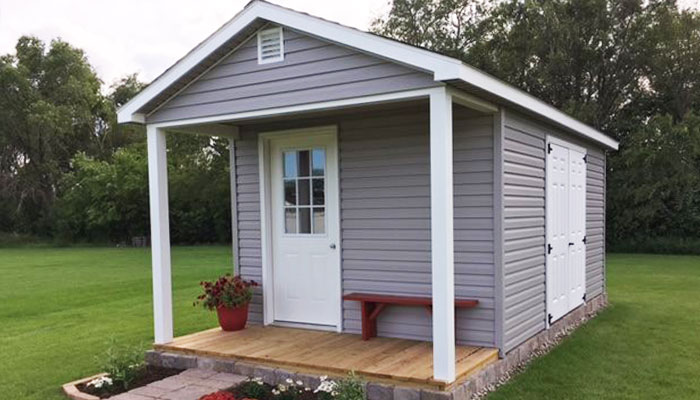
    Years ago I had a friend that was starting a consulting business. This person had worked for various organizations over the years and was ready to run a solo business. The city where this person resided was somewhat expensive, so they decided to convert a garden shed into an office space. They followed a similar process to this one, adding some interior finishing and electricity.

    This individual struggled to work alone in this space, after years of working in offices. While it provided separation from children and other home distractions, it was hard to get used to working alone the majority of the time. Eventually the moved their office back into the house.

    I was reminded of this when I saw a tweet from David Perell, noting that a good business model might be building recyclable, transportable offices. This pandemic has changed the way many people work, and while some have offices, I’ve had many of my colleagues working in bedrooms, dining rooms, and even in part of a kitchen area.

    The way we work has changed for much of the technology world and plenty of us have adapted well. People that hated being stuck at home with distractions are growing used to the idea, though I suspect that not having a permanent space of your own is likely growing old. I wonder how many people would like a shed like structure in their yard or garden, with about 100sq ft/9sq m of personal room for your desk and whatever you need for your job. There are some really small, neat designs with lots of windows, porches, even fancy designs. Interiors can be simple or designed just for you.

    Would any of you want to give up a little garden space to get a private office? With the changing world, and the chance that you might work at home for a long time, perhaps some of you would like a private space that’s just your own, perhaps even one that you could take with you if you moved to a new residence. Or maybe one that you can take to a shared space in a town. I could even see pods like this in an office park. Instead of a shared office space, maybe there would be outdoor pods near each other, where we can work near each other, but still in a safe, private way when we need to do so. Perhaps this is the next evolution of BYOD, as a Bring-Your-Own-Office.

    Steve Jones