Author: way0utwest

  • T-SQL Tuesday #151 Coding Standards

    This month the T-SQL Tuesday blog party is hosted by my good friend, Mala. This is her fourth time hosting and she has a good topic this time. While I love her hosting, and a few others, I would like to see more people participate and take a month on their technology of choice.

    You can submit to host by contacting me on Twitter and reading the host page.

    Coding Standards

    I am a big fan of standards, both for coding and naming, when building software. I feel that having some standards help share information among staff. Since staff might come and go on a project, the less friction that we have, the better off we are.

    With that being said, the main standard for me is that the team has a standard. Preferably the organization has a standard, but we want to ensure that everyone follows a similar style of coding. This includes naming and style.

    For example, if we want plural names for all entities, let’s stick to that. I think singular makes more sense, and despite my habit of years of plural, I have been working to change. If my team wanted to go one way or the other, I’d just work with them.

    The same thing goes for commas. I like commas before a column list, but if the team prefers after, then that’s OK. I can adapt. Especially with a tool like SQL Prompt that let’s me easily reformat to another style.

    The other advantage of coding standards, apart from transferring information, is that we can use templates and snippets of code as a way to speed up coding. We can even write or use code generators to ensure that we build the code that everyone understands.

    A Few Specifics

    For me, these are things I’d set up if there were no standards. I’d be welcome to debate on them and be willing to change. These are for SQL. For other languages, there would be similar choices based on the language.

    1. commas before column list columns
    2. start column list on a new line
    3. FROM, WHERE, ORDER, GROUP, HAVING all indented 1 space or tab from left
    4. I prefer spaces, but only lightly.
    5. align all clauses in WHERE on separate lines
    6. entities use singular names
    7. primary keys are named <tablename>PK
    8. if surrogate keys, use <tablename>ID as the column header
    9. FK constraints use FK_<source>_<destination>_<column1>_<column2>
    10. ALL indexes named as CDX_<table>_<column> for clustered or NDX_<table>_<column> for non clustered. CCX or NCX for columnstore.
    11. FK column in the child table uses the same name as the PK column in the parent.

    There are more, but this is a quick list. The important thing is to have standards.
  • Flawed Data Integration

    I recently had to travel by airplane after a surgery. My mobility was limited and I requested wheelchair assistance, which I used from Denver to Houston to Amsterdam. Across three airports and two countries, the process was interesting, especially the data integration needed to get things to happen in the real world. As often is the case, there are all sorts of ways that systems don’t work well together.

    In this case, there are actually multiple digital systems integrated. Since airlines contract with passengers, they record their own data that a particular person needs something. However, the actual service is provided by the airport, and each airport has their own system. A classic case of data transfer being needed between multiple systems, in this case three different airport systems.

    Like the digital applications and databases many of us work with, there are disparate ways the data is handled in different systems. In Denver, the young man pushing me had to update his location constantly, so that there was tracking of how I moved through the airport from check-in to security to the train to the gate. I assume some notification gets to a person at the gate, but it was late. Without my wife, I wouldn’t necessarily have had a good way to flag down someone. I assume the delays I had at all gates were more human than digital, but I really don’t know. As a “customer” here, I have no idea when data moves from one application to another, much less when the humans in the real world get notified.

    Many of our digital transformations are taking place with the idea of bringing more transparency to various processes, either digital or analog. Our DevOps changes are to make it clearer how we build and deploy software. Many new app features are built to help employees better understand some part of their business. Others are there to inform customers and give them more reasons to stay our customers and not move on to a competitor.

    I think it’s important that our software developers and UX designers keep evolving and growing to better meet the needs of our customers. I think it’s amazing how well software has grown and changed from a one-size-fits-all to adapting and customizing for different users. We all might use and react to software a little differently, so allowing the software to meld with the way we work is incredibly helpful to reducing the friction and flaws in the human to computer integration.

    This was a good reminder to me of how important data integrations can be between systems, and how much of an impact those friction points can have on a customer. The trip back was much smoother, with people waiting at the airplane doors and showing up in time to get me onto the next plane. That was a wonderful reminder of just how data integration between applications can mesh with humans to create a incredible experience for the customer.

    Steve Jones

  • Refreshing Tables in Data Masker

    Data Masker for SQL Server is a product that helps to change data for compliance purposes. It works well, but it isn’t intuitive in a few ways. We bought the product and it has been improved, but it still sometimes throws me for a loop with certain features.

    Recently I was editing a masking set and I added a table to the database. In this case, I opened my masking set and went to add a masking rule, but the table wasn’t there. It took me a few minutes to figure out how do to this.

    This is documented, but there are a lot more words there than this simple procedure that worked for me.

    Refresh the Controller

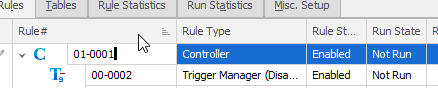
    Your masking set has a controller for each schema (essentially). If you pick the controller, you can select “Edit rule”.

    2022-06-07 07_23_31-simpletalk_ Data Masker for SQL Server

    In this rule, go to the Tools tab. The first button is a refresh button. Pick that.

    2022-06-07 07_23_44-Edit Rule Controller

    Now, you see more stuff, but in this case since I added a new table, I click the top button. This is Refresh All Tables, under the “ignore exclusion list” section.

    2022-06-07 07_23_51-Refresh Database Tables

    This runs, and I’ll see my new table(s) in the left list of Known Tables. Click the Save and Update button. You should get a confirmation that tables are updated. You can turn off some of these dialogs, so this might not appear for you. I usually don’t turn these off since I demo things.

    2022-06-07 07_24_00-Data Masker

    Then update the rule controller. It isn’t intuitive that you need to click “Save” or “Update” on every screen, especially in modern software where we expect changes to just be made on selection. However, this is an older design and needs the confirmation.

    Now, you should see the new table in any rules you create/edit.

    Data Masker is a great tool for protecting data in non-production environments. It is highly customizable and lets you meet your compliance or regulatory needs. Download an eval today and give it a try.

  • Daily Coping 13 Jun 2022

    I started to add a daily coping tip to the SQLServerCentral newsletter and to the Community Circle, which is helping me deal with the issues in the world. I’m adding my responses for each day here. All my coping tips are under this tag.

    Today’s tip is to make of list of what matters most to you this week.

    I’m coming off vacation this week. I know, life is hard for me, but I do have a few things to dig into this week. The things that matter are:

    • rehab – get my ankle back in shape
    • rehearsal – I deliver two sessions at VS Live and the audience deserves a well-prepared Steve.
    • work – I need to get SSC in shape for me to travel, and get a presentation ready next week for sales people.
    • life – back to the gym and cooking for the family.