Tag: hardware

  • Keep Data Forever

    Will this keep data forever?

    How long do you expect to keep a piece of data in any of your databases? Chances are if you’re like me, you rarely think about it and expect that you need to store all the data perpetually. As long as you have a job, and the database is being used by some system, you keep the data.

    Over time that becomes a problem. Some companies are starting to examine the legal issues of old data, mostly emails, but potentially other records, and digitally shredding or removing that data over time. For others there are the problems of storage, with the raw space needed to keep all this data growing faster than hardware budgets. More and more companies are looking to archive data that is less used to ease the stress on their storage and backup systems.

    However if you do decide to keep data forever, how do you do it? There are all sorts of issues with various techniques, and I have heard a few companies considering printing out the 1s and 0s and using a more durable storage medium like microfilm or even paper-like substrates that might last more millennia. There is a new type of disk that promises to last longer than ordinary discs thanks to it’s “etching” rather than “burning” process.

    Whether it really works is something we won’t know for years, but I do know that the best solutions for now are migrating your data to new (and larger) storage mediums and crossing your fingers that any archived data on disk, tape, or DVD is still readable if someone asks for it.

    Steve Jones


    The Voice of the DBA Podcasts

  • Going Big with SSDs

    Nimbus Data just sold 100TB of SSDs to eBay

    I found a report recently that eBay had implemented 100TB of SSD storage from Nimbus Data for their virtual infrastructure. That’s a huge amount of very fast storage, which definitely helps explain how the eBay auctions seem to run so quickly. Apparently eBay isn’t the only company that’s moving to SSDs for part of their infrastructure as Facebook spent $69million on FusionIO storage.

    SSD storage isn’t cheap, with eBay reporting $25k for a 2.5TB device, which is about 2.5 times the cost of my rough pricing from Dell for a similar HDD device. The SSDs have amazing performance, though I’m not sure what the reliability is compared to HDDs. There are plenty of vendor studies that promise long lasting drives, but I think we’ll have to see what more people report as they deploy these drives over time.

    I’ve never worked in a company similar to eBay or Facebook that had a very large IT budget and could afford to over-spend to achieve high levels of performance. I’ve always had to analyze the price/performance ratios and choose hardware that met our needs, at a reasonable price. However I am glad that companies that need high performance are willing to try new technologies, and hopefully release the results of their investment at some point in the future.

    More and more people are starting to implement SSD drives, but not as their only storage. I find companies using these drives in limited places, as tempdb drives, log drives, or for certain filegroups. The premium paid for these drives means they need to be used where they provide that highest level of performance for the price, which isn’t every place you store data in SQL Server.

    As SQL Server DBAs, we need to learn more about the impact of SSDs in different parts of our systems, plan for them to fail  more often than HDDs for now, and more importantly, consider designing in some type of archiving or partitioning strategy that can tier storage into faster, and slower, sets of data.

    Steve Jones


    The Voice of the DBA Podcasts

  • Hardware Hacking

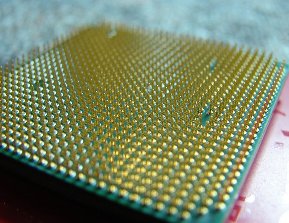
    How safe are our chips?

    One of the reasons that we have so many gadgets at low costs, with a regular re-fresh and re-tool of the internals is that many of our computing chips and circuit boards are built overseas in factories that are optimized for low costs and rapid evolution to new technologies. That works fine for consumers, but it presents a problem for a government concerned with security.

    Since the fabrication plants are under the control of a foreign government, that means that the military and governments that want to use the same chips that consumers use must vet the designs, and then the end product. This piece talks about the problems with the supply chain that can come from foreign suppliers that might have incentives to allow hardware hacks into the designs at the request of their own governments.

    The world continues to grow closer economically, but we still have our own national patriotism and loyalty . We want our own countries to grow and do well, and our companies to grow inside of our own borders. As the stakes raise, will foreign supplies think about introducing backdoors or other hardware hacks into more of our chips? Imagine the problems we might have if our x64 chips contained a way for foreign companies to access our data?

    Criminals certainly would love these hardware hacks and as they get more and more sophisticated, I wouldn’t be surprised if this becomes an attack vector in the future. We might find in the future that we will not only have choices between Intel and AMD, but also choices between domestic produced and foreign produced chips.

    Steve Jones


    The Voice of the DBA Podcasts

  • Why Two Devices

    I used to travel with two laptops, one as a backup, however lately I’ve switched to taking the iPad and a laptop. The iPad doesn’t double as a backup, but it does let me do things like take notes at events or conferences with an extremely long battery life. My laptop only gets 2-2.5 hours, and when you’re on the go for 10 hours, you need something else. I also use the iPad for demos of SQL Monitor, from Red Gate, using http://monitor.red-gate.com/ 

    However I’ve been tempted to get a real second machine, something that is truly a backup. I read Brent Ozar’s post on his MacBook Air, and it’s really tempting to get one of those, especially as I use VMware, which works agree both Mac and PCs.

    Seth Godin as another interesting argument for a second machine. Use one for pleasure, or distractions, and one for work. That’s not bad, but I kind of do that with my phone. I read on it and listen to music, as a break from the laptop (or sometimes in conjunction with it).

    I’m a practical guy, and don’t want to get (too many) gadgets for fun, especially laptops. I went through that last year, going from a Win 7 tablet to the iPad, which was a good move for me. At least my daughter thinks so.

    For now I think I’ll stick with just the iPad and my Lenovo. However when I look for a new laptop, I have to say that the MBP will be high on my list, just to try something new.