Tag: Redgate

  • Friday Flyway Tips–Seeing Pending Migrations

    I find that quite a few people using Flyway will end up with a lot of migration scripts over time. While you can certainly re-baseline and split scripts into separate folders, visualizing these over time can be hard.

    The Flyway Desktop team added a nice little option that makes it easier to see new work as opposed to old work.We’ll look at that in this post.

    I’ve been working with Flyway Desktop for work more and more as we transition from older SSMS plugins to the standalone tool. This series looks at some tips I’ve gotten along the way.

    Lots of Migration Scripts

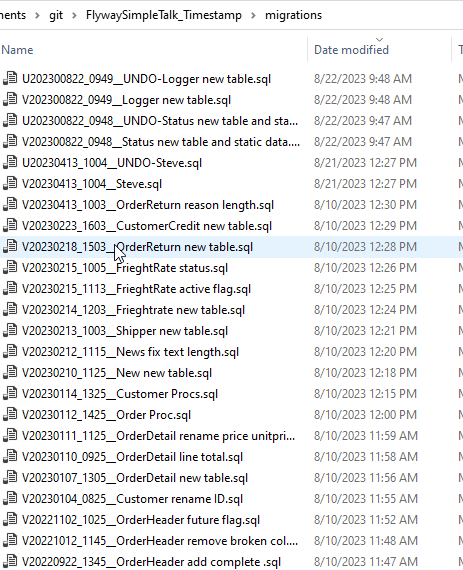
    We might see a lot of migration scripts over time in a folder. Certainly I can see this in the file system for one of my projects.
    2023-10-19 15_06_07-migrations

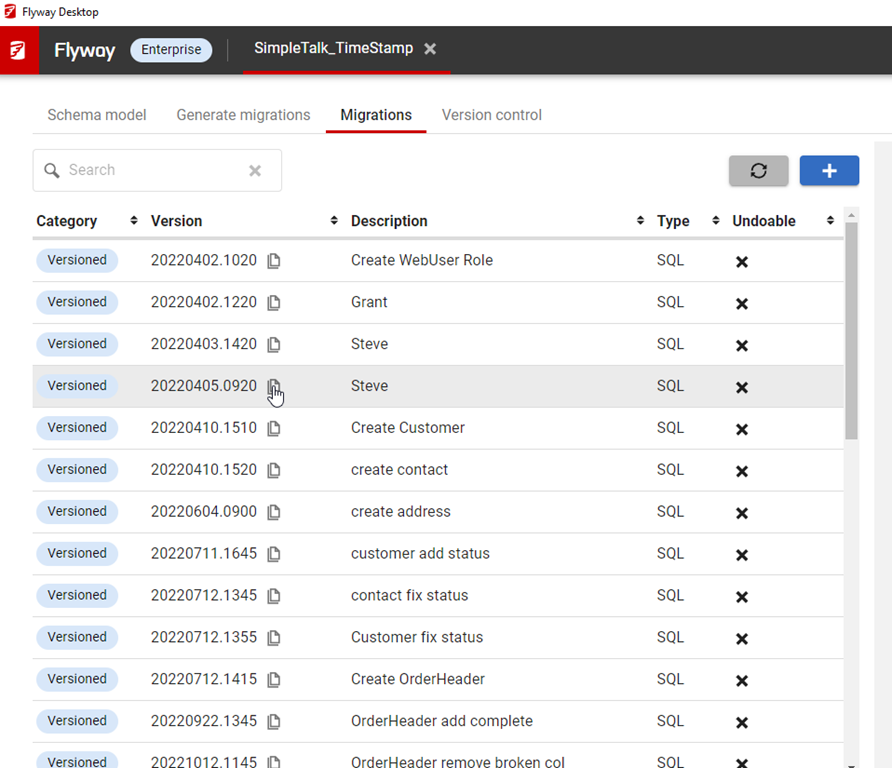
    In Flyway Desktop,  here is my view.

    2023-10-19 15_40_08-Flyway Desktop

    That is a lot of scripts. Since these are ordered as they would apply, it can be a lot of scrolling to find the ones that haven’t been applied.

    However, if I click an environment on the right, I get a different view. Now I see a checkbox above the migrations that says “Only show pending migrations”.
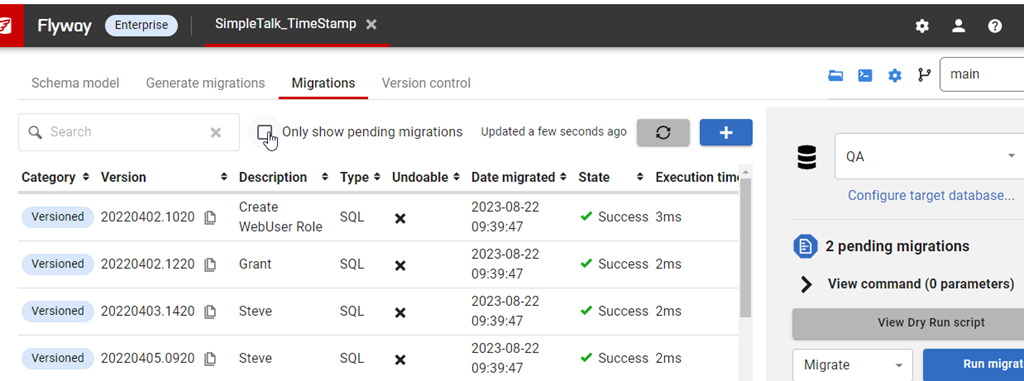
    2023-10-19 15_40_29-Flyway Desktop

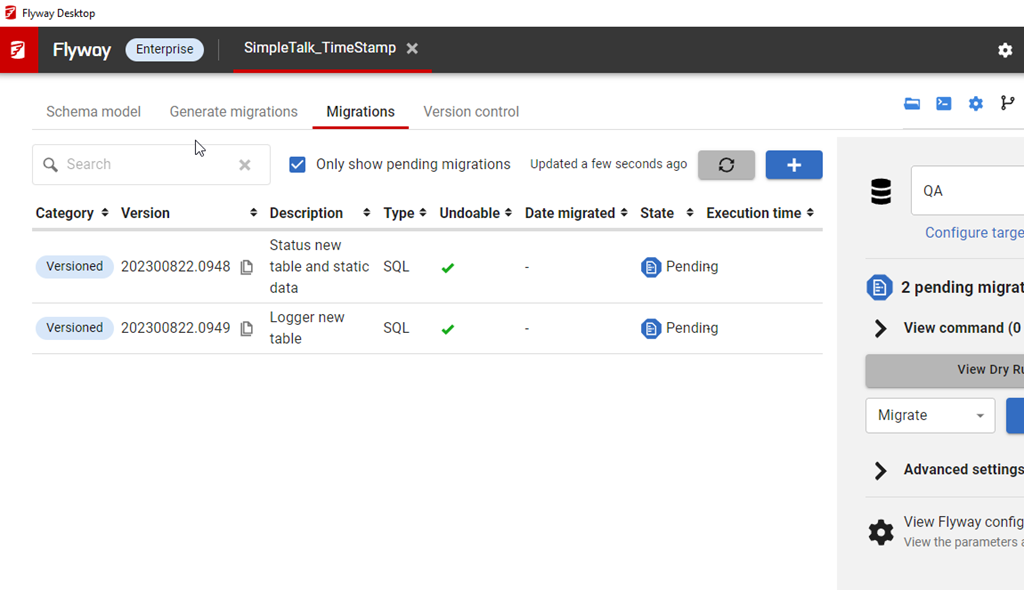
    If I click that, I see a view of the few that haven’t been applied to this environment.
    2023-10-19 15_42_13-Flyway Desktop

    A quick way to see what work has been added to the project, but not applied to other environments.

    Try it out today. If you haven’t worked with Flyway Desktop, download it today. There is a free version that organizes migrations and paid versions with many more features.

    Video Walkthrough

    I made a quick video showing this as well. You can watch it below, or check out all the Flyway videos I’ve added:
  • Finding Object Dependencies in SQL Doc

    I had a customer recently ask if they could find out which objects are dependent on others using SQL Doc. This post shows how to do that.

    Using SQL Doc

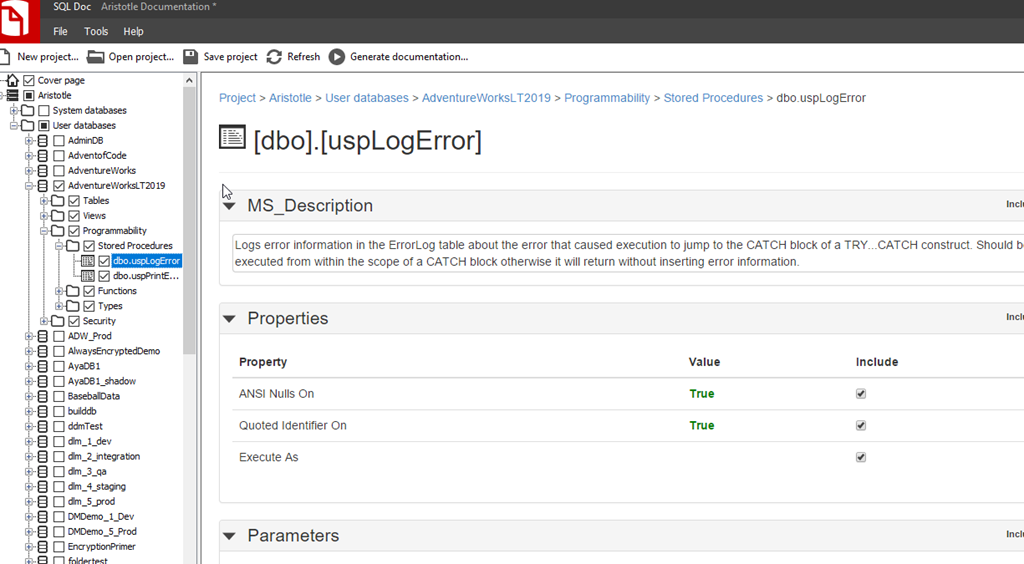
    In the SQL Doc application, you can dive down into the various objects in your database. As I’ve shown below, I navigated on the left side down to a specific object.

    2023-10-18 13_03_42-SQL Doc - Aristotle Documentation _

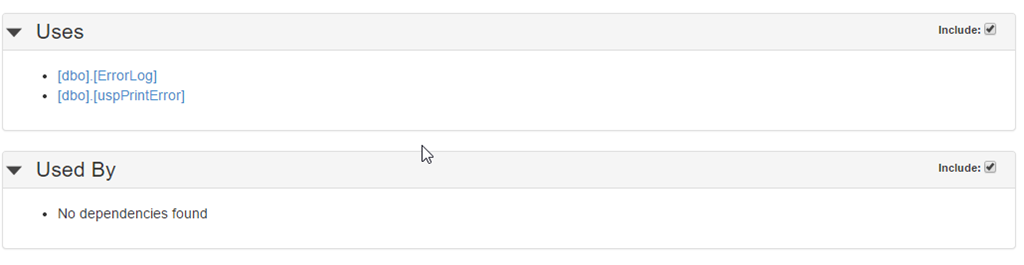
    This gives me the basics of this object, but I can scroll down and see more. The lower part below the script shows what this object depends on (Uses) and what other objects depend this one (Used By). In this case, this object depends on dbo.ErrorLog and dbo.uspPrintError.

    2023-10-18 13_05_18-SQL Doc - Aristotle Documentation _

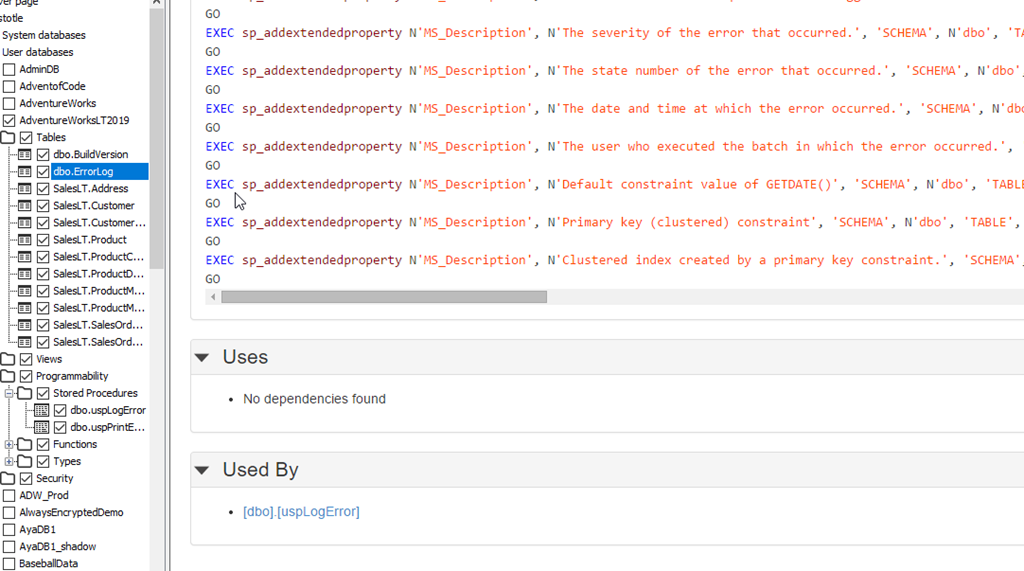
    The reverse of this can be seen in these objects. If I look at dbo.ErrorLog, then I see this proc (dbo.uspLogError) listed.

    2023-10-18 13_05_32-SQL Doc - Aristotle Documentation _

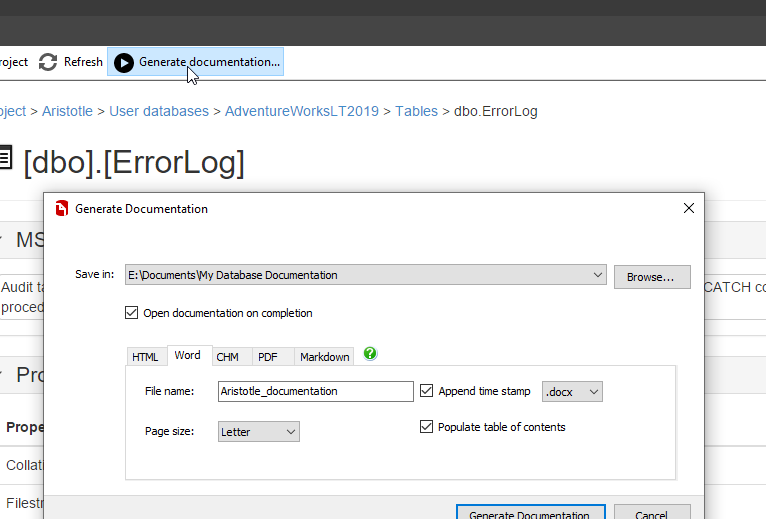
    This is really a preview of documentation, not the docs themselves. While you can edit the MS_Description at the top, this isn’t the tool I’d expect most users to use. Instead, you ought to click Generate documentation at the top and choose the type you need.

    2023-10-18 13_08_18-SQL Doc - Aristotle Documentation _

    Or better yet, use the command line and ensure this is regenerated after every release.

    Searching the Documentation

    Once the documentation is generated, it’s in static text files. These might be Word or some other format, but they are files in your machine.

    If you want to search something, then you would use that search facility. A few examples below:

    Word

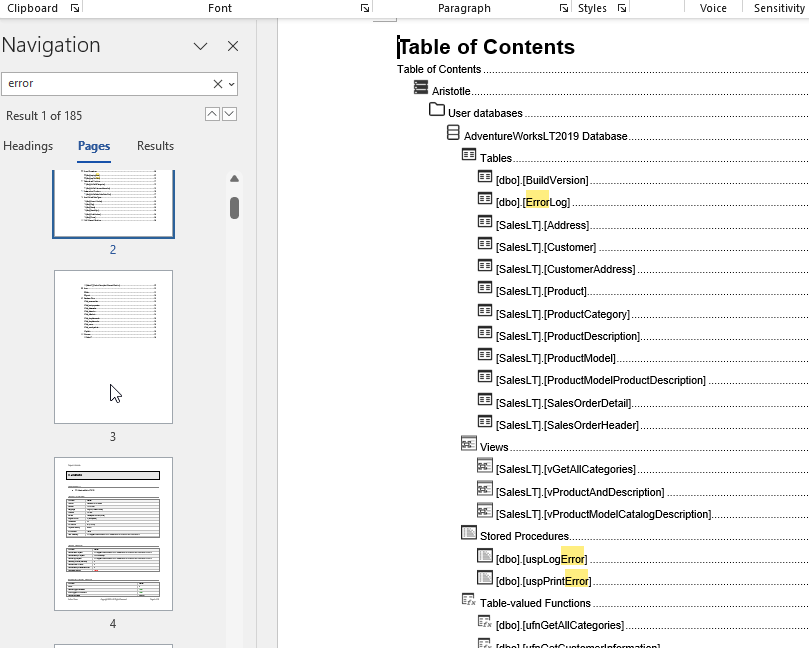
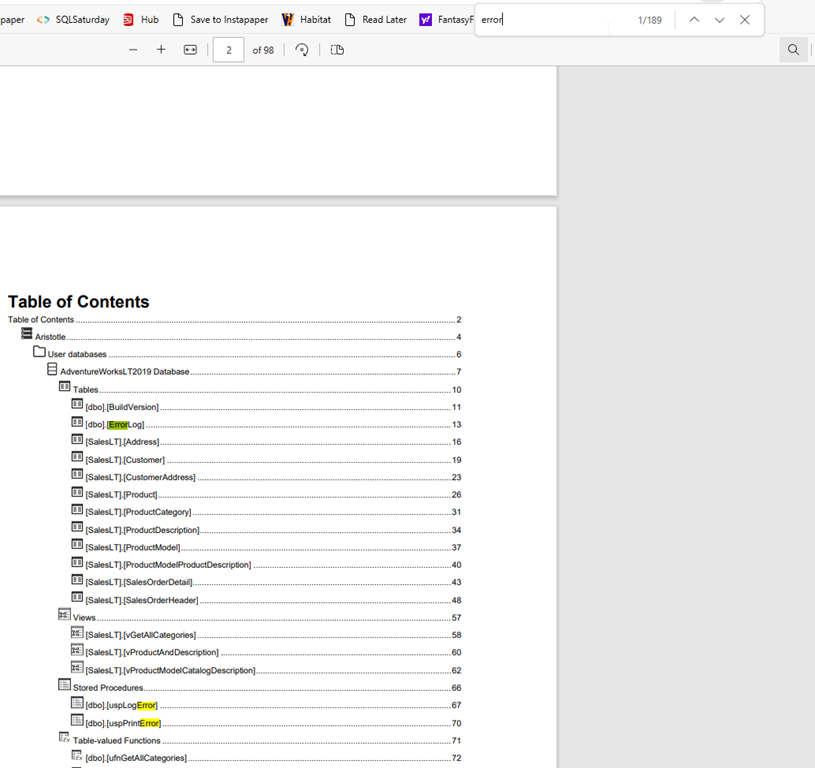
    In Word, as you can see, if I hit CTRL+F, I can search for something, like Error. That gives me a lot of results.

    2023-10-18 13_09_43-Project Llama Overlay

    Not the easiest thing to search, but seeing this results in the TOC let’s me scroll down to jump to a page.

    PDF

    If I generate a PDF, this often renders in some application. For example, by default, this opens in a browser for me. If I want to search for “error”, I can again, CTRL+F and enter the term.

    2023-10-18 13_12_29-Aristotle_documentation-2023-10-18T13-12-01.pdf and 20 more pages - Personal - M

    HTML

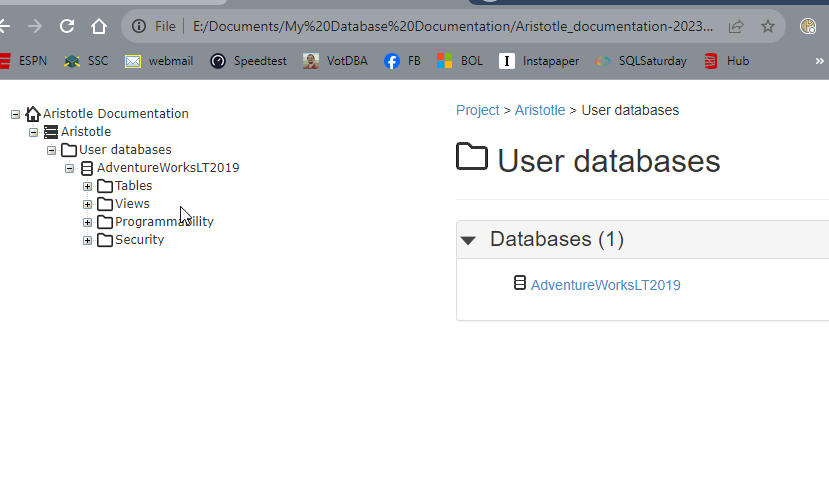
    The HTML docs open in a browser, but they’re not directly searchable. There isn’t a place to click search.

    2023-10-18 13_13_37-User databases

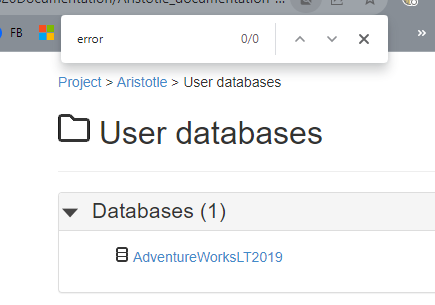
    If I use CTRL+F, it doesn’t work because the docs for each object are in separate files.

    2023-10-18 13_13_57-User databases

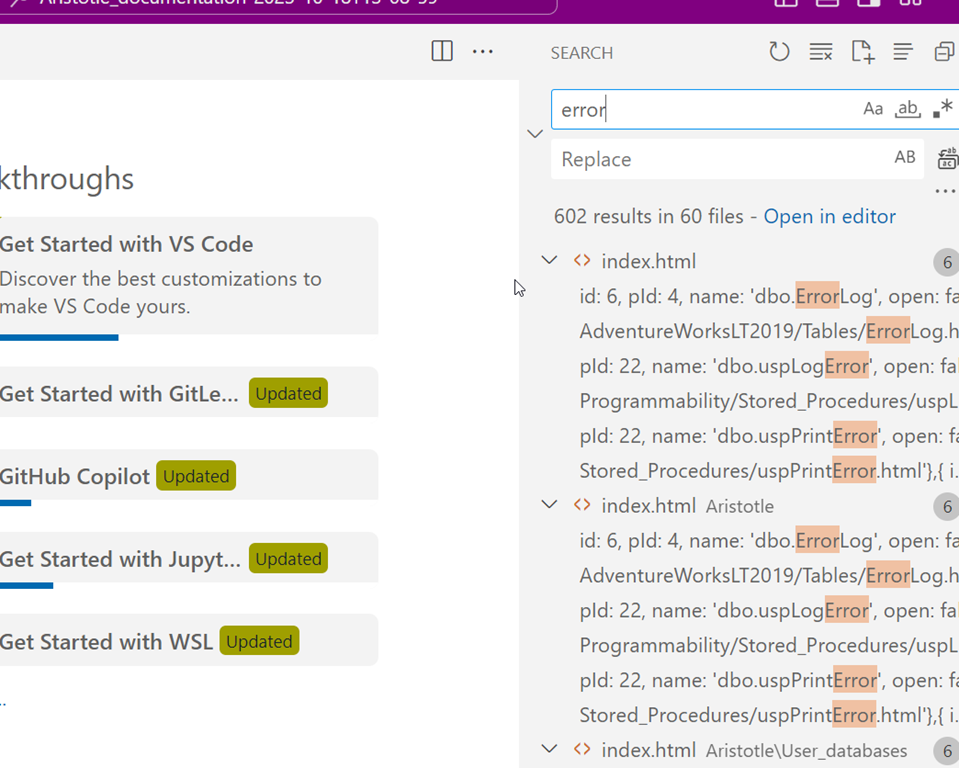
    However, I can do some searching in the files if I use something like Visual Studio code to open the entire folder. It’s not the prettiest search, but it works.

    2023-10-18 13_16_18-Welcome - Aristotle_documentation-2023-10-18T13-08-59 - Visual Studio Code

    Recommendations

    I’d recommend you do two things.

    1. Ensure that this is regenerated automatically with every deployment. Either to QA or prod, your choice. Depends on how your developers use docs.
    2. Pic a searchable format, either Word or PDF.

    SQL Doc is one of those utilities that can help a team share information, especially to report writers or others that might need to understand what fields are available and what they are used for, but don’t know the databases that well.

    One thing to think about is a layer of abstraction for non technical people where you only generate docs for views that have well named columns for people to use in reports.

  • Creating a SQL Clone Image from a SQL Clone Database

    A customer asked if a new image could be created from a database that was itself a SQL Clone. It can, and I’ll show that in this post.

    This is part of a series of posts on SQL Clone, which is a virtualization product from Redgate Software.

    Creating a New Image

    To start with, I’ll look at the clones that I have deployed on a test server. As you can see below, I have a database, called “SimpleTalk”, on a local instance.

    2023-09-29 15_52_52-Zoomit Zoom Window

    I’m going to use this to create an image. First, I’ll click “Create Image” on the left. I’ll choose SQL Server, since I will use the existing cloned database as the source.

    2023-09-29 15_53_00-SQL Clone

    I pick the instance and database. As you can see, I’ve chosen the database that was listed above as a clone.

    2023-09-29 15_53_10-SQL Clone

    Next we skip the classification screen. This is a test db, so no data in there to worry about.

    2023-09-29 15_53_14-SQL Clone

    I’m not going to modify this, as this is a test.

    2023-09-29 15_53_17-SQL Clone

    Now I pick the destination, which is a local share.

    2023-09-29 15_53_21-SQL Clone

    I give this a name which differentiates from the original db and other images. I normally want to name all images as _new or _current for rotation purposes, but here I’m adding a test name since I’ll delete this right away.

    2023-09-29 15_53_32-SQL Clone

    You can see this start working.

    2023-09-29 15_53_36-SQL Clone

    And it completes in about the time for a restore. If I had added masking, this would run a little slower.

    2023-09-29 15_53_59-SQL Clone

    I have the image created, so it’s time to test this with a new database.

    Validating the Image with a Clone

    Click “Create clone” on the left menu and you get a dialog that asks for an image. I’ll pick the one I created above.

    2023-09-29 15_54_06-SQL Clone

    Once we chose the image, we can modify it. We won’t here.

    2023-09-29 15_54_11-SQL Clone

    Now we add an instance and a name. I’ve entered those below.

    2023-09-29 15_54_24-SQL Clone

    Once this completes, I can see this database, and my other clone in the SSMS Object Explorer.

    2023-09-29 15_54_37-SQLQuery14.sql - ARISTOTLE.sandbox (ARISTOTLE_Steve (75))_ - Microsoft SQL Serve

    If I query both databases, I get the same data, since I haven’t changed either one during this process. Note below that each one of these queries is from a cloned database.

    2023-09-29 15_55_23-SQLQuery1.sql - ARISTOTLE.SimpleTalk Cloned Clone (ARISTOTLE_Steve (54))_ - MicrThe SQL Clone cloned database is just a database. SQL Server sees it as any other database, as SQL Clone presents the mdf/ldf/ndf as any other database. You can back it up like any other one.

    If you are looking to save storage space for multiple copies of databases, or give each user a consistent copy in seconds, check out SQL Clone.

  • The Database DevOps Roadshow Continues (with fun photos)

    At SQL Saturday Denver 2023, I had a few people ask me about the Redgate Database DevOps roadshow and how it was going. A few people asked about the van as well.

    Here’s the van, with my ready to rock in Chicago:

    IMG_5860

    Chicago is done, but we have a few more dates coming:

    • Oct 11 – Atlanta
    • Oct 19 – Jacksonville
    • Oct 26 – San Diego
    • Nov 1 – San Francisco
    • Nov 14 – Seattle

    All these are on the Redgate Events page.

    IMG_5776_copy

    I won’t be doing any in October, as you can see above, I’m tired. With the 3 US ones and the 3 UK ones I did across Aug/Sept, I was gone 24 days from Aug 23-Sept 21. I need a break, as shown below:

    IMG_6182

    The show goes on, and I’ll see (some) of you in Nov.

    Redgate-on-the-move