Category: Blog

  • Migrating MySQL Databases

    A little out of my area, but I need to move the tsqltuesday.com database to a new service. The company running the db decided that they don’t want to keep a lower level consumer type tier. Since their minimum plan is now $20/month, I decided to look elsewhere. My first move was to try Azure Database for MySQL. This is a quick look at moving the MySQL data.

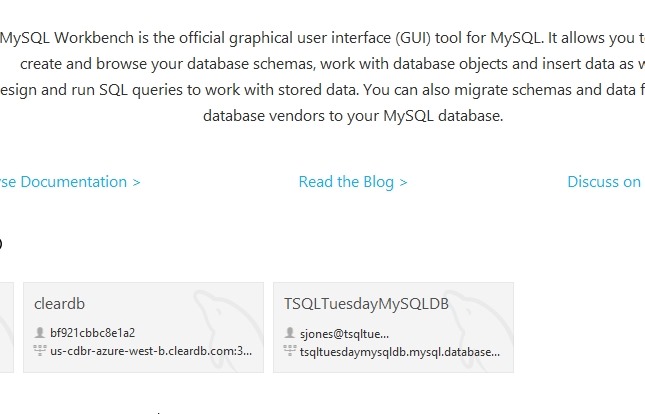
    I have MySQL Workbench, so I started that up. I saw a note that this contained a migration wizard. I first created a MySQL database in Azure, which is really simple. Then I created two connections from MySQL Workbench. One to the existing database and one to my new one.

    2018-02-08 13_50_54-MySQL Workbench

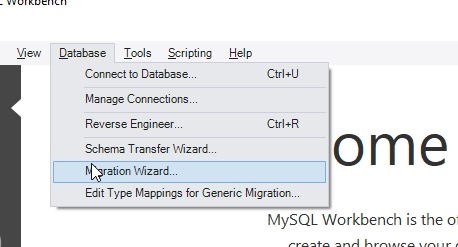
    The next step was to start the Migration Wizard. This is under the Database menu.

    2018-02-08 13_51_07-MySQL Workbench

    As with all wizards, this opens with a welcome page.  I clicked Start Migration to get going.

    2018-02-08 13_51_24-Why GDPR Will Fast Track the Fourth Industrial Revolution _ HuffPost

    The wizard is fairly simple. Once I had this working, I walked through the wizard, choosing my source and destination. This was a simple process and things connected up once I’d opened the firewall.

    2018-02-08 13_51_58-MySQL Workbench

    After verifying connections, I selected everything. Since this is a WordPress site, it’s a fairly small schema and set of objects.

    2018-02-08 13_52_21-MySQL Workbench

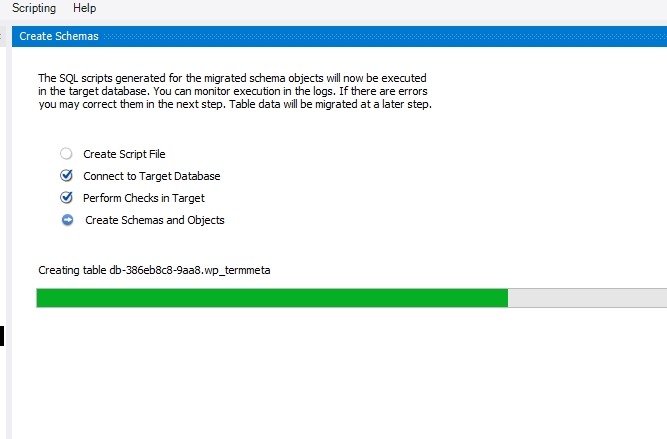
    I basically clicked next, next, and let everything transfer. This only took about 5 minutes.

    2018-02-08 13_52_40-MySQL Workbench

    Once this was done, I queried the database, and everything was working. I saw my data and it appeared complete. No errors, so I assumed things were correct. Row counts seemed to verify this.

    2018-02-08 13_55_58-MySQL Workbench

    This was pretty simple, perhaps even easier than using SSIS and the Copy Database Task since this was built in.

    Now to figure out how to re-point the application.


  • Moving Lookup Data with ReadyRoll

    I’ve been using ReadyRoll for a small project and wanted to move some lookup data. There are some tables where I want to keep data in sync across environments, so if my build and release pipeline can do this, great. ReadyRoll makes this easy, and this is a short post to show how.

    The Current Environment

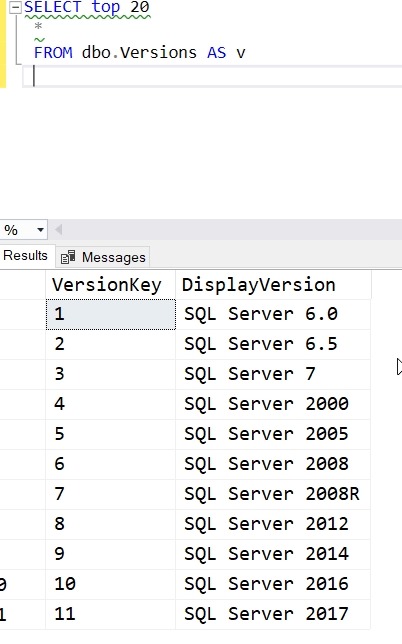
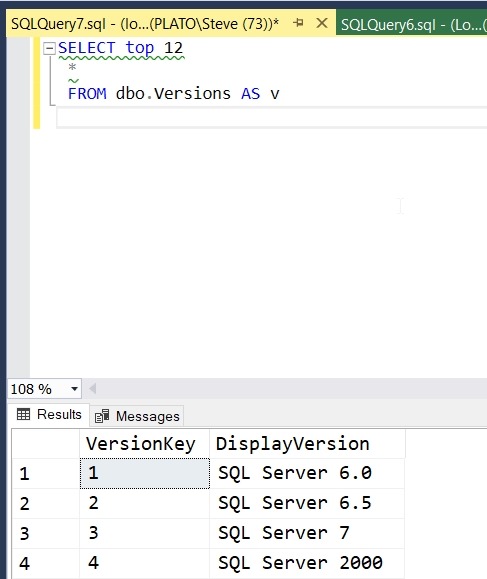
    I’ve got a table in my dev database that has SQL Server versions. I can see the list here:

    2018-01-31 12_15_05-SQLQuery6.sql - (LocalDB)_Projectsv13.SSBuilds_1Dev (PLATO_Steve (51))_ - Micros

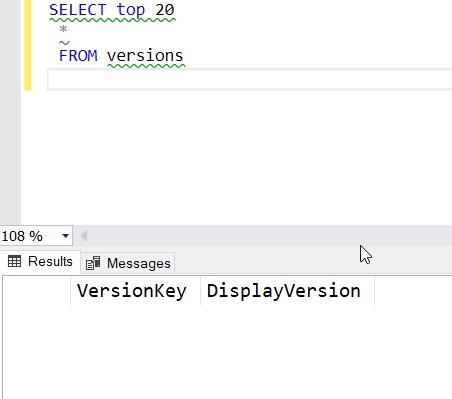
    In my QA and staging systems, I see this (only one is shown, but it’s the same in both).

    2018-01-31 12_13_41-SQLQuery5.sql - dkranchstaging.database.windows.net.ssbuildsRRstaging (vstsdeplo

    The goal is to have this data migrate with other changes in a build and release pipeline.

    Adding Data to the Project

    I’ve already built this as a ReadyRoll project and set up a build and release pipeline in VSTS. Now I want to include my data.

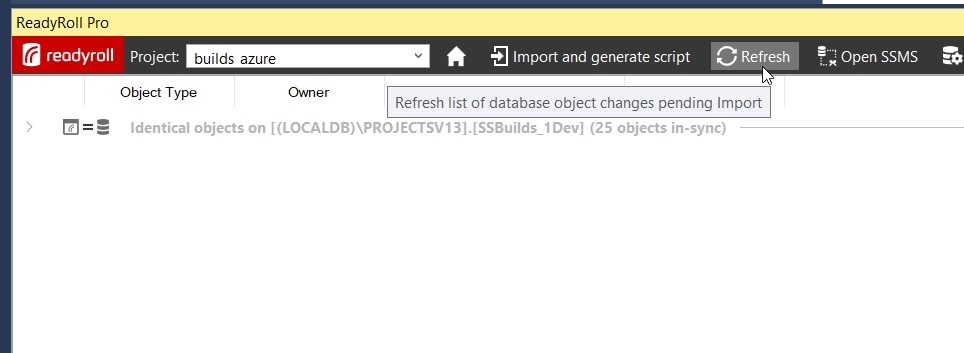
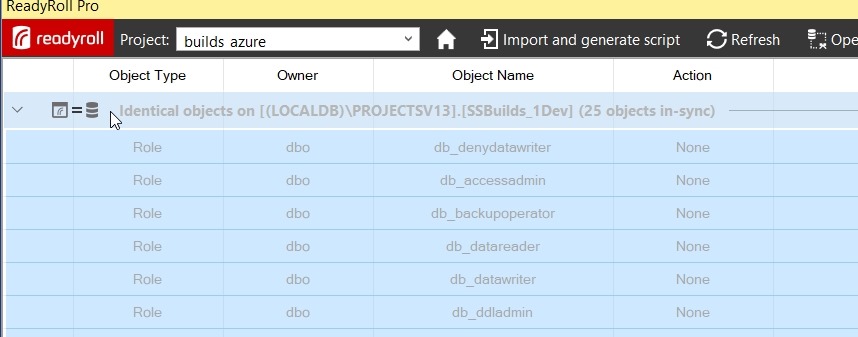
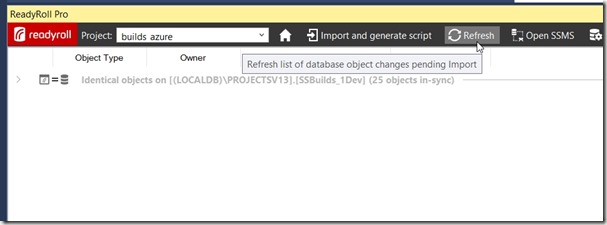
    In the ReadyRoll tool window, I have refreshed the project and I see everything in sync. That’s good, and that’s how I want to be starting a small section of development.
    2018-01-31 12_11_09-builds_azure - Microsoft Visual Studio

    I want to find my table, so I need to expand the “Identical Objects”. When I do that, I see a list of all objects in the database.
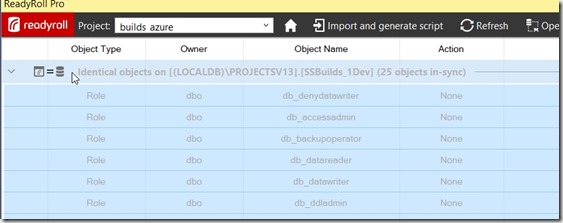
    2018-01-31 12_17_22-builds_azure - Microsoft Visual Studio

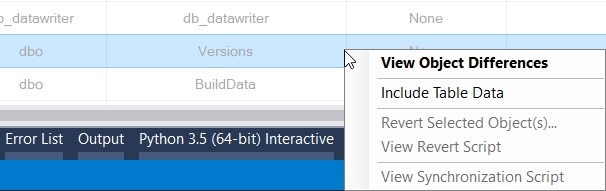
    I can scroll down to find my table. When I do, I’ll right click it to get a few options. One of these is “Include Table Data”. We want to pick this one.
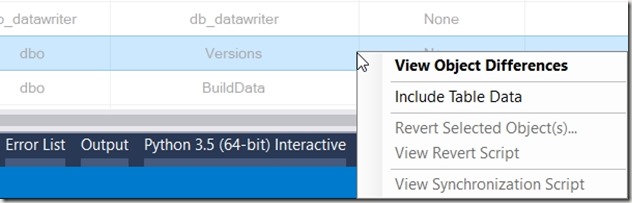
    2018-01-31 12_20_01-

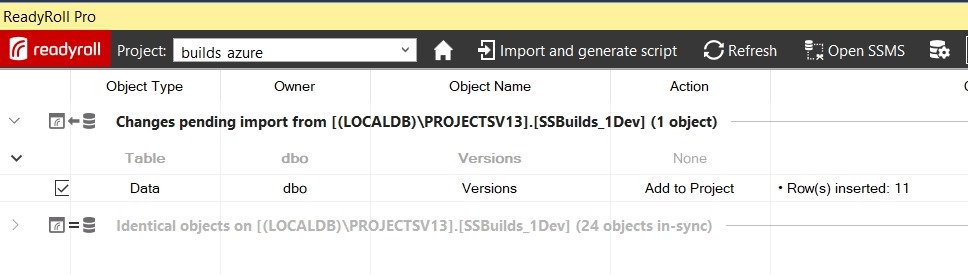
    Once I do that, I get a note to refresh again. This is so RR can determine what table data needs to be added to a migration script.

    2018-01-31 12_21_07-builds_azure - Microsoft Visual Studio

    My changes show that I need to get 11 rows of data into a new script.
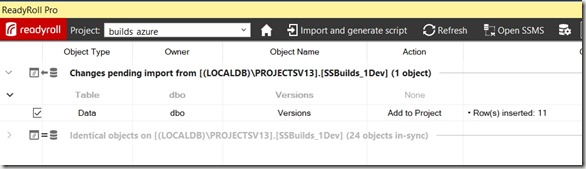
    2018-01-31 12_21_44-builds_azure - Microsoft Visual Studio

    I click Import and generate script, which will build my migration script and add it to the project. In my case, this is script 4.

    2018-01-31 12_23_00-builds_azure - Microsoft Visual Studio

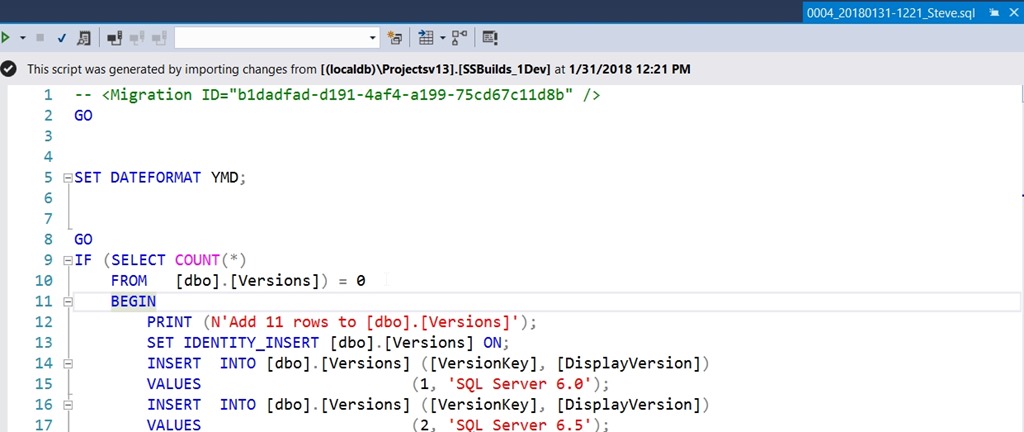
    Note that this script has a few things in it, based on a call to SQL Data Compare in the background. First, it sets a dateformat. Next, it does the insert for an empty table, since that is the situation I’m in. Last, this uses the SET IDENTITY_INSERT option.

    If you don’t like these options, change them here. You can alter this script to suit your environment. Remove the IF, let the identities be what they are, make the changes that matter to you.

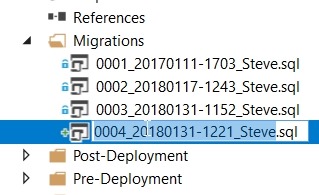
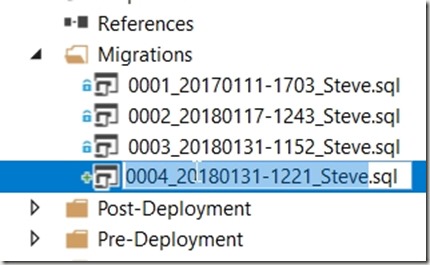
    The only thing I’ll do is click the script name twice to edit it.
    2018-01-31 12_25_08-builds_azure - Microsoft Visual Studio

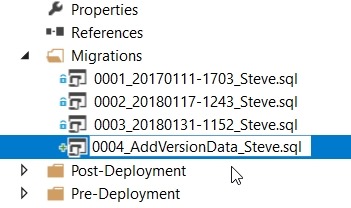
    The numeric sequencing is important. The rest, not so much. I’ll choose something simple here.
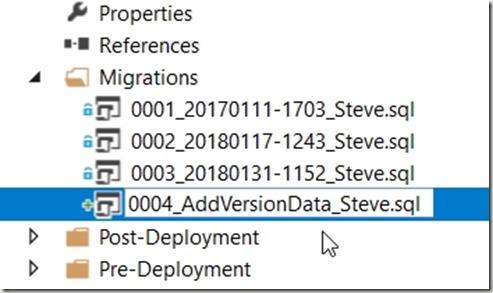
    2018-01-31 12_25_21-builds_azure - Microsoft Visual Studio

    Build the Project

    I can build locally, and I always should to be sure things work. Once I see this and I’ve tested a few things, I’ll let the “system” do more work.

    2018-01-31 12_28_32-builds_azure - Microsoft Visual Studio

    The nice thing about ReadyRoll is that I can include my database project alongside application projects, if I want. For application developers or hybrid developers, I can use a consistent interface for saving changes to version control.

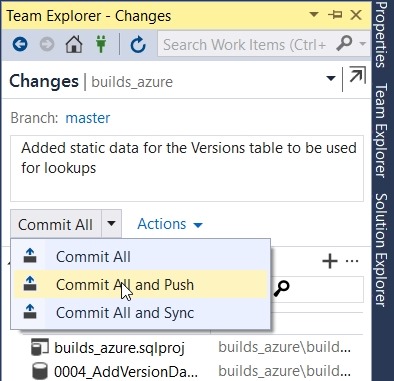
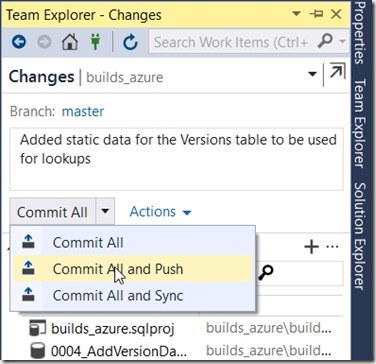
    In Team Explorer, I’ll check changes, add a comment, and then Commit and Push.
    2018-01-31 12_30_36-builds_azure - Microsoft Visual Studio

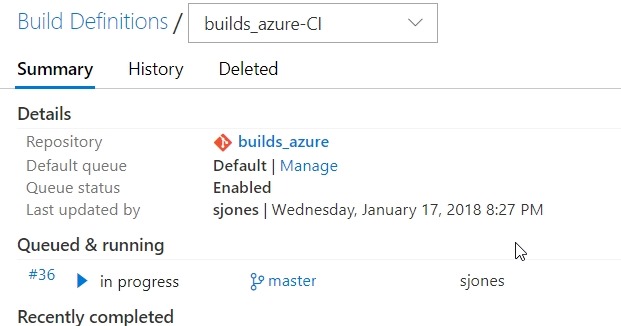
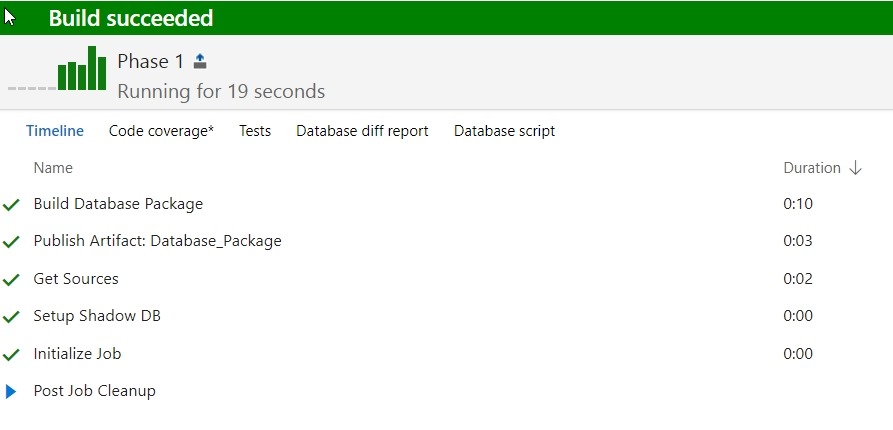
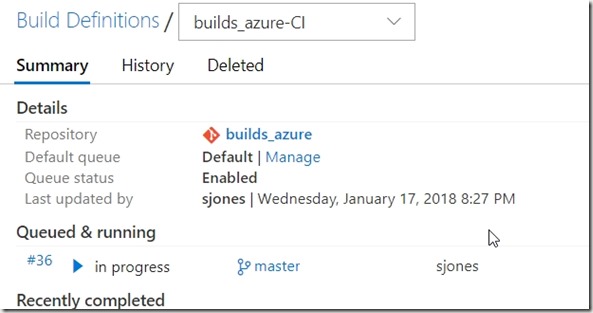
    If I go to VSTS, I’ll see the build in progress. I’m using a local build agent and usually within 15 seconds, my build will start. Sometimes it’s really fast.
    2018-01-31 12_31_04-builds_azure-CI summary

    If I click the build number, I can see I’ve barely caught this before it finished.

    2018-01-31 12_31_19-Build 36

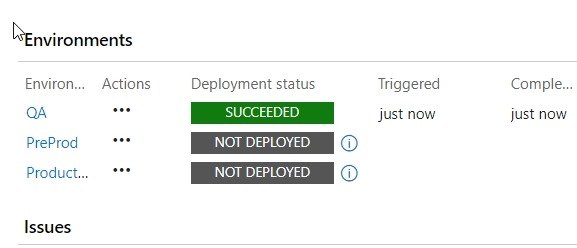
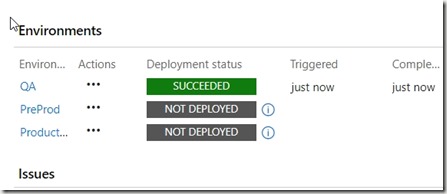
    The build completes, so now I need to check releases. I have a CD trigger that will deploy to a local QA instance when the build succeeds. If I go look at the release, I’ll see that’s occurred.
    2018-01-31 12_35_49-Release-14 - Visual Studio Team Services

    This worked, so let’s check the QA instance. As you can see, my data was deployed.

    2018-01-31 12_36_43-SQLQuery7.sql - (local)_SQL2016.ssbuilds_rr_sjones_2_integration (PLATO_Steve (7

    If you were watching closely, you see I have a small data issue. I need to correct that, but that’s for another post.

    ReadyRoll is a part of the SQL Toolbelt, and if you’re a customer, I’d urge you to start a PoC and see what you think of the tool. ReadyRoll Core, with limited features, is included with Visual Studio Enterprise, and if you’re a customer of Microsoft, you can try that. We also have 14 day trials if you’d like to do this on your own.
  • Getting Your SET Options

    Have you ever used @@options? I haven’t typically needed this, but there are times that you might wonder what options are set for a session. You can check in SSMS, look for defaults, etc., but there’s an easy way.

    SELECT @@OPTIONS

    This uses the @@options function, which contains a bitmap of your session settings. There are defaults with the sp_configure user options, but these can be overridden.

    If you want to get the options, which are also stored as bitmaps in various places, you can code them with this BOL article.

    Or use a script like this:

    DECLARE @i INT;
    SELECT @i = @@OPTIONS;
    SELECT ConstraintChecking = CASE WHEN (@i & 1 = 1 ) THEN 'ON' ELSE 'OFF' end,
            ImplicitTransactions = CASE WHEN (@i & 2 = 2 ) THEN 'ON' ELSE 'OFF' end,
            CursorCloseonCommit = CASE WHEN (@i & 4 = 2 ) THEN 'ON' ELSE 'OFF' end,
            AnsiWarnings = CASE WHEN (@i & 8 = 8 ) THEN 'ON' ELSE 'OFF' end,
            AnsiPadding = CASE WHEN (@i & 16 = 16 ) THEN 'ON' ELSE 'OFF' end,
            AnsiNulls = CASE WHEN (@i & 32 = 32 ) THEN 'ON' ELSE 'OFF' end,
            ArithAbortSetting = CASE WHEN (@i & 64 = 64 ) THEN 'ON' ELSE 'OFF' end,
            ArithIgnoreSetting = CASE WHEN (@i & 128 = 128 ) THEN 'ON' ELSE 'OFF' end,
            QuotedIdentifer = CASE WHEN (@i & 256 = 256 ) THEN 'ON' ELSE 'OFF' end,
            NoCount = CASE WHEN (@i & 512 = 512 ) THEN 'ON' ELSE 'OFF' end,
            AnsiNullDefaultOn = CASE WHEN (@i & 1024 = 1024 ) THEN 'ON' ELSE 'OFF' end,
            AnsiNullDefaultOff = CASE WHEN (@i & 2048 = 2048 ) THEN 'ON' ELSE 'OFF' end,
            ConcatNullYieldsNull = CASE WHEN (@i & 4096 = 4096 ) THEN 'ON' ELSE 'OFF' end,
            NumericRoundAbort = CASE WHEN (@i & 8192 = 8192 ) THEN 'ON' ELSE 'OFF' end,
            XactAbort = CASE WHEN (@i & 16384 = 16384 ) THEN 'ON' ELSE 'OFF' END

    For the row-based people, how about this:

    DECLARE @i INT;
    SELECT @i = @@OPTIONS;
    SELECT 'ConstraintChecking', CASE WHEN (@i & 1 = 1 ) THEN 'ON' ELSE 'OFF' END
    UNION 
    SELECT  'ImplicitTransactions', CASE WHEN (@i & 2 = 2 ) THEN 'ON' ELSE 'OFF' end
    UNION 
    SELECT  'CursorCloseonCommit', CASE WHEN (@i & 4 = 4 ) THEN 'ON' ELSE 'OFF' end
    UNION 
    SELECT  'AnsiWarnings', CASE WHEN (@i & 8 = 8 ) THEN 'ON' ELSE 'OFF' end
    UNION 
    SELECT  'AnsiPadding', CASE WHEN (@i & 16 = 16 ) THEN 'ON' ELSE 'OFF' end
    UNION 
    SELECT  'AnsiNulls', CASE WHEN (@i & 32 = 32 ) THEN 'ON' ELSE 'OFF' end
    UNION 
    SELECT  'ArithAbortSetting', CASE WHEN (@i & 64 = 64 ) THEN 'ON' ELSE 'OFF' end
    UNION 
    SELECT  'ArithIgnoreSetting', CASE WHEN (@i & 128 = 128 ) THEN 'ON' ELSE 'OFF' end
    UNION 
    SELECT  'QuotedIdentifer', CASE WHEN (@i & 256 = 256 ) THEN 'ON' ELSE 'OFF' end
    UNION 
    SELECT  'NoCount', CASE WHEN (@i & 512 = 512 ) THEN 'ON' ELSE 'OFF' end
    UNION 
    SELECT  'AnsiNullDefaultOn', CASE WHEN (@i & 1024 = 1024 ) THEN 'ON' ELSE 'OFF' end
    UNION 
    SELECT  'AnsiNullDefaultOff', CASE WHEN (@i & 2048 = 2048 ) THEN 'ON' ELSE 'OFF' end
    UNION 
    SELECT  'ConcatNullYieldsNull', CASE WHEN (@i & 4096 = 4096 ) THEN 'ON' ELSE 'OFF' end
    UNION 
    SELECT  'NumericRoundAbort', CASE WHEN (@i & 8192 = 8192 ) THEN 'ON' ELSE 'OFF' end
    UNION 
    SELECT  'XactAbort', CASE WHEN (@i & 16384 = 16384 ) THEN 'ON' ELSE 'OFF' END

    UPDATE: From the comments, an UNPIVOT might be easier to read for some of you.

    DECLARE @i INT;
    SELECT @i = @@OPTIONS;
    SELECT [Option], [Value]
    FROM(
    SELECT ConstraintChecking = CASE WHEN (@i & 1 = 1 ) THEN ‘ON’ ELSE ‘OFF’ end,
    ImplicitTransactions = CASE WHEN (@i & 2 = 2 ) THEN ‘ON’ ELSE ‘OFF’ end,
    CursorCloseonCommit = CASE WHEN (@i & 4 = 2 ) THEN ‘ON’ ELSE ‘OFF’ end,
    AnsiWarnings = CASE WHEN (@i & 8 = 8 ) THEN ‘ON’ ELSE ‘OFF’ end,
    AnsiPadding = CASE WHEN (@i & 16 = 16 ) THEN ‘ON’ ELSE ‘OFF’ end,
    AnsiNulls = CASE WHEN (@i & 32 = 32 ) THEN ‘ON’ ELSE ‘OFF’ end,
    ArithAbortSetting = CASE WHEN (@i & 64 = 64 ) THEN ‘ON’ ELSE ‘OFF’ end,
    ArithIgnoreSetting = CASE WHEN (@i & 128 = 128 ) THEN ‘ON’ ELSE ‘OFF’ end,
    QuotedIdentifer = CASE WHEN (@i & 256 = 256 ) THEN ‘ON’ ELSE ‘OFF’ end,
    NoCount = CASE WHEN (@i & 512 = 512 ) THEN ‘ON’ ELSE ‘OFF’ end,
    AnsiNullDefaultOn = CASE WHEN (@i & 1024 = 1024 ) THEN ‘ON’ ELSE ‘OFF’ end,
    AnsiNullDefaultOff = CASE WHEN (@i & 2048 = 2048 ) THEN ‘ON’ ELSE ‘OFF’ end,
    ConcatNullYieldsNull = CASE WHEN (@i & 4096 = 4096 ) THEN ‘ON’ ELSE ‘OFF’ end,
    NumericRoundAbort = CASE WHEN (@i & 8192 = 8192 ) THEN ‘ON’ ELSE ‘OFF’ end,
    XactAbort = CASE WHEN (@i & 16384 = 16384 ) THEN ‘ON’ ELSE ‘OFF’ END) AS options
    UNPIVOT (
    [Value] FOR [OPTION] IN ([ConstraintChecking],[ImplicitTransactions],[CursorCloseonCommit],[AnsiWarnings],[AnsiPadding],[AnsiNulls],[ArithAbortSetting],[ArithIgnoreSetting],[QuotedIdentifer],[NoCount],[AnsiNullDefaultOn],[AnsiNullDefaultOff],[ConcatNullYieldsNull],[NumericRoundAbort],[XactAbort])
    ) AS T1
    ORDER BY [Option]
    GO
  • Learning Goals–January Review

    In December I participated in T-SQL Tuesday #97 and wrote a post about 2018 goals. I promptly spent two weeks out of the country and then a relaxing holiday season. Actually, holidays extended slightly with a ski trip and a wedding in January.

    This is a look back at my goals, since I have a monthly reminder to do so. This is the first review, a little late as I’ve struggled to focus a bit on work in January, but here goes.

    Progress

    I picked two things to work on this year: Python and Extended Events. I’m failing miserably in both.

    I did work on a little Python in solving a few of the Advent of Code puzzles, but I’ve only read a few pages in the Machine Learning book and not much else. I’ve gotten distracted by other items on my list.

    I haven’t done anything on Extended Events.

    I did play with a little more Pester, and I set up an MVC site in a project for a demo, so I tackled things that interest me, but not in the extra areas I wanted to learn.

    Planning and Moving Forward

    I didn’t actually do my planning in December. When the appointment came up, I was a little buried with other items and let it pass without rescheduling.

    Moving forward, here’s what I want to do. I’m going to set a reminder for Tuesday afternoons to spend an hour on XE. I’ll set that for 3 months and see where we stand. I’m hoping to work through a bit of Pluralsight courses and then some of Jason Brimhall’s series on his blog.

    For Python, I’m going to take some time on Friday mornings here. That’s likely a slower time for me, so I’m scheduling a half hour to work on something with Python. I need to refresh some core skills and then move on from there. I’ll likely go back through a bit of the Dive into Python book, then try moving to a bit of ML stuff. This is good as I’ll get some content, at least questions of the day, out of this work.

    I also realize that I continue to spend some time on R, as this is a part of SQL Server and it’s an area that generates some content for SSC. That along with my MVC project are things that will distract me a bit, but I’ll try to push forward in all these directions.

    Hopefully this will result in a better review next month.