
How can we help you learn better?
I constantly see people asking the question about how they should learn more about some aspect of SQL Server. We have lots of articles here on SQLServerCentral, and there are any number of other sources on the Internet, but I’ve typically recommended that people buy a book. I’ve been an author, and I like to support authors, but that isn’t why I recommend books.
When you try to learn some new topic, say Reporting Services, there is so much information you can find on Google, but it’s all unorganized. It can be hard to learn without a plan, and books are usually organized in a way to walk you through a technology. That along can be valuable, and you can supplement chapters with articles you find around the web. This was the inspiration for our Stairway Series of topics, which we’ll eventually compile into books at some point. The Stairway on Reporting Services, by Jessica Moss, is excellent, and if you read through it, you’ll see what I mean.
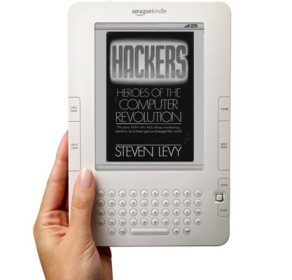
The book market is evolving, and e-books are exploding. I see more and more Kindles and other e-readers everywhere I go and it seems there’s a resurgence of reading, at least for some people. I know that technical books haven’t necessarily been popular on e-readers, but I’m sure that will change over time. I still think books are one of the best ways to tackle some new technology, but I think the static way we present information in most books could be improved. This week, I wanted to get some ideas from you.
What would you like to see in an e-book that would help you learn?
Would you like to see video included, or demos/screencasts of some feature being used? Should reference implementations of functions be linked from the book, or perhaps you’d like to see more interactive questions, puzzles, and evaluations of your knowledge as you proceed. One thing I thought might be interesting would be a pre-chapter quiz that could let you know if it’s even worth reading that section.
I suspect that we’ll start to see more integration of platforms, perhaps even allowing you to sync your e-reader with an application on your desktop that allows you to cut/paste code from the book into SSMS while you have your e-reader on the desk. Give us your ideas today for ways that might make is easier for you to learn.
Steve Jones
The Voice of the DBA Podcasts
We publish three versions of the podcast each day for you to enjoy.
- Watch the Windows Media Podcast – 25.7MB WMV

- Watch the iPod Video Podcast – 20.1MB MP4
- Watch the MP3 Audio Podcast – 4.1MB MP3




 Voice of the DBA
I am really digging your innovative thinking, Steve. With that in mind, one thing that I think would help the learning process is at the end of the chapter, when the reader/student is trying the newly acquired methods out in SSMS, maybe there could be an imbedded version, or some type of testing engine, where it allows the reader/student to have a guided tour. A choice can be made where either the engine or user can drive, and step through a certain scenario. If it is user-driven, and the user makes a wrong choice, it is pointed out, with the correct choice highlighted. Perhaps an explanation pop-up as to why the chosen action is incorrect, and why the highlighted action is correct. Demos, in my opinion, are invaluable learning tools. Repetitive action, such as learning to ride a bike (You can’t learn how to ride a bike by watching someone else, but you can get ideas on how to perform it yourself) cements into our minds, the (seemingly) correct way to do things. Unlike a bike, however, if an incorrect method is implemented, abrasions are not always so obvious. Too many times I have (either through my own, or others’ implementations) seen less-than-optimal approaches to a subject. Thanks to MS’ approach in having at least three ways to accomplish a certain task, best-practices can be somewhat obscure. The demos, accompanied with a try-it! application could help to guide the user in a best-practices tone, and take a dynamic approach to learning a subject. I have a TON of ideas here, and I’d love to talk to you about it sometime. Hopefully, I can run into you at a SQL Saturday event, or the Summit this year. Thanks for doing what you do for the #SQLFamily, Steve, hope to chat soon!
LikeLike