What does the Future DBA Do?

The database administrator (DBA) role has always been a strange one to many organizations. Some companies embrace the role, some don’t. Some hire DBAs, some expect others to handle those duties. The others could be sysadmins for other systems or developers, or maybe everyone might just assume someone else is handling backups, index maintenance, and more. Often those latter companies will have issues at some point when they need to recover a system or performance is extremely poor.

As cloud computing has become more popular, there have been quite a few pieces about how the DBAs job is changing. Often the response to these items is one of two things. Either people agree and talk about a completely new way they will need to work and new skills they must acquire, or they are sure nothing will really change.

I think both things are true. I’m not sure that if you are a DBA now that your work in your current role will change that much. Sure, the company might add some new tasks, new resources, ask you to learn now things but often if your company hasn’t embraced a lot of change, your job isn’t changing. Even if your company adopts some cloud computing.

I just wonder if this is your last job. I hope this is mine, but for many people, they can expect a new employer at some point. If that is likely, then are you positioned for your next job?

I ran across a piece on how the DBA job might change, and I think there are things to think about here. There are five items to look at, and all of them relate to the cloud’s influence on DBAs. While I don’t know that most, or even lots, of companies will adopt the Database-as-a-Service (DBaaS) or have their DBs be a utilty in the PaaS sense, I do think DBAs should strive to make the database a utility for both ops staff and developers. There is a surprising amount of effort here, and I do hope things like the Spawn project from Redgate change the way we work with databases in the future.

I do think that if you need to seek a new employer, and new opportunities, your general skills will matter. Being an amazing T-SQL guru or incredible AG admin might be highly valued in your current role, but often hiring managers might want to be sure you know something about a wide variety of things, from AI/ML to Power BI to working in the cloud. Your ability to learn, collaborate, and discuss intelligently different aspects of database work will be important.

If you think you might need another job, think about acquiring the skills for your next job today.

Steve Jones

Listen to the podcast at Libsyn, Stitcher or iTunes.
Posted in Editorial | Tagged | Comments Off on What does the Future DBA Do?

Daily Coping 11 May 2020

I’ve started to add a daily coping tip to the SQLServerCentral newsletter, which is helping me deal with the issues in the world. I’m adding my responses for each day here.

Today’s tip is tell someone about why your favorite music means a lot to you.

You’re the someone today.

I love music. In fact, I avoided Android as a mobile OS for years because my early experiences showed it to be a much worse experience for music than iOS. At one point I had an Android phone and every picture I took interrupted my music. As someone that travels a lot and enjoys music, I switched back a few weeks later to an iPhone.

Even today, I think the iPhone is still much better as a music device than Android, but without a headphone jack, I won’t go back. Of course, I might lose that on Android soon, so maybe I will go back.

In any case, music has been a big part of my life. I fondly remember listening to 45s as a kid, hanging out in record stores, trying to learn songs on my guitar, and spending hours and hours with a single album. Some memorable long sessions:

Music evokes emotion, excitement, inspiration, and escape for me. Even now, I listen to music often while working, constantly while traveling, and usually in the gym.

Music is something that enriches and enhances my life.

Posted in Blog | Tagged , , | 7 Comments

The 2020 Desktop Upgrade

It’s been a few years since I upgraded my home hardware. Being stuck at home, doing more work here, and trying to help with The #SQLFamily Folding@Home group, I’ve been contemplating some upgrades. I also have a guilty pleasure of playing Doom.

I first ran into the DOS version early in my career and even joined in some lunchtime LAN tournaments at work with Doom and Quake. When my son was about 12, we bought Doom 3 and upgraded my desktop to work through the game together. We had hours of fun and I’ve been tempted to recreate that. I decided not to upgrade my system when Doom 2016 came out,  but I posted a note that I was tempted to get Doom Eternal and escape a it from the sameness of this quarantine time at home. Glenn Berry suggested I upgrade a few things if I was doing to change video cards, and I decided to treat myself a little.

Tl;dr: I spent about $800 to get to a place where I could comfortably play Doom Eternal.

Current Hardware

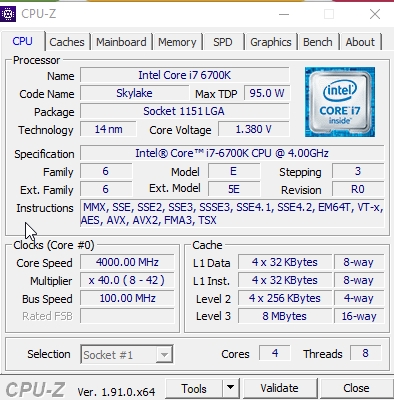
I built my own machine in 2016, upgrading from the previous generation of hardware. I don’t love building hardware, though it can be fun to get things working. However, I’m more of a “I want it working” person than someone that enjoys building. In any case, I have this:

This has worked well for me, but it’s been a number of years. I have SQL 2014-2019 running, VMWare, and lots of other apps that could use a little more horsepower and cleanup.

The CPU-Z data is here:

The Upgrades

I hadn’t really planned on upgrading everything, but a friend offered a deal on an AMD  Ryzen 7 2700 X system with 32GB of RAM. Since it was already in a system with an SSD, that was attractive. This gives me more cores, a slight CPU boost, and I can move things from system to system without being rushed. I like that.

Specs:

Upgrades:

  • RAM: 32GB for $154 gives me 64GB
  • EVGA GeForce RTX 2060 KO Ultra Gaming, 6GB GDDR6 – $305
  • Mini Displayport to DVI adapter (my monitors are VGA/DisplayPort only – $13
  • Samsung EVO 860 1TB – $160
  • USB Wi-Fi adapter – $12
  • Power Supply Corsair RM 750X (Swap from the old to new machine) – $0

Total cost for a second, upgraded desktop was $994. That’s a pretty good deal for me, slightly more than the $600 I thought I’d spend, but I ended up with more RAM and disk space than I’d planned on initially.

For me, the hardest part was switching out power supplies, which is easy in terms of unplugging things and removing a few screws. It’s a royal pain in terms of trying to disconnect things in a tight space. I don’t have the smallest hands, but I managed to get things set up and the new machine booted the first time. That doesn’t always happen when I remove and reinstall motherboards.

Once the new machine was up, I installed chocolatey first, Dropbox second, and then use choco install to start grabbing other things. I my case, I disconnected one monitor from the old system, added a second keyboard and mouse (temporarily) and started to install things as I was working. I’d glance over at the new machine, so what icons were on the old machine or what I was doing and then install more software.

Across a few days, I managed to get most software installed. During this time a few pieces of hardware arrived, and I installed them piecemeal.

Performance

The newer CPU-Z info is here:

New desktop CPUZ

Windows Experience Scores

Area Old Score New Score
CPUScore 8.5 9.2
DiskScore 8 9
GraphicsScore 8.1 8.9
MemoryScore 8.5 9.2
WinSPRLevel 8 8.9

Next Steps

Moving machines is always a bit of a chore, but in this case, I don’t have to be in a hurry by adding a second machine. I have enabled remote access, so that I can move the old machine into a headless configuration and still access things I might need.

This is a big job, as I’m migrating data, apps, VMs, and more, so this will be an interesting process across the next few weeks as I slowly get setup on the new system.

Posted in Blog | Tagged | 2 Comments

A Day in the Life of an Advocate

I have one of the best jobs in the world. I get to work from home, travel to lots of events, set much of my own schedule, and I work for an amazing, supportive company. I’m incredibly proud of the way Redgate Software has handled this pandemic crisis. From strong leadership, a commitment to employees, the Community Circle, and the very strong work by our Core services team to ensure technology has helped us continue to operate as a business.

We maintain an internal company blog where lots of information is shared by individuals and groups. Each week we compile a list of important posts that are sent to all employees on Friday. It’s a way to understand different things that are happening inside the company, since many of us are focused on our own jobs and might not know what others are doing. Recently, I was asked to write a post for the blog on a day in the life of an Advocate. I was happy to tackle it, but included Kathi, Kendra, and Grant as well, since we all share that title, but have very different jobs.

What do we do? For the most part, we do what the title says: we advocate. We advocate among the public for Redgate, and, as Microsoft Data Platform MVPs, we advocate for people to use the Microsoft data platform. At the same time, we advocate for customer needs inside of Redgate, liaising with developers and others to influence what and how they build software. We advocate at Microsoft on behalf of all the customers that want new features and struggle with existing ones.

For all of us, this might be through meetings, presentations, written content, emails, and more. In some sense, we are communicators that move information and knowledge around. All of us have done that throughout our careers, and it’s what many of you do as well. In fact, I think some of the most successful technical professionals I know are great communicators. They many have great technical skills, but they also have the ability to communicate well with others.

I saw a famous software developer once recommend that anyone really wanting to be a developer ought to major in a subject like English (or your language of choice) to learn how to analyze writing and communicate your thoughts back to others. Certainly you need technical skills, but most of us really need to learn how to work well with others. A soft skill, but a vitally important one.

That’s most of my day as an advocate. Communicating. Hopefully many of you find that I do it well and have learned something, been inspired, or even entertained by my work. I look forward to continuing it for many years.

Steve Jones

Listen to the podcast at Libsyn, Stitcher or iTunes.

Posted in Editorial | Tagged , | Comments Off on A Day in the Life of an Advocate