Tag: finances

  • Learn More than Technology

    I’ve been lucky and successful in life in many ways. Certainly I’ve worked hard, may long days and nights, but plenty of others have as well. In fact, there are plenty of people I know that have worked more hours, but been less successful. Conversely, I know some that have worked much less and been more successful. It’s hard to know what the best way is for each of us to examine how to move forward in life, but it’s also not really helpful to compare yourself with others as a measurement. What I’d note you should do is decide if you think you’re becoming more or less successful and find your own path.

    This could mean very different things to different people, and that’s fine. I don’t want to live other people’s lives. I want to live my own, learning from positive and negative things that happen to others, but following the path that best suits my wife and me. I include my wife because we’re a partnership. We decided to spend our lives together, and that means we work with each other, sharing success and sacrifice, making joint decisions. It’s worked out well for us, and I am looking forward to the next few decades of continuing on that path.

    I got inspired to write this by Troy Hunt’s 10 Personal Finance Lessons for Technology Professionals, which is better written than what I’d do if i wrote it. My wife and I haven’t been as focused as Troy has, but we’ve gone through a similar set of thoughts and execution in our careers. We were less money focused, and we don’t live on the Gold Coast, but we’re pretty happy with where we are. We’ve made a few real estate investments, along with some traditional ones, and I think we’ve been fairly successful.

    What inspired me, however, isn’t the advice about how to make money as much as the need to understand what money means to you and the implications of your choices. I do think money is necessary, at least some to live in the US. I also think money can make life better, but you have to learn to enjoy life first. Money should help you with things you enjoy, not make you buy things you think you (or others) will enjoy. However, to ensure you can make the choices you want to, learning a bit about money is useful.

    Most of us don’t get good financial literacy, and more importantly, we don’t think about what money really means. It’s a representation of time, and your time is the most valuable asset you have. I don’t advocate that everyone try to be rich, or retire at 40, or save every penny/pence/shilling/lira/yen and live like a pauper.

    Enjoy your life as you live it and learn to appreciate the small things that touch your days. Along the way, learn a bit about money so you can make choices. Develop a hobby outside of work, and enjoy the moments with friends and family. Life is short. Try to actively live to enjoy it.

    Steve Jones

    The Voice of the DBA Podcast

    Listen to the MP3 Audio ( 4.5MB) podcast or subscribe to the feed at iTunes and Libsyn.
  • Financial Advice for Techies

    I’m not writing a post here on how to manage your money, but I will point you to Troy Hunt’s post. He wrote a great one called 10 Personal Finance Lessons for Technology Professionals.

    Read it.

    I was lucky enough to be born with lots of advantages, not the least of which was some intelligence. However, as many people can attest, intelligence doesn’t mean you can manage money. There are lots of doctors out there that have gone bankrupt and lost their earnings.

    My parents taught me a bit about money and I’ve tried to do that with my kids. I’ve tried to be open and honest and help my kids grow up and at least understand the implications of their decisions.

    Troy has good advice, and I think he’s written a great post. I’ve followed a similar path, investing in real estate, though perhaps not with the focus of Troy. It’s put my wife and I in a good place, and as our kids leave the house, we are prepared to live a comfortable and enjoyable life.

    Read the post. Ask me, or Troy, questions if you are looking for help.

  • The Financial DBA

    I’ve got an Azure subscription. At least, I think I have just one. I know I have a few Microsoft accounts, across 4 (or more) different email addresses, that I use for various VSTS development purposes, but only one should have any Azure resources. When  I check each of them, I find that I do only have resources (and charges) for one. However, I also found a strange charge on my credit card statement from Microsoft Azure. It was just a couple dollars, but as I started digging through the various statements, I couldn’t determine where the charge was from, or what it was for. As of now, I’ve opened a support case with Microsoft to track down my usage.

    This has me thinking of the future of many data professionals, some of whom will certainly have a few assets in a cloud based environment. I have a small subscription, but plenty of resources, and keeping track of which items belong to which resources and what I need isn’t always easy. It’s quite the challenge, especially when billing and finance aren’t my job. In an organization like Redgate, I’d guess we have lots resources, some of which developer provision, need, and then might forget about. Who reconciles this and ensures the assets we have are those we need?

    As we move to a world where services are used as often as assets, perhaps interchangeably, I expect that many of us will need to be accountable for not only the usage, but tracking why we’ve engaged that service. Over time, we need to retire and get rid of assets, but ensuring we remember exactly what we’re using and why can be hard over time. With a little employee movement, many of us might find ourselves in charge of services that we don’t understand, and might not be sure are necessary. We also might not be sure these services can just be discarded. The last thing we want is some uptime disruption because we terminated some service contract.

    A whole new dimension to our job is likely coming, and for many of us, this will test our documentation and organizational skills. I wouldn’t be surprised to find many DBAs or lead developers having a standing monthly meeting with someone in finance to be sure we aren’t wasting money.

    Steve Jones

    The Voice of the DBA Podcast

    Listen to the MP3 Audio ( 3.3MB) podcast or subscribe to the feed at iTunes and Libsyn.

  • Software Assurance Cuts Back

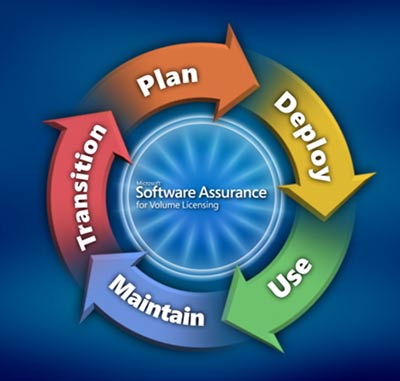
    Did anyone ever use this benefit of Software Assurance (SA)? Apparently if your company had SA on Microsoft software, you could purchase that software for a discounted price for use in your own home.

    I wasn’t aware of it, and it’s never been a perk that any of my employers have offered me. I have had the chance to use Microsoft Office on my home computer if I was licensed for it at work, but I never knew I could “own” something like Visual Studio at a discount. I’m not even sure I would have taken advantage of it, but I’m sure there are lots of people that might have appreciated it. Plenty of my friends that wanted Microsoft Office at home, instead of Microsoft Works. I’m sure a few of them would have purchased a copy of Office at a discount from their company if they could have.

    However it doesn’t matter anymore since this perk is being removed from Software Assurance. I wonder how much money that Microsoft thinks they’re saving here, or maybe how much money they think they might earn. Those extra copies of software don’t cost Microsoft anything, though perhaps there is a significant administrative cost savings involved. More people probably use the Home Use Program instead, which allows people to use a copy of software at home.

    I don’t know that these programs add much to the value that a company gets from SA. Perhaps if they did include home software, or XBOX games, this might be a nice perk to attract employees, but I doubt it. I don’t know that these discounts would make a different in helping me choose where to work. To me they just help Microsoft continue to dominate in some areas of software as corporate workers look to use the same software at home that they have at work.

    If that’s the goal, Microsoft ought to sell the software at a nominal cost, like $25, just to get people to use it at home.

    Steve Jones