Celebrating Lives

I set up the sqlmemorial.org site earlier this year. It’s not quite complete, with some networking and process to work out, but it’s there, which is the important thing. The site gives us a way to remember  celebrate those that we’ve known as a part of our SQL community.

There are only a few people that I’ve personally known well, and fewer still that I’ve met. As a result, there are only a few people about whom I can write something about from my own memories.

I’d like to know more about the others we’ve lost.

It can be difficult to write a memorial to someone’s life, especially someone that is close to us. It is a sad moment to think that you’ll never get the chance to spend time with a friend again. The few times I’ve had to put words down are upsetting, but they are a bit cathartic.

The site runs from a GitHub repo, and I have a page on how to add a thought, a note, or a picture. If you have a link, a note, or a picture, please think about adding a pull request to add some depth to the description of someone’s life. Leave a note for them, for others, or for yourself. If you are unsure how to do this, feel free to email me something and I’ll add it in your name, or anonymously.

I’m saddened when I run across a message or note from someone that’s gone, but I also have some happy memories that I hold on to. If you have any memories, please consider adding something in tribute to sqlmemorial.org.

Steve Jones

Listen to the podcast at Libsyn, Stitcher, Spotify, or iTunes.
Posted in Editorial | Comments Off on Celebrating Lives

Daily Coping 5 Aug 2021

I started to add a daily coping tip to the SQLServerCentral newsletter and to the Community Circle, which is helping me deal with the issues in the world. I’m adding my responses for each day here. All my coping tips are under this tag. 

Today’s tip is to be kind to yourself when something goes wrong.

I have been learning to be a lot better about forgiving myself during the pandemic. I realized during the last year that many things get out of my control, and I have to adjust my life, and accept that.

I still strive to move forward, to get stronger, smarter, more compassionate, etc. But I also have more acceptance when things don’t go well.

In the past year, I’ve had many plans fall apart. Some because of external changes, some because of me. As I get older, there are days that I’m a bit worn out, and I’ve tried to be kind to myself because I had to change plans. I’ve thrown out my back, and learned to not be mad at myself. I’ve accepted days when I’m sick or tired and can’t get something done.

Maybe the best example for me is that there are days my body is sore, or lacking energy. Some of these days I’ve schedule a yoga class (we’re still reserving space at my gym). I know I can’t always get through the class without a break, and I am kind to myself, not beating myself up when I’ve given a good effort, but just don’t have the energy.

It’s not an easy thing to do, but I’ve learned how to work hard, push myself, but accept when something has gone wrong, even if it’s only in my mind.

Posted in Blog | Tagged , , | Comments Off on Daily Coping 5 Aug 2021

Gathering More Digital Data with Tile Slim

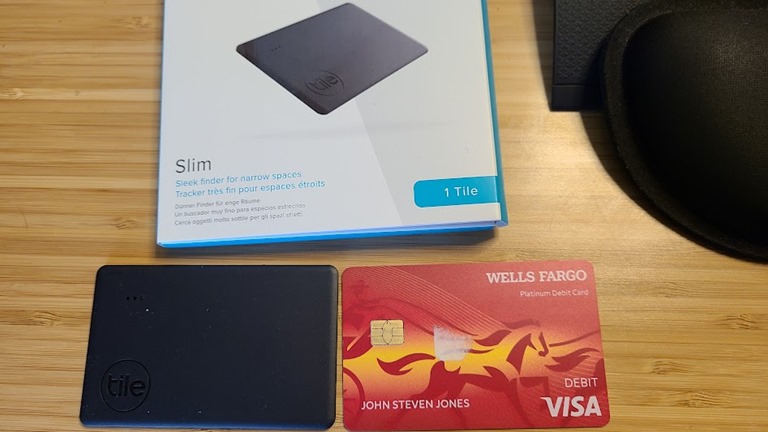
After my wallet misadventures, I ordered a Tile Slim to track my wallet. It came a few days later and I walked through the setup. As you can see here, it’s literally the size of a credit card. It’s about as thick as 3. How do I know? See the post above.

20210730_162436

The instructions say to download the app and follow the instructions.

I did that, and the setup consisted of creating an account, pressing the button on the Slim and then letting my phone find it. Most of the rest of the setup was getting location services added and then enabling Find my Phone (or not). I did this, as I’ve lost my phone a couple times lately for a short while.

I think I’m getting old.

In any case, I completed things, put this in my wallet and then walked away.

Actually, like any good developer, I tested it. First, I left my wallet on the desk and walked upstairs. Since the bedroom is above the office, this wasn’t helpful. I could see the wallet very close to me in it’s history. If I activated the sound, I could hear it, which is good. If I drop my wallet behind a bed or piece of furniture, this should work. Especially if I walk around a bit.

Next, I took it outside to the camping trailer. I left it there and went inside, almost right away. Not quite, as I loaded up a few things I needed to pull out of the trailer. When I checked the tile, Bluetooth told me it wasn’t in range, but the location history showed it a short distance from where I was standing in the kitchen. That’s cool.

Of course, I need to have my phone and my wallet near each other for location history, but still, that’s helpful.

I’ll see how this works, and if I can get some of this digital data and maybe see how often I don’t have my phone and my wallet. That might be an interesting piece of IoT data to plot.

Posted in Blog | Tagged , | Comments Off on Gathering More Digital Data with Tile Slim

Do as I say, not as I do

A common saying from parents, teachers, and many managers, is that you should follow their instructions and not necessarily their behavior. This is a very human thing to do, with many of us struggling to follow the behavior that we ourselves want. Instead, we follow the vagaries of our moods and desires. We do this even as we tell others to do things that we don’t bother to do.

It’s not just human behavior, but it applies to how many companies deal with their customers. Microsoft talks often about taking advantage of new features in code and using the platform to solve problems. They dislike adding simple “syntactic sugar” (like a numbers table), and instead prefer you build the code to handle some of these simple tasks.

However, they don’t really follow this advice, as Andy Mallon showed with a recent post on why not to use a couple of their “recommended” stored procedures. They’re not well written for modern code, they have limitations (or bugs), and could be considered a security risk.

To be fair, I know that changing code in something that works is always dicey, but at the very least, moving from varchar() to nvarchar() shouldn’t break anything. If there are edge cases, then write some tests and rebuild the code to work better. Maybe, more importantly, these procedures ought to model good code, as Microsoft would recommend to their customers.

There are a lot of places where different products at Microsoft might not use SQL Server well, and I understand. These might be software developers that don’t know a lot about how to perform good data modeling or even how to take advantage of SQL Server code. However, at a company with the resources Microsoft has, I’d expect them to form teams to handle these tasks and then review and suggest changes to software like Dynamics, Sharepoint, etc. Even if they can’t use the latest features in the SQL Server codebase, they ought to model good practices for all versions.

For many of us, we might act similarly inside a company. Often we write code out of habit, and perhaps, to expeditiously get work completed, even when we know better. Using SELECT *, leaving out error handling, and more are habits that far too many of us embrace, far too often.

Start making some changes today. If you know there are better practices you should follow, then take the few extra moments to implement them. If you don’t know of good practices, start compiling a list, asking questions, even post an idea or question in the discussion for this editorial. We all could write better code, and that starts with us actually making an effort to model the behavior we might preach to others.

Steve Jones

Listen to the podcast at Libsyn, Stitcher, Spotify, or iTunes.

Posted in Editorial | Tagged , | Comments Off on Do as I say, not as I do