Tag: blogging

  • SQL Saturday South Florida 2024 Powerpoint Decks

    Thanks to everyone who attended my sessions today at SQL Saturday South Florida. Here are the resources from today.

    Blogging for the Tech Professional

    Deck: BloggingfortheTechProfessional.pptx

    Get started with writing today. Use Word or Open Live Writer, save 10 posts offline, then set up a blog.

    Architecting Zero Downtime Deployments

    I always enjoy this talk and I hope you did. Here are the things you might need:

  • SQL Saturday Boston 2023 Slide Decks

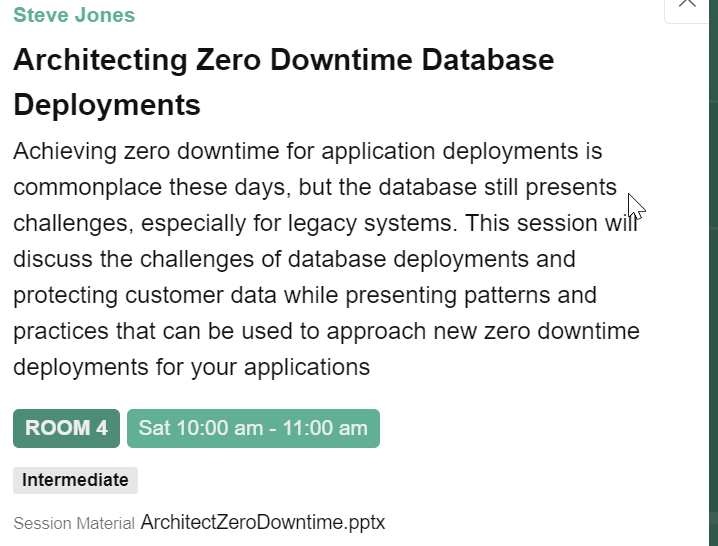
    Thanks to everyone who came to my sessions at SQL Saturday Boston 2023. I’ve added the decks to the schedule, so you can click my session and will see the download there. You can see this below, and all speakers can edit their sessions and upload the deck. See the download below:

    2023-10-14 13_43_08-SQL Saturday Boston 2023 (#1046)

    I’ve also copied the links here for slides:

    For the first session, Architecting Zero Downtime Database Deployments, there is also a GitHub repo here. Clone the repo down (or fork) and you can follow the sessions along. The repo is at: https://github.com/way0utwest/ZeroDowntime

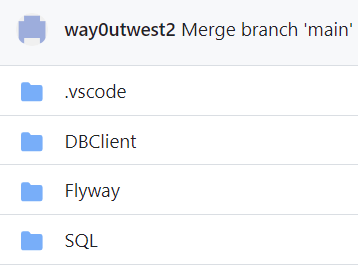
    In here, there are a few folders, as shown here:

    2023-10-14 13_45_44-way0utwest_ZeroDowntime_ Code for my zero downtime presentation

    The two items from the session are the DBClient, which is a Visual Studio 2019 project, and the SQL folder, which has all the setup (and teardown code). Each script is numbered, and you can run them in order. There are also some comments in each for when to flip feature flags.

    If you find issues, please submit an issue in the repo.

  • Blogging for the Tech Professional at Denver Dev Days

    For those that attended my talk at Denver Dev Days, here are the slides: BloggingFortheTechPro.pptx

    A couple interesting questions that I need to add to the deck.

    What do you recommend for a student? (or someone early in their career)

    This could also apply to someone changing careers or fields. If you don’t have experience, does blogging help?

    It does. A blog is your portfolio and it’s a good way to showcase what you are learning, have learned, what you are interested in. This gives you some way to show “experience” even if you don’t have any.

    Build a project, explain how you learned something, document your journey. I might think about a wider set of topics rather than deeper on one here, as it’s hard to know what you want to do early in your journey. It’s also a time when you don’t want to limit opportunities, so showcase a lot of different things you’ve worked on.

    How do I get better at blogging?

    Build a network of people you trust. Let them see drafts, get feedback, and incorporate the feedback into your writing. I would do that in two different ways:

    1. Am I correct in my technical details? To do this, get quality feedback from a subject matter expert. Think senior skilled person evaluating your work here.
    2. Am I explaining things well? Get feedback from anyone on spelling, phrasing, grammar, and flow. Think English teacher feedback here.

    How do I justify the time to blog when I’m busy at work?

    This is an investment in your career. Doctors, lawyers, accountants, etc. need to work on their careers outside of work. Chefs, mechanics, plumbers do this as well.

    Technical people can do this. Take 15-30 minutes a week to do this. Over time, it’s a great way to add richness to your resume and stand out from others.

    Do you blog at work?

    In general, I make notes and sketches of things at work. 3-5 sentences, some bullet points. Then I would spend time outside of work fleshing out my posts. For examples of how long I spend on things, check out the SQL New Blogger series. If you’re starting out, double my times for yourself.

  • Building a Better Profile

    I give talks on branding and managing your career at various events. Often I am helping people to better market and sell themselves if find new opportunities. One area that I talk about for data professionals is the online profile. I think having one is important, especially as many of our contacts with potential employers are made digitally.

    I ran across an article that focuses on LinkedIn, specifically the profile you create there. It has some thoughts on recommendations, accomplishments, certifications, and more. I like the thoughts, and I do think they help showcase who you are as a professional working in some field. It is worth reading through the article and adjusting your profile to include these items.

    I’d guess that most people don’t have these things to add. They might have friends who will write a recommendation, but what about classes, certifications, projects, etc? Getting those is real work, and it’s an investment of time and effort to grow your abilities.

    Having a full (or fuller) profile helps you stand out. It helps give hiring managers confidence that you are a person who can do the job they need. Getting this full profile, however, is something you need to do over time. Invest in your skills and showcase this in your profile.

    One easy way to do this is to take the work you do and document it. Write blogs, share posts, create an ongoing commentary of what you do at work. When you feel proud of something you’ve done, find a way to add it to your profile. This will create the impression that you are getting things done and solving problems at work.

    I’m sure all of you do this. Take a little time and ensure the next person that might consider hiring you, or the person you want to hire you, knows this as well. It can be easy to talk about these things in an interview, but you need to get the interview first. Your resume/CV and profile are how you get the interview, so be sure you are taking care of them across time.

    Steve Jones

    Listen to the podcast at Libsyn, Stitcher, Spotify, or iTunes.