Azure DevOps Agent Job Names

I’ve been working with some complex builds lately, multi-stage ones, and I’ve been annoyed by the Azure DevOps agent. If you’re like me, you might see this in Agent consoles:
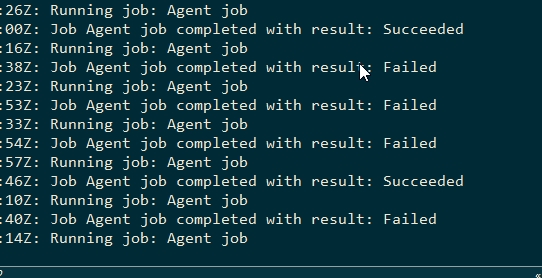
Azure DevOps agent output

Notice anything interesting? No? Me, either.

This is annoying. I’ve renamed the releases and builds, but for some reason, I still get “Agent Job”. Very annoying, but I also see that this does allow for more customization. In Azure DevOps, things are very flexible, but often not obvious or intuitive where they are changed.

In this case, I can look at a Build stage. I see something like this:
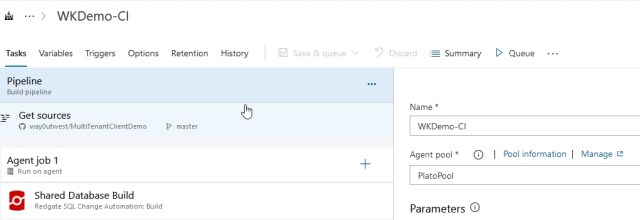
ADO Build definition

I’ve renamed the CI, and I see that as the  Pipeline as well. This what I’d hope would get sent to the agent. However, it doesn’t. Instead, I need to click on “Agent Job 1” in this case. Once I do that, I see this:
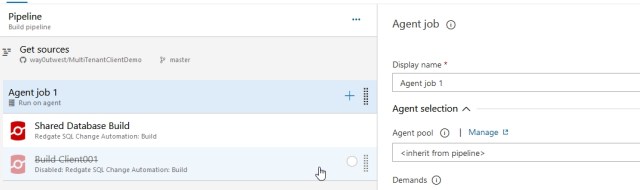
ADO Agent Job properties

Here is where “Agent Job” comes from. In this case, I’d had two at one point, but deleted the other. I can rename this to something else:

Renaming the agent job title

Once I do that, I’ll start seeing names that allow me to more easily track what the agents are doing.
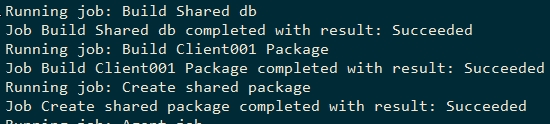

ADO Agent output with proper names


Posted in Blog | Tagged , | Comments Off on Azure DevOps Agent Job Names

Live Stairway – Dax and Power BI Lesson 2

I’ve created my own meeting, since the last one had issues. This is the meeting:

https://redgate.zoom.us/j/94367190656

For security purposes, the password is: 0x303237343839 (cast to int)

This week we’ll be looking at the Stairway to DAX and Power BI Level 2.

Join me, Thursday, 12noon MDT.


Posted in Uncategorized | Comments Off on Live Stairway – Dax and Power BI Lesson 2

Daily Coping 29 Apr 2020

I’ve started to add a daily coping tip to the SQLServerCentral newsletter, which is helping me deal with the issues in the world. I’m adding my responses for each day here.

Today’s tip is enjoy washing your hands. Remember all they do for you.

I’ve never quite paid as much attention to washing my hands as I have the last couple months. I’m not a germaphobe, but I do fine myself soaping up longer, counting seconds to 20+, rinsing, and then being careful what I touch. I wash my hands after going through a store. I try to avoid finger pressing buttons on things like payment machines, and use some sanitizer if I do.

It’s not perfect, I’m not paranoid (or maybe not enough), but I am being careful and cognizant.

Posted in Blog | Tagged , , | Comments Off on Daily Coping 29 Apr 2020

Keeping Unique Aliases

I am a big standards guy. Not any particular standards, but ensuring you have some in your organization and that people stick to them. Pascal case, Camel case, it doesn’t matter to me. I’ll build a habit with any of them; I just want some consistency from others working in a team. Or even across teams since people move to different projects over time.

I ran across another post on naming conventions, this one looking at SQL standards, and it’s a practical look at a few things. I like some of the ideas, like the singular or plural choice (” Who cares. Just pick one and use it consistently. “), but I especially like the idea of the third item: standard aliasing.

In the past, I’ve often found that I used the same aliases over and over. When I was the only DBA, this ensured consistency. “P” was always for dbo.Product, and pc was always used for ProductCategory. However, when we added other team members, I quickly realized we didn’t use the same conventions. I’d check out code and see prod.productid instead of p.productid. The new people didn’t like my single character aliases and I didn’t like typing most of the word for theirs.

Ultimately we had to decide what made sense for both of us and compromise. We choose specific items, not all at once, but as needed. We’d have a 30s meeting or exchange a quick chat message and then update a document with the standards. When other new developers were hired, they already had a reference list that they quickly learned.

I think the idea of standard aliases makes sense. It’s built into SQL Prompt and some other tools, precisely because many teams want to ensure their developers adhere to a standard, and more importantly, can quickly understand any code they pick up. That’s the real reason for standards: they convey information, silently and quickly.

Steve Jones

Listen to the podcast at Libsyn, Stitcher or iTunes.

Posted in Editorial | Tagged | Comments Off on Keeping Unique Aliases